ENS Labs Quarterly Report - Q1 2026
Abstract
Q1 2026 accelerated exciting progress towards ENSv2’s launch in the coming months.
Across ENS Labs, two threads came together this quarter that set up the final push: the team reached the shape we need for v2 delivery, and our company-wide offsite locked in organizational alignment on mission, vision, and go-to-market.
In February, we launched public alphas of both the ENS App and ENS Explorer on Sepolia testnet, sharing with the community the first interaction with the next generation of ENS applications. By quarter end, ENSv2 contracts were 100% written with 98% test coverage and are now with auditors for a final check.
This quarter was also defined by a difficult architectural decision to deploy ENSv2 exclusively on Ethereum L1, and to cease development of Namechain. This decision was ultimately the correct path forward for the protocol and has simplified migration paths for millions of names, and will enable users to register or renew an ENS name with stablecoins from any EVM chain without manual bridging or gas, and focuses engineering efforts beyond the deployment stack.
There were also new opportunities for ENS that we pursued and started ideating around: we deepened our position across the AI frontier striving to solve the identity problem in agentic commerce. In March, we introduced on.eth in collaboration with ecosystem partners, advancing a more unified approach to interoperable naming. This work establishes a canonical onchain registry, replacing fragmented offchain systems with verifiable onchain resolution via ERC-7828.
Q1 set the foundation for what comes next: ENSv2 Beta launches in May on testnet, with ENSv2 mainnet as a fast follow.
Team Updates
We closed Q1 at 39 full-time employees, with 7 new hires across Product, Design, Engineering, Growth, and DevRel (a 21% headcount increase). This is the right sized team for ENS Labs to achieve v2 delivery and beyond.
ENSv2 is a complete reimagining of ENS and goes way beyond a single deliverable: it spans the protocol itself, a consumer app, a developer-grade explorer, enterprise-grade resolution infrastructure, and the migration tooling required to carry millions of existing names from v1 to v2 without breaking the experience for anyone. Shipping all of that and seeing it integrated broadly across hundreds of wallets, apps, and interfaces requires migration readiness, developer enablement, and go-to-market execution running in parallel. We feel incredibly energized with this team for ENSv2, and do not anticipate having additional hiring needs in the next quarters to come.
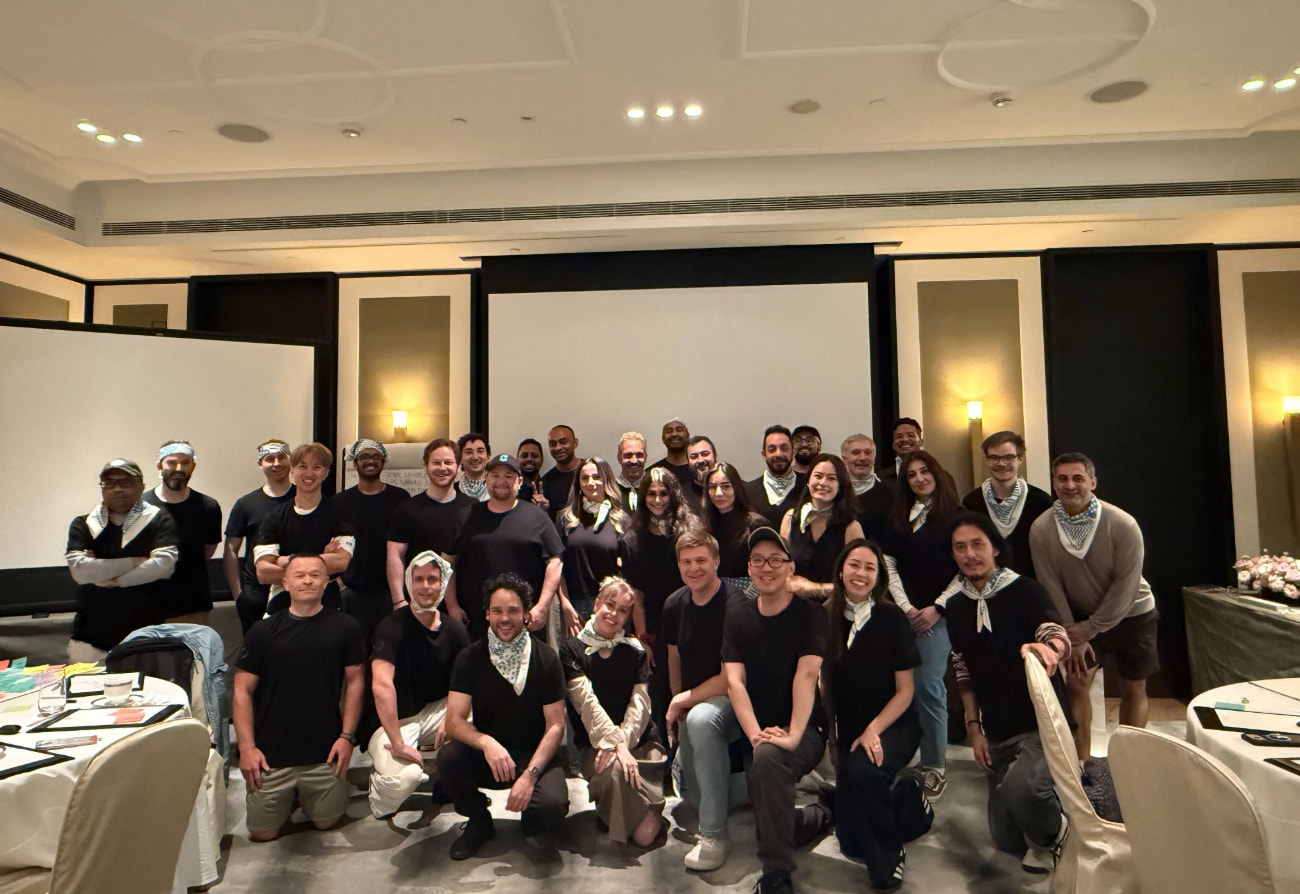
In March, we brought together the team for our largest scale IRL offsite. The goals were straightforward: confirm ENSv2 launch readiness, align on the go-to-market plan, explore new areas of opportunity, and renew ENS Labs’ mission, vision, and values.
We left with all three.
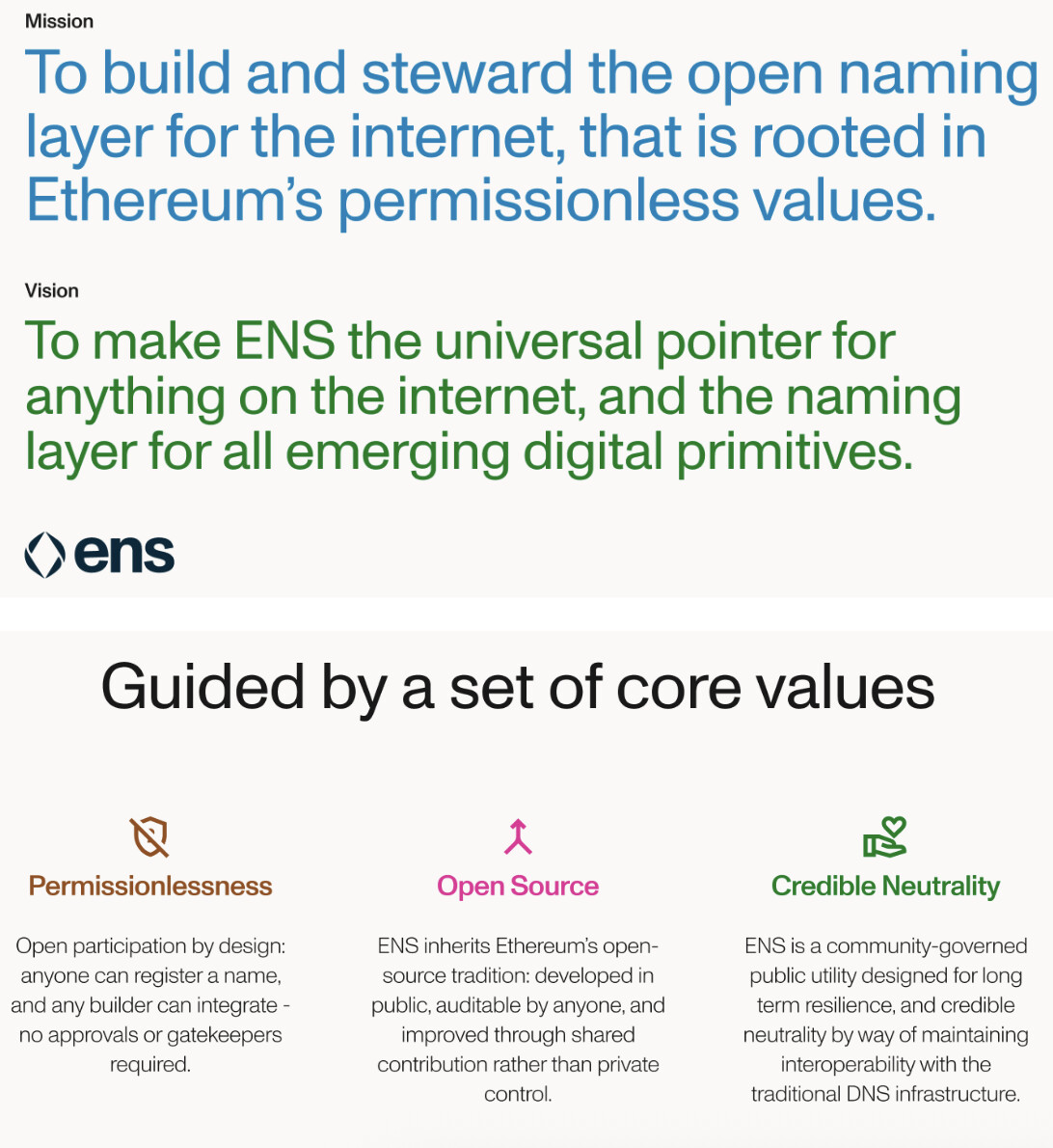
Our vision: to make ENS the universal pointer for anything on the internet, and the naming layer for all emerging digital primitives.
Our values: permissionlessness, commitment to open source, and credible neutrality.
The offsite also clarified three adoption drivers we’re orienting around for 2026 and beyond:
- Stablecoin payments as the new nexus of real-world crypto adoption
- Prioritizing integrations, particularly with FinTechs (much longer sales cycle but worthwhile impact)
- Explore APIs and other products and services that would make for a more seamless integration experience across new and existing partners
ENSv2: From Alpha to Launch Readiness
Public Alpha: ENS App & ENS Explorer

On February 4th, we announced the public alpha of both the ENS App and ENS Explorer on Sepolia. These moved from read-only states into functional tools the community could test directly, running on ENSv2 contracts.
By the end of Q1, we’ve captured 150+ feedback responses on the ENS App and dozens more on the Explorer. We’re prioritizing bug fixes and usability improvements based on real user feedback, strengthening the foundation for the production-ready versions soon to come.
ENS App
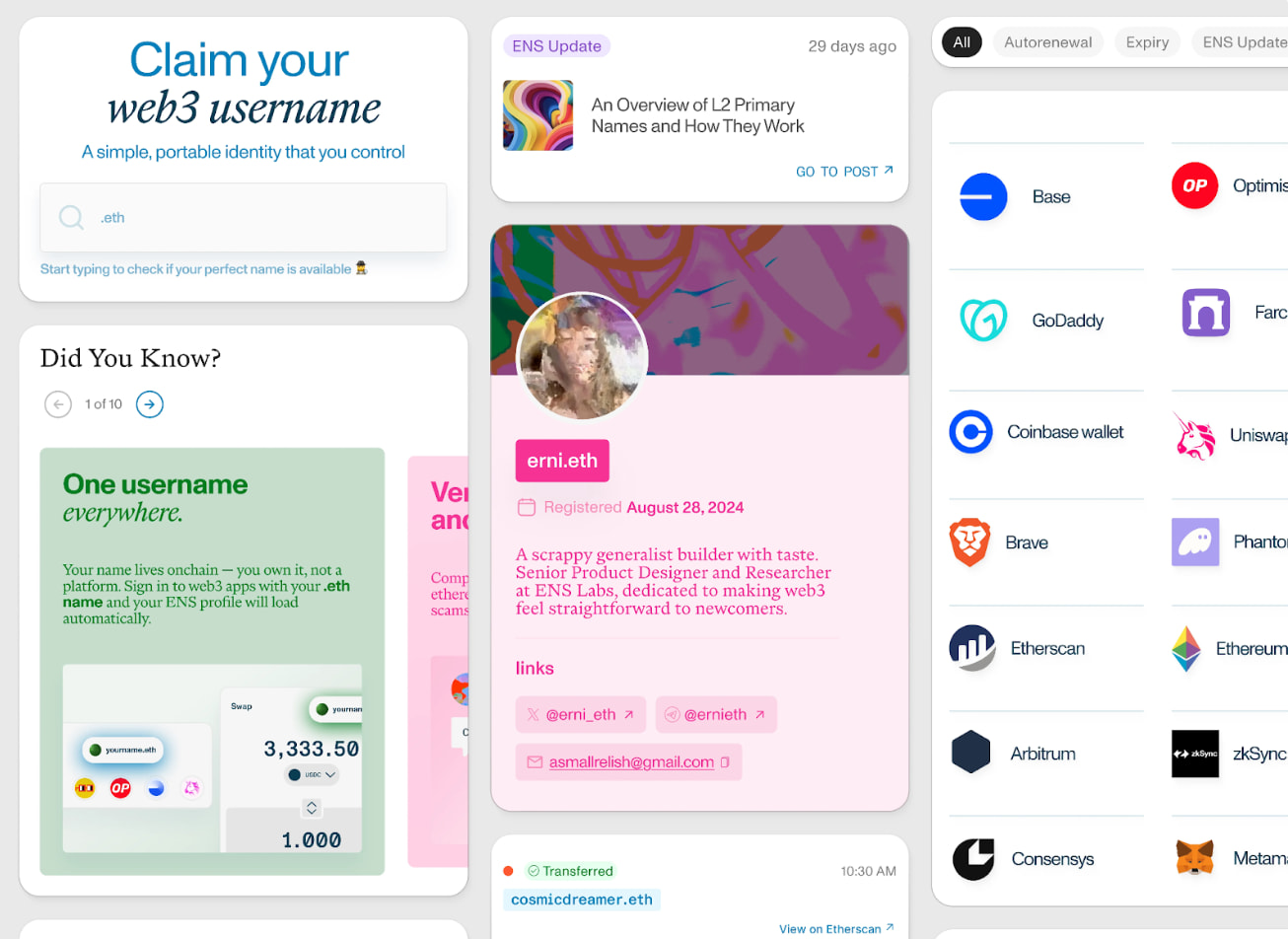
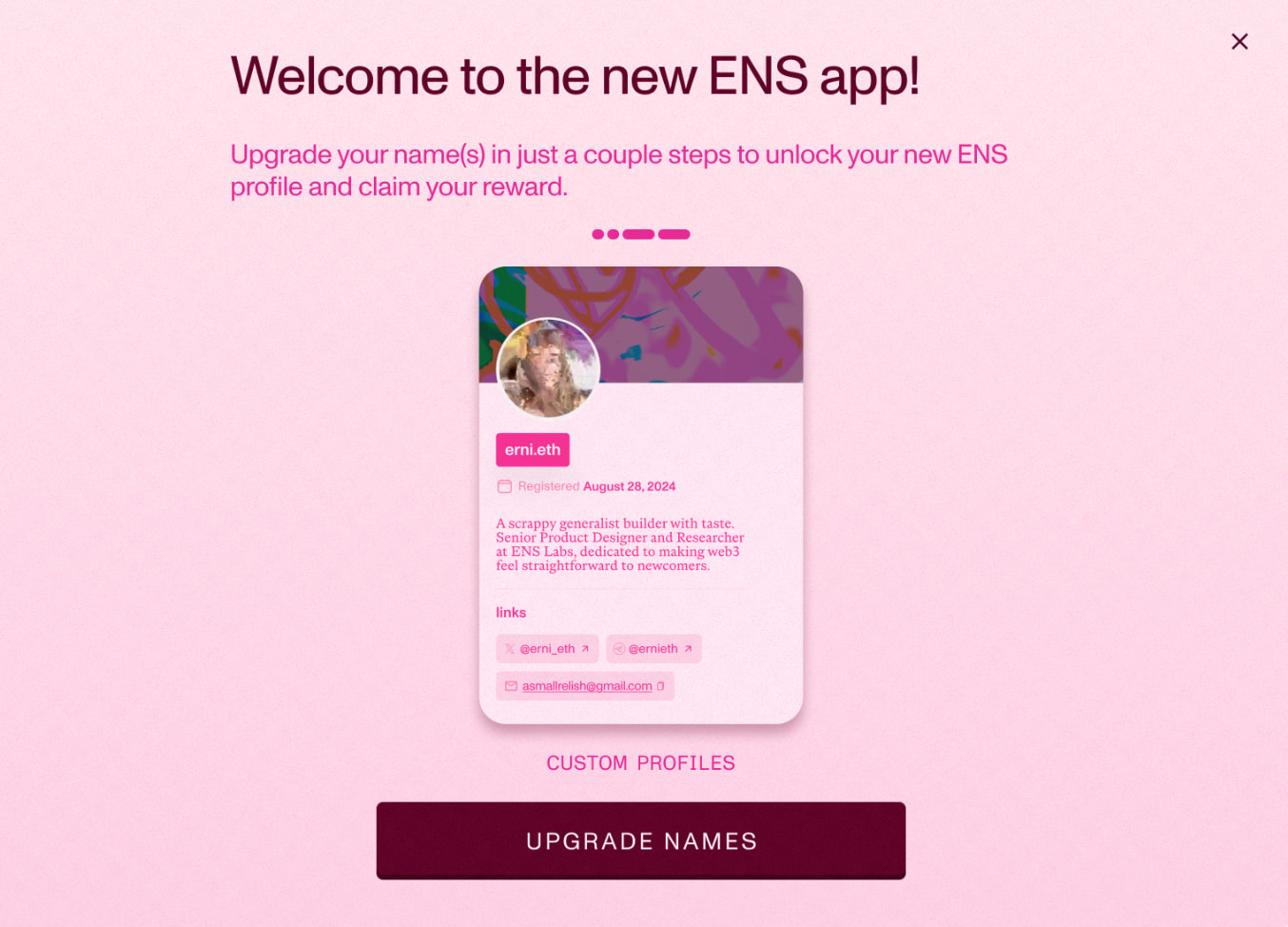
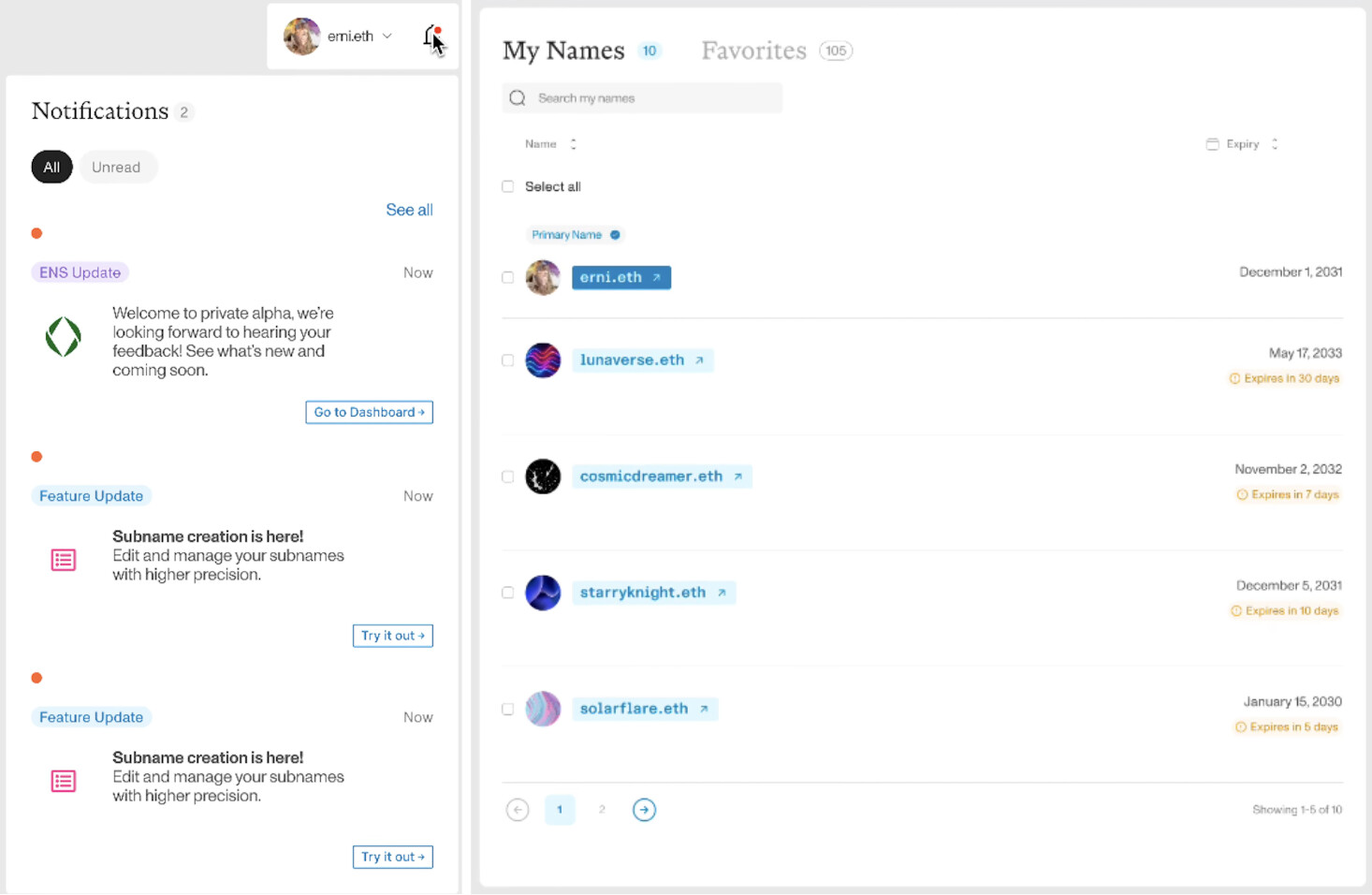
The ENS App emphasizes simplicity and onboarding users. Here is a non-exhaustive list of Q1 alpha launch features for the ENS App:
- Single-Click Registration Flow: One-click name registration using Smart Sessions with stablecoin payment support, while still allowing optional manual wallet approvals.
- Dashboard: Unified dashboard displaying primary names, all owned names with search and filtering, accurate metadata including expiry and primary status, and dynamic insights.
- Profile Editing: Detailed name profile view with Smart Session support for seamless record edits for owners or accounts with appropriate role permissions.
- Notifications: Real-time notification service supporting Telegram, email, and in-browser channels with configurable preferences.
- Internationalization: Multi-language support to serve ENS’s global user base.
- Wallet Auto-Funding: Streamlined onboarding by enabling wallet auto-funding registration (for alpha testing purposes only).
- Primary Name Flow: Improved flow for setting and managing primary names.
ENS Explorer
The ENS Explorer is the source of truth for ENS: a comprehensive developer tool offering complete protocol visibility with precise controls. This is the tooling that should showcase the full power of the ENS protocol to power users and more technical users who would like a data-rich view- the complete opposite of the abstraction principles that rule the ENS App. As ENS serves an incredibly diverse user base, these two products are made for both sides of the abstraction/ complication spectrum.
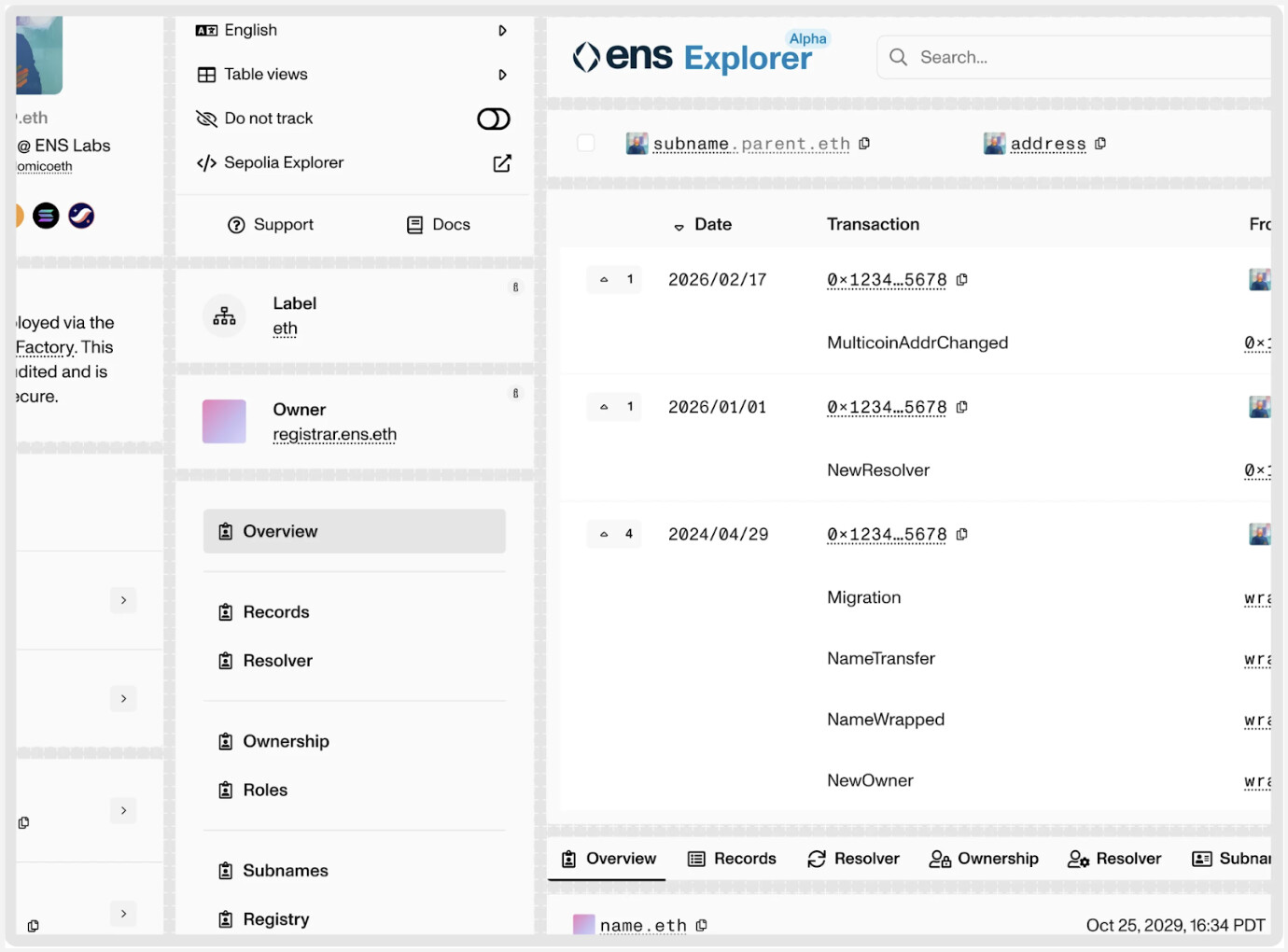
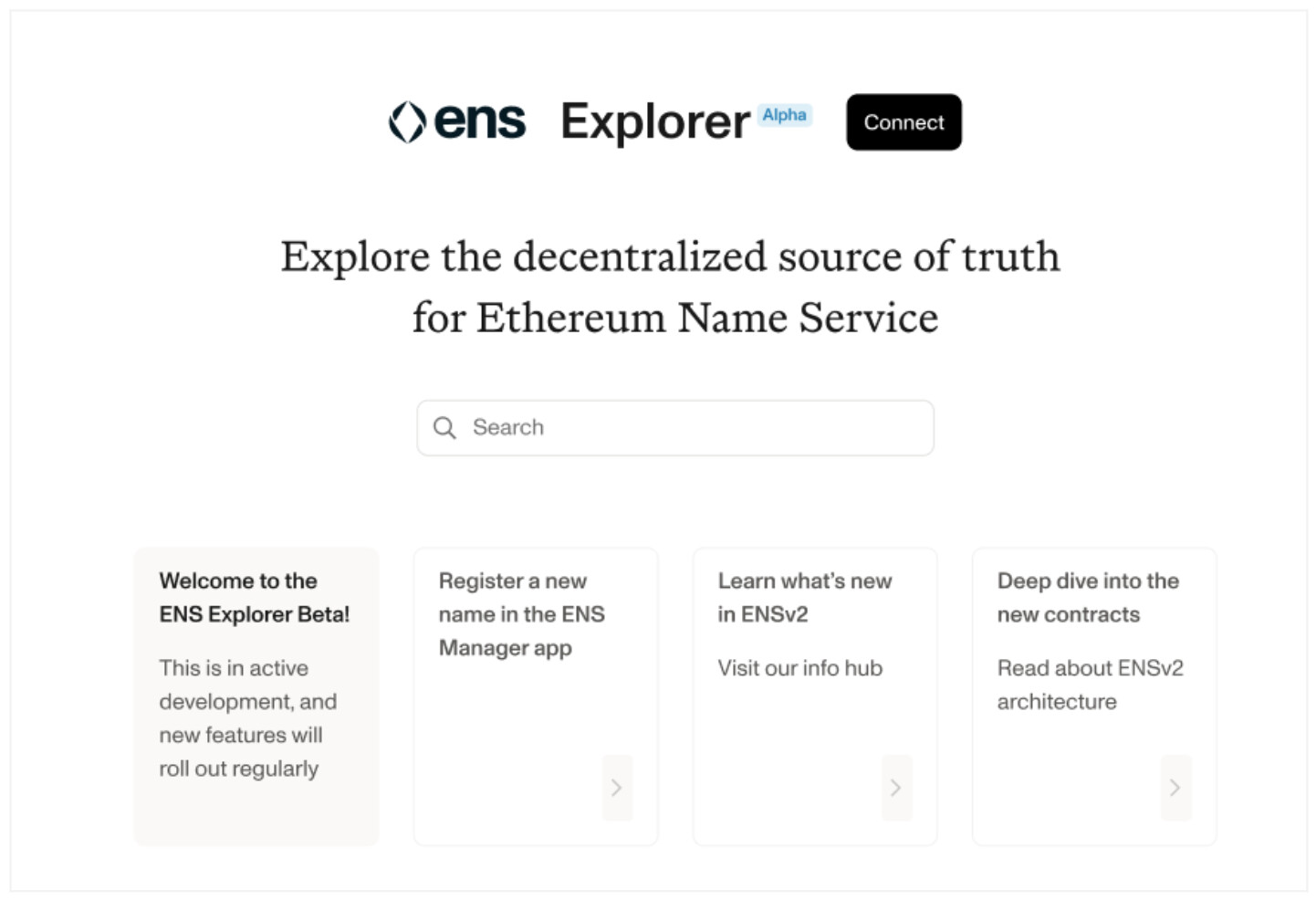
Here is a non-exhaustive list of Q1 alpha launch features for the Explorer:
- Token info, roles, and fuses display
- Name registration directly from Explorer
- Temporary premiums and bulk or single renewals
- Resolver pages with aliasing and history
- Permissioned resolver dashboard with owned resolver management
- Improved search functionality
- Enhanced editing via transaction manager
Now is the perfect time to check out the ENS App Alpha and ENS Explorer Alpha and leave feedback directly in-app! We are working quickly to refine our final versions and would welcome any further feedback.
ENSv2 Architecture & Universal Resolver
ENSv2 is a reinvention of the ENS protocol that is designed around the idea of giving users unprecedented control over their namespace. With v2, ENS will move away from a single, flat registry contract and towards hierarchical registries.
A hierarchical architecture is one where every ENS name can have its own resolver and a subregistry. That opens up subtree management, a flexible roles system (resolver, name/node, record), and multi-name registry management. When a name expires, it’s removed from the registry immediately, so re-registration and subname management start from a clean slate.
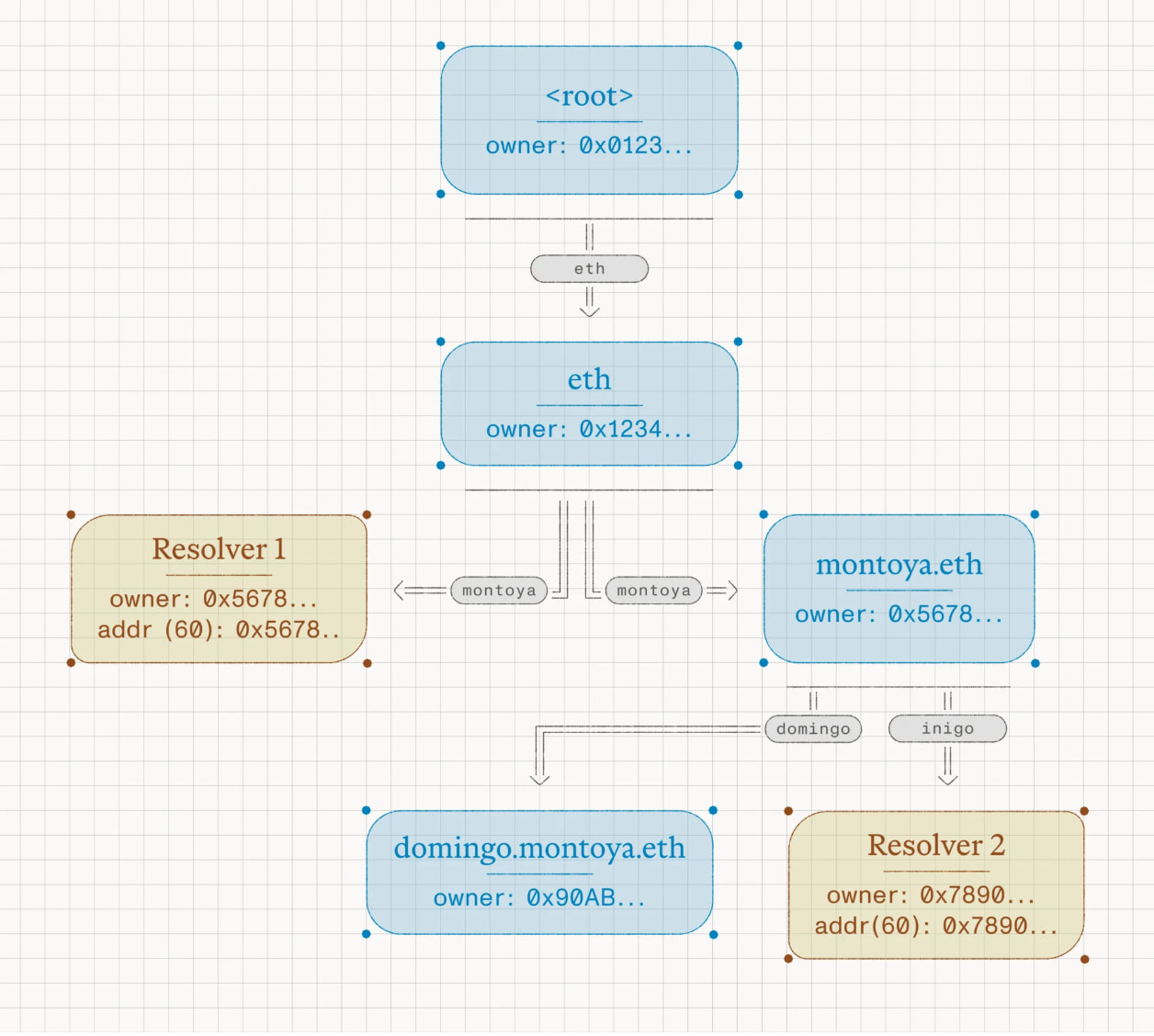
Name resolution in v2 will also undergo a smoother upgrade path. In v2, clients no longer handle resolution themselves. Instead, they call a single Universal Resolver contract that manages the entire process. That means resolution occurs either directly onchain or through coordinating CCIP-Read lookups, where offchain data is fetched and finalized onchain. All the while, complexities of the new hierarchical lookup process are hidden from the client implementations.
This provides a seamless experience for end users during the upgrade from v1 to v2. In the simplest case, developers simply use the latest Viem or Ethers libraries, instead of having to rewrite integrations. We are optimizing for all major ENS integrations to be “v2 ready” before users upgrade so that there are no disruptions during or post launch. ENSv2 becomes more powerful under the hood while everything on the surface keeps working exactly as before.
There are already dozens of ENS-integrated projects that are “ENSv2-ready” using the Universal Resolver. As part of v2 launch readiness, we are racing to ensure that as many major ENS compatible partners are part of v2 at launch.
By end of Q1, ENSv2 contracts were deployed to Sepolia, test coverage was at 98%, contracts were 100% written, and the code is now with auditors. Other Q1 engineering milestones:
- Launched the ENS App and ENS Explorer public alphas using an internally-built indexer
- Namechain code fully removed, making ENSv2 entirely independent of ENSv1 contracts
- Improved migration process with a clear upgrade path and forward compatibility with ENSv1
- Security improvements via more granular contract control
- Usability improvements to registry contracts
- DNSSEC bug fix and optimized v1 security
- Security controllers implemented for registrar and root
- L2 primary name bug fixes with better efficiency and reliability
Shaping the V2 Experience
One of our initial goals when designing Namechain was to ensure that interacting across EVM chains no longer felt like a fragmented user experience. The L1-only decision has not changed that goal. For the ENS names purchase flow in v2, we have partnered with Rhinestone to make the ENSv2 purchase flow feel like a single, unified experience regardless of where a user’s assets are. With this integration, name registration is ‘one step’ using an intents-based registration flow. This means that names can be registered using assets from any EVM chain without manual bridging or gas management. We believe this will be a huge unlock for user experience in today’s multichain ecosystem.
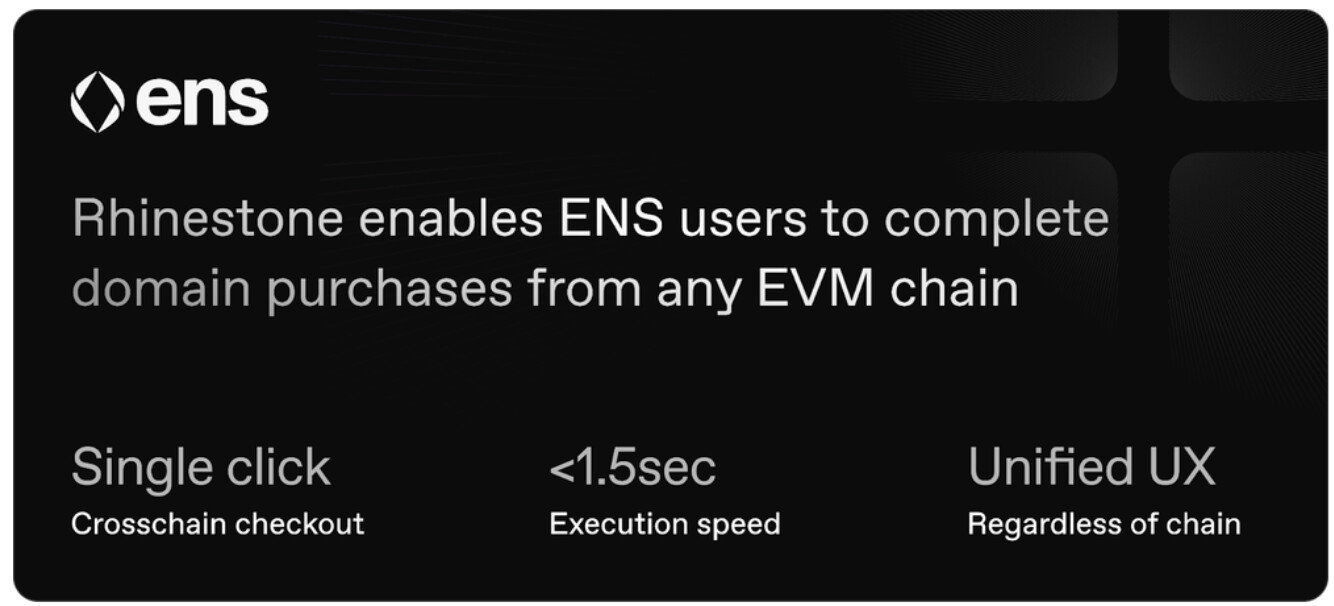
Additionally, our design team ran a full review of both the ENS App and Explorer to assess impact on existing user flows after the decision to stay on the L1. Because the design foundations were already built around the user, the core impact was minimal. Design completed an audit for consistency across both apps, and the upgrade flow was rescoped into a simpler, more focused experience.
With the beta version of the apps targeted for release in May, we will be focused on the following in Q2:
- Upgrading priority integrators to the Universal Resolver
- Completing the notification service, new contract data indexing, and account abstraction infrastructure
- Deeper Para integration for users who create a wallet via social or email
- Shipping updated `ensjs` and a self-contained test environment for local ENS development
- Producing comprehensive ENSv2 developer documentation ahead of launch
Maintenance also continued on the existing ENS Manager app, including WebSocket migration, DNS sync fixes, avatar and header crop improvements, mobile profile fixes, and an ENSjs v4.2.2 upgrade.
Empowering the Developer Ecosystem
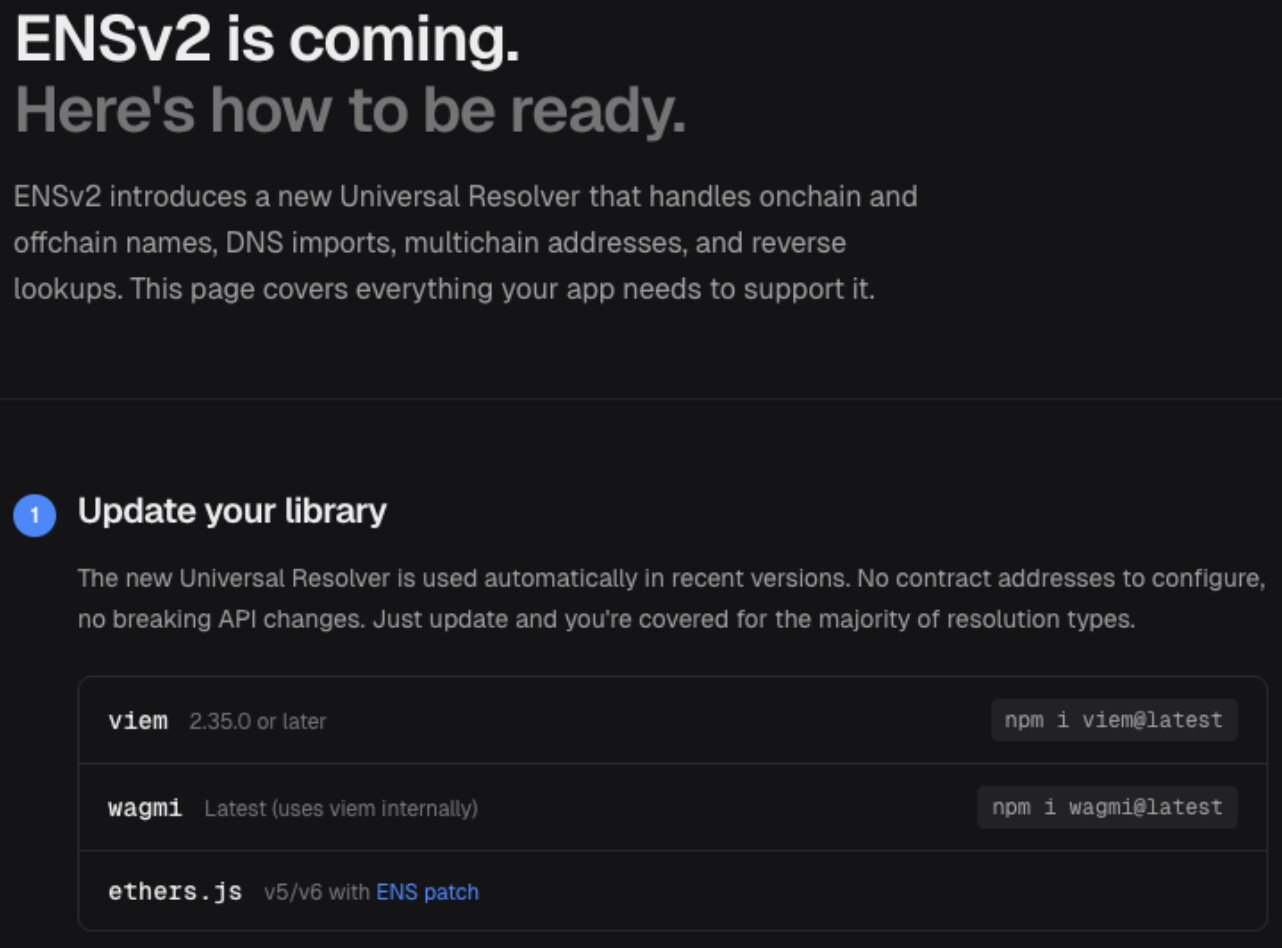
With our dedicated ENSv2 Readiness squad across DevRel, Growth, and Engineering, the team focused on building out critical infrastructure for the v2 upgrade including:
- ENSv2 Readiness Checker to help integrators verify compatibility
- Created the resolution-tests repo, a standardized test suite to verify ENS resolution accuracy across libraries and tools
- Developed and documented an ethers.js monkey patch for ENSv2 compatibility
- Drafted Wallet Integration Guidelines to help wallets prepare for ENSv2
- Achieved 23% Universal Resolver adoption on NPM and 10.8% of GitHub repositories with 10+ stars ready for ENSv2
The growth of our DevRel, Growth, and Engineering teams in Q1 made a dedicated ENSv2 Readiness squad possible. We’re excited how much further these scaled teams can bring us to winning cornerstone integrations in the next few quarters. We also launched ENS Developer Office Hours, a biweekly community call for developers building with ENS, with our ENS Developers Telegram growing from 560 to 606 members in Q1.
Hackathons & Developer Engagement
ETHGlobal HackMoney 2026 [Virtual]
We started the year strong with ETHGlobal’s HackMoney with 45% ENS adoption, the highest rate compared to any other ETHGlobal attended events!
There were 272 of 600+ projects represented by 1,300+ hackers globally that were built on ENS. We were excited to award $5,000 in prizes by pooling prizes across 145 teams.
Check out the winners for Most Creative Use of ENS for DeFi:
- ACN (Agent Commitment Network) - Decentralized marketplace designed to solve the critical trust gap in autonomous AI agent ecosystems. Achieved by using ENS + EIP-8004 for onchain agent identity, then storing portable reputation records directly on the ENS PublicResolver, and then establishing agent identities as immutable NFTs.
- GridGame-HyperSwiper - Blockchain-native multiplayer game where ENS identity, verifiable skill, and state channels are core to gameplay, not just settlement.
- Takeaway - Create chain-specific ENS subnames. Send funds to the subname, and a relayer automatically reads your destination chain and address from ENS text records and bridges the funds via Li.Fi. No bridge UI, no extra signing after setup.
ETHDenver 2026
We sponsored ETHDenver with a booth at Etherspace, where Greg (DevRel Engineer) gave a Main Stage talk on “Building Resilient Websites With ENS.” This year there was strong attendance amongst attendees from traditional finance and FinTech backgrounds compared to previous years.
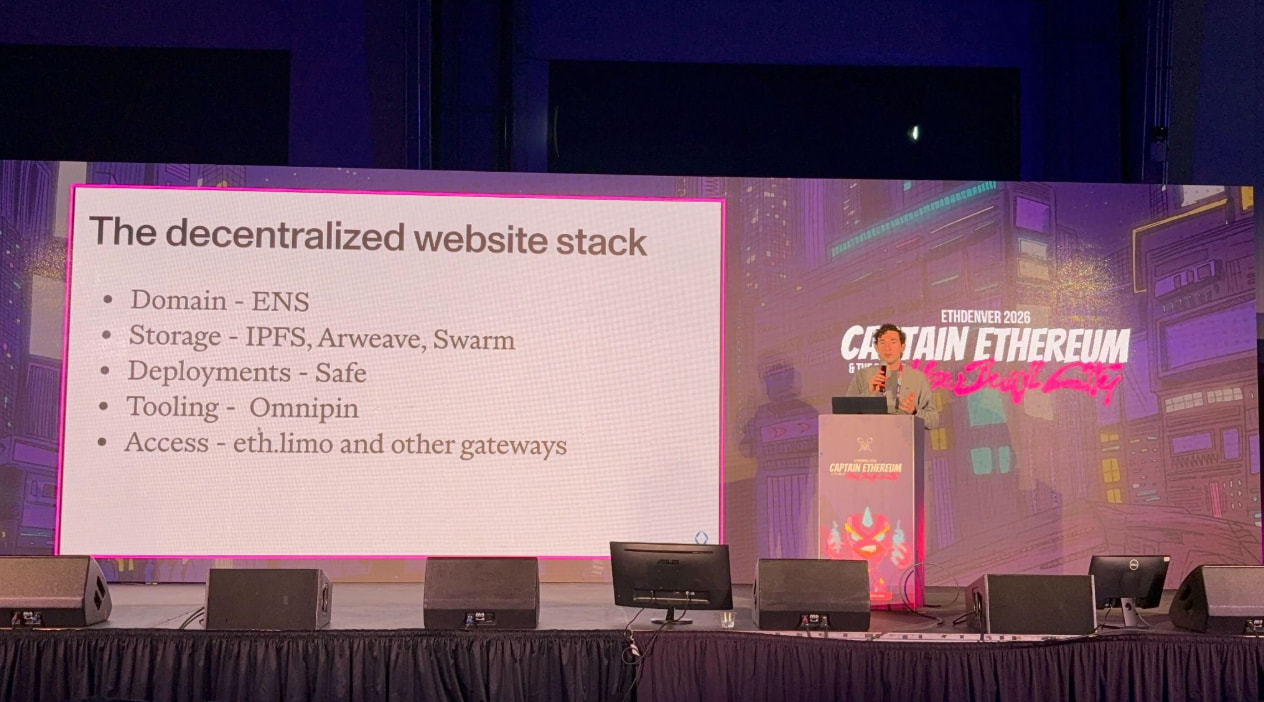
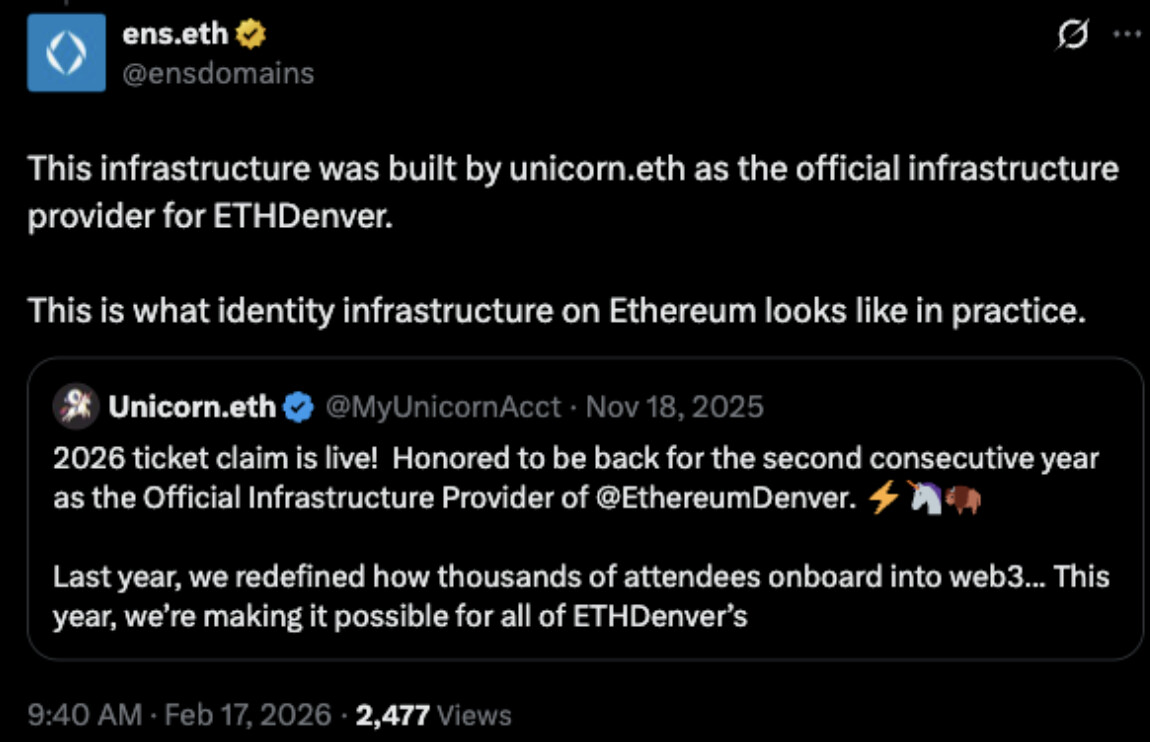
ETHDenver showcased ENS in action by powering the ticketing system with unicorn.ethdenver.com with each attendee ticket represented as a human-readable identity on Ethereum.
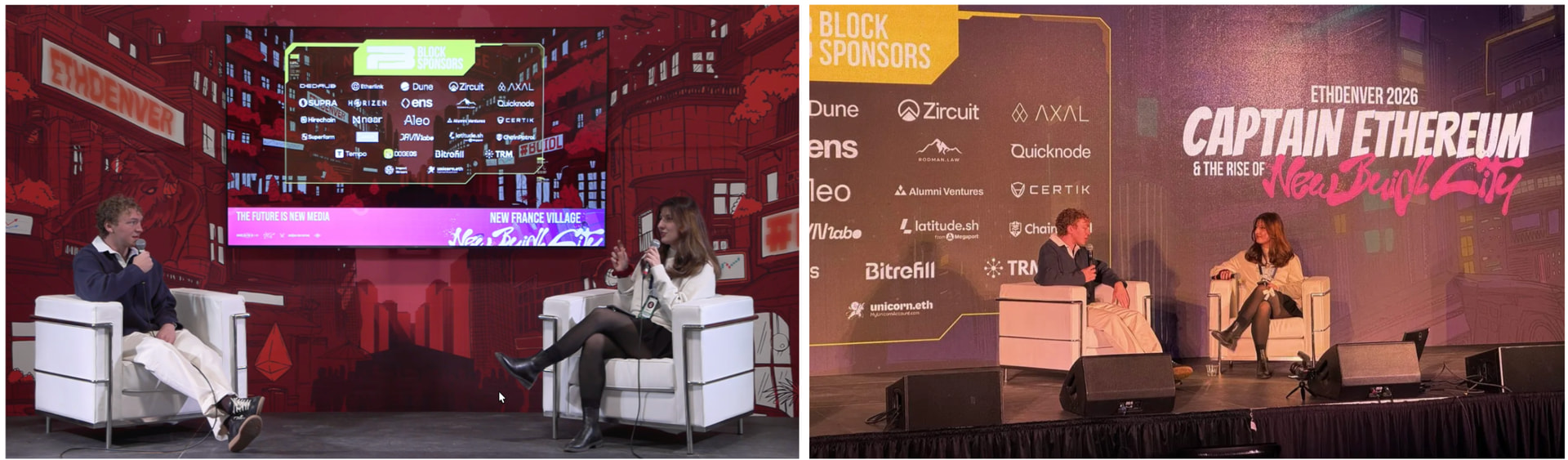
During the week, Mely (Partnerships Manager) joined Louie O’Connor of the Ethereum Foundation for two fireside conversations on how Ethereum projects can better communicate their vision to broader audiences.
- The Future Is New Media | Louie O’Connor - Ethereum Foundation
- We Are the (New) Media | Mely - ENS & Louie O’Connor - Ethereum Foundation
ETHMumbai 2026
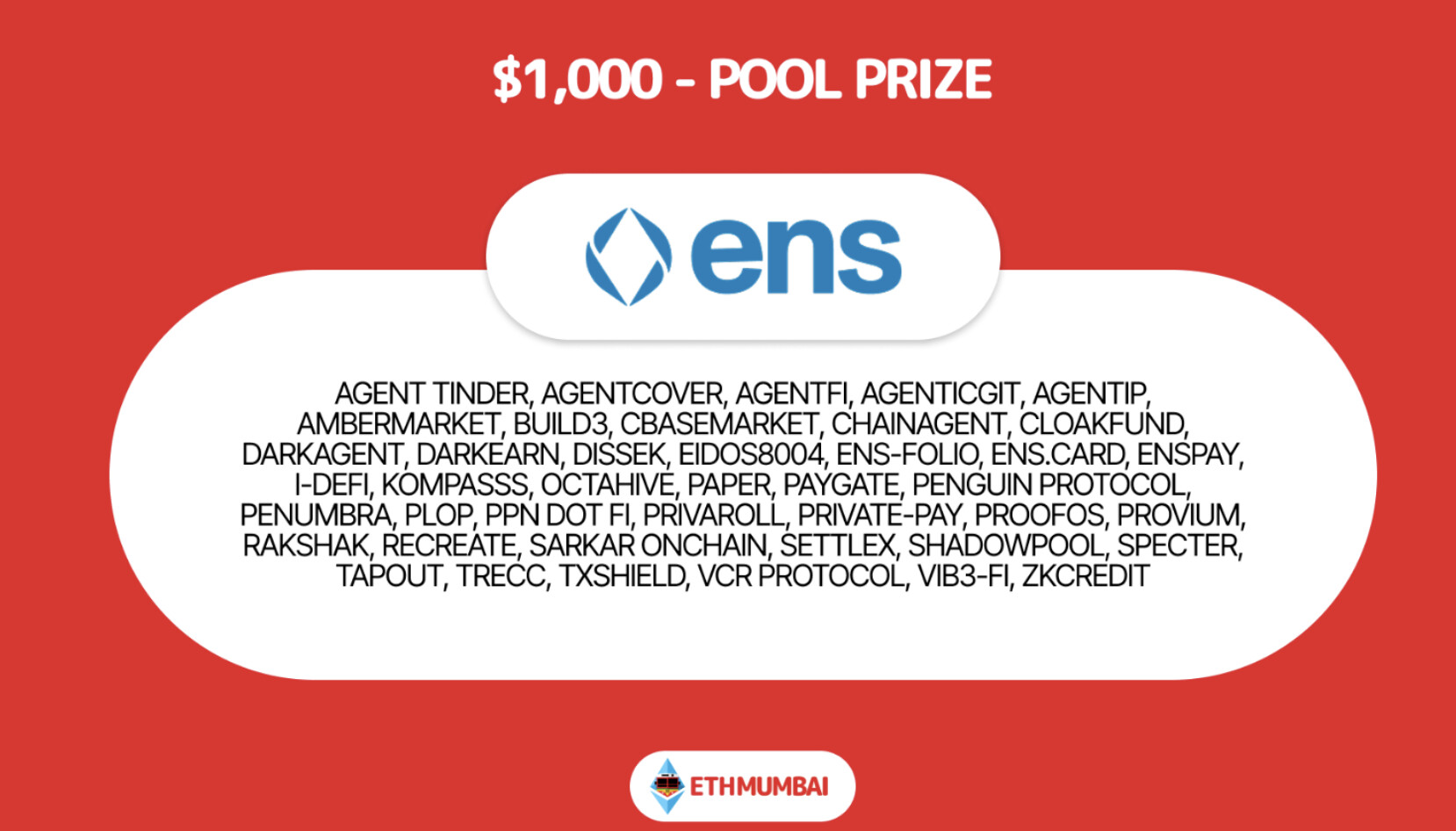
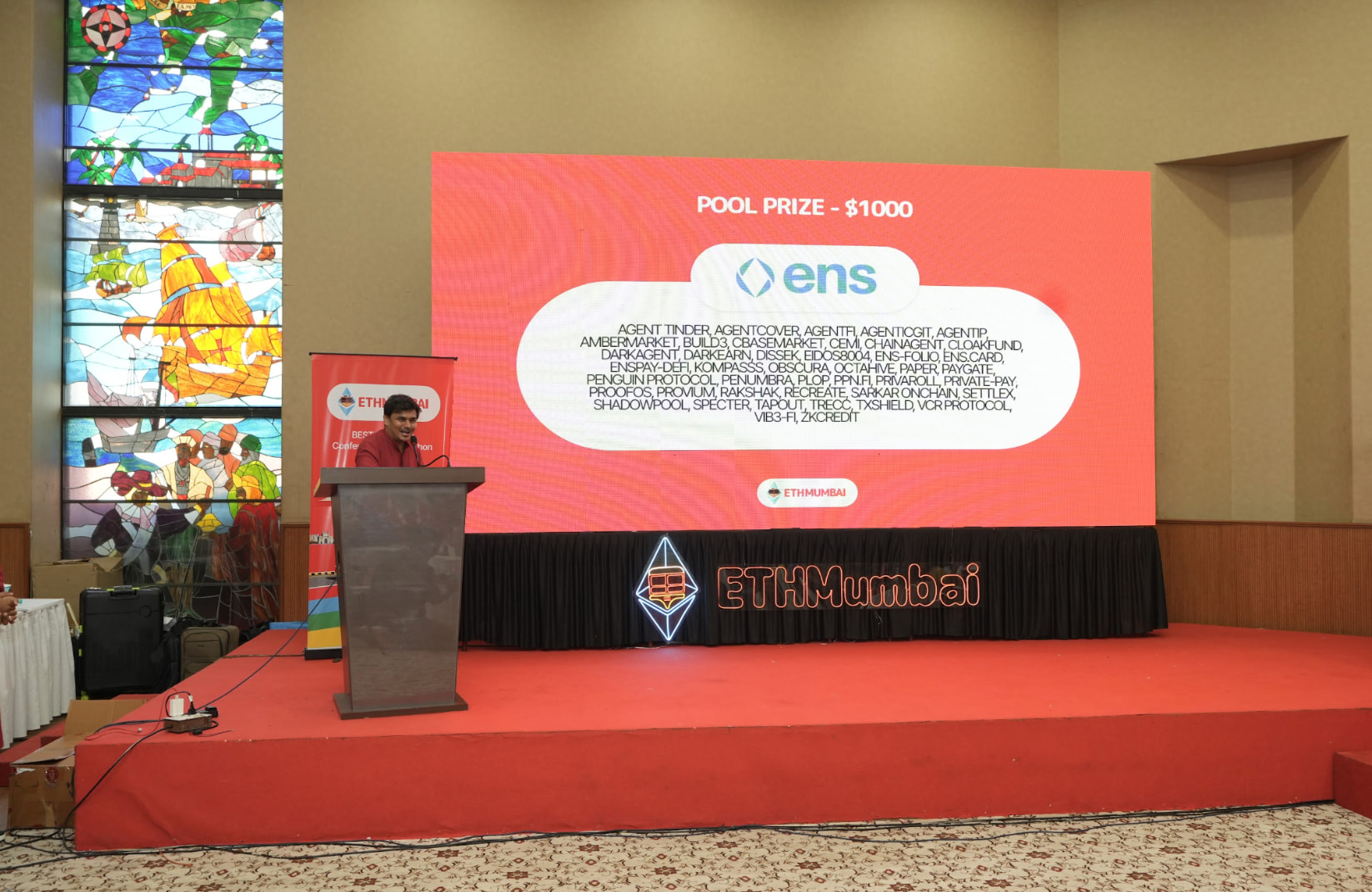
At the ETHMumbai 2026 hackathon, 62.5% of projects (50 of 80) were built on the ENS. We were excited to offer $1,000 in prizes to the top three best creative uses of ENS including OPM (onchain security layer for npm), BumpWallet (tap to pay NFC wallet), and D3ploy (censorship-resistant deployment platform).
New Surfaces for ENS
Even while all teams across ENS remain focused on v2 delivery, we are also deeply aware the work does not end there. ENS is the universal pointer for all emerging digital primitives, and we spent Q1 working on increasing the surface area for ENS.
on.eth: Interoperable Names
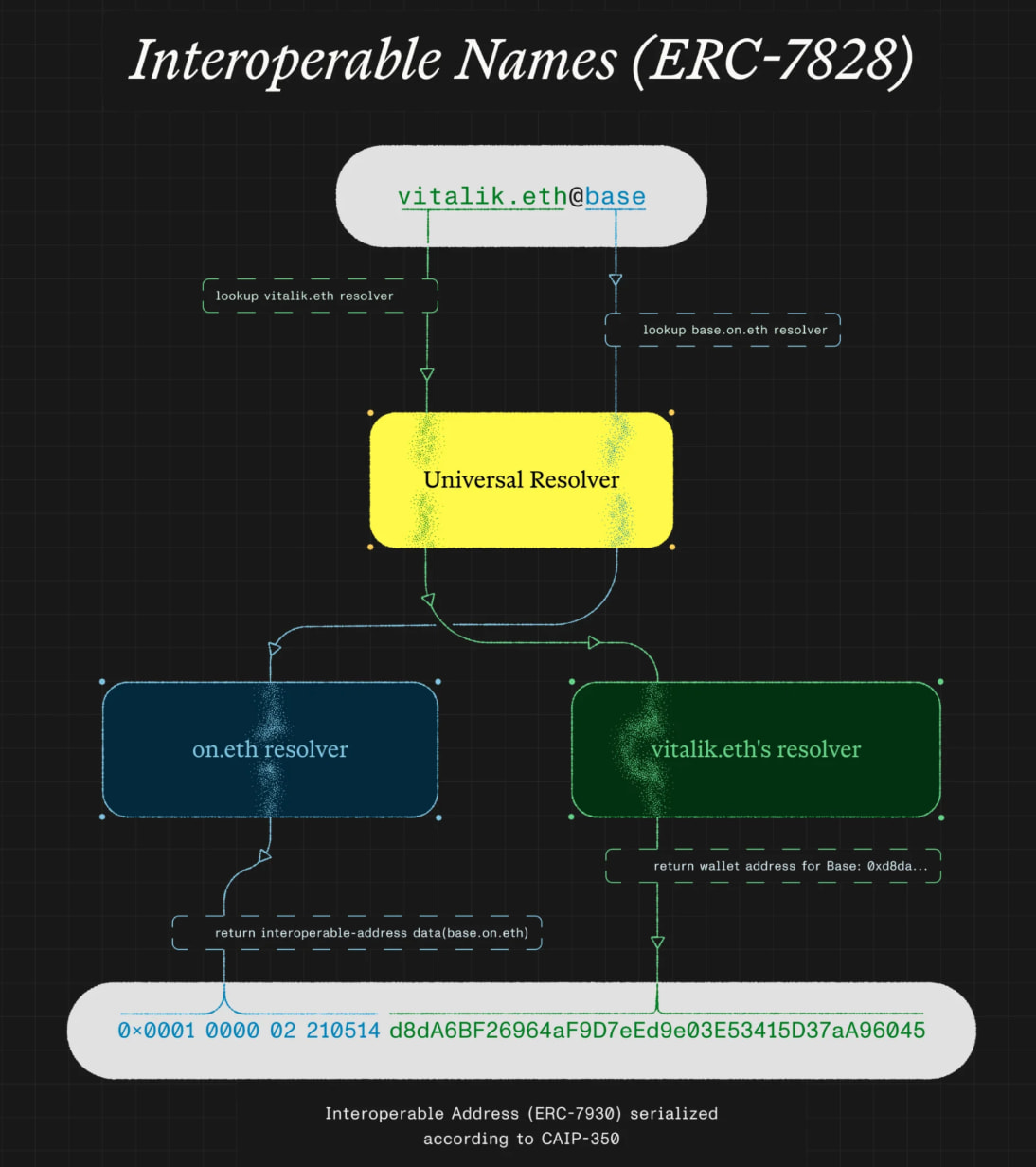
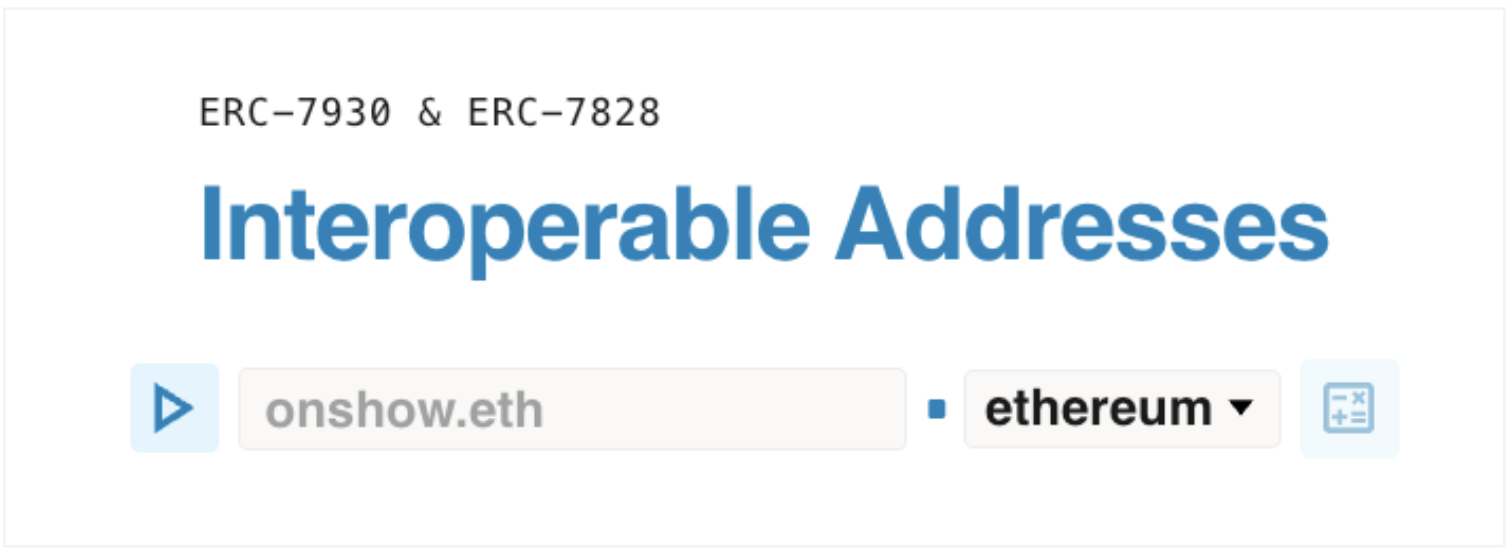
In partnership with Unruggable, Wonderland, and the Ethereum Foundation, we launched on.eth: Names For Chains and Interoperable Names. A DAO approved canonical chain registry enabling interoperable names (for example, vitalik.eth@base) via ERC-7828, replacing fragmented off-chain mappings with verifiable onchain resolution.
ENS x AI
In Q1, we kept pushing on ENS as the identity layer for AI agents. Our ERC-8004 companion blog laid out why ENS is the naming layer for AI agent commerce. We followed up by contributing to ENSIP-25, a minimal standard for verifiable bidirectional attestation between ENS names and onchain AI agent registries.
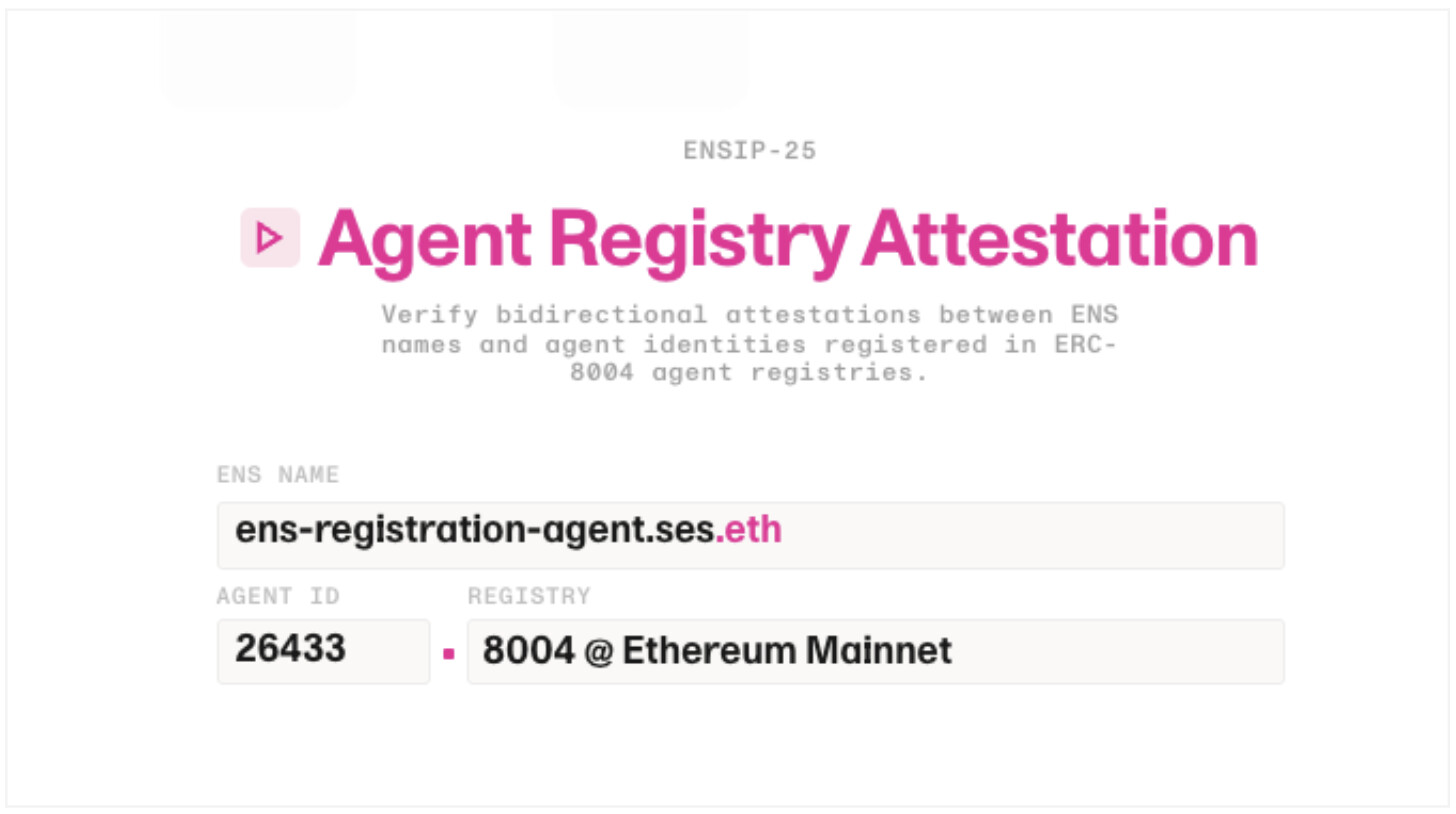
ENS is positioned as the naming and discovery layer for AI agents, an open and standard namespace the ecosystem can build on, ensuring onchain agents are consistently and verifiably identifiable as the space evolves.
Read more about how to use ENS to build with LLMs and AI assistants.
Integrations & Partnerships
We’re continuing to build integration partnerships, with a focus on FinTech companies bringing consumers onchain. A key learning from Q1: pitching ENS to institutions takes data-driven arguments. Framing ENS as a solution to address-poisoning scams (which targeted 1.3 million users in 2024 with confirmed losses of at least $79.3 million) lands with institutional buyers in a way that abstract decentralization arguments don’t.
Strategic meetings were held with leading payments and domain infrastructure companies to explore ENS integration across name resolution and subnames as a username system. Internally we rallied together to define the highest priority integration partners and ensure readiness to integrate into partner company’s tech stacks.
We also launched an authoritative ENS community dataset on Google Cloud BigQuery. Researchers and builders now have SQL-queryable access to ENS activity with daily updates.
.ens gTLD & DNS Engagement
ENS’ DNS policy and ICANN engagement efforts continued to accelerate forward in Q1. Ahead of ICANN’s 2026 gTLD round, we advanced preparations for .ens as the application window opens in Q2 2026. Extending off that work and deepening our presence in the DNS space, Alex Urbelis (GC & CISO) submitted Public Comments on the Name Collision Procedure Documentation for the 2026 New gTLD Round.
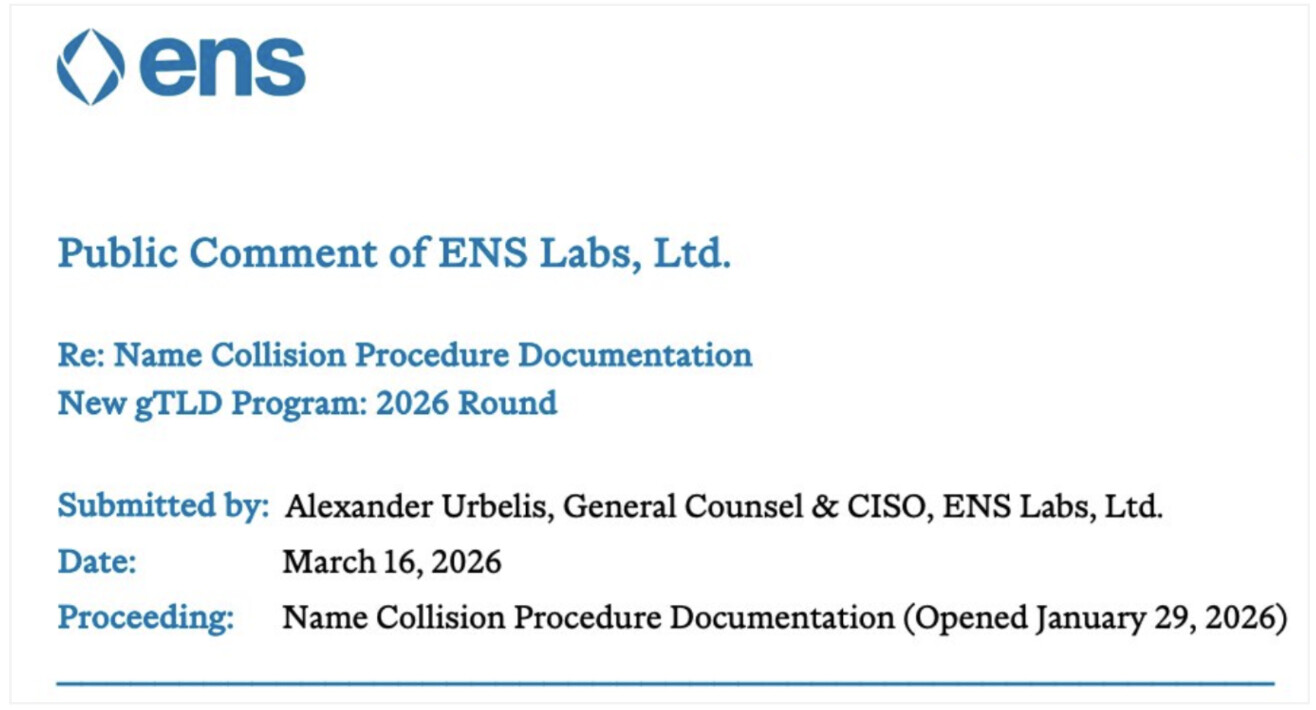
We showed up across key industry forums this quarter, presenting on public-private partnerships with the National Cyber Forensics Training Alliance, joining the Coalition to Change Crypto Freezes and Recovery where we contributed the UDRP model as a framework for industry collaboration, and participating in DNS focused discussions.
Looking ahead, we remain committed to stewarding ENS’ presence in the DNS space and will have more to share on .ens in Q2.
Growth & Ecosystem
Narrative & Content
Q1 was the most productive quarter ever for ENS Labs content output, with 10 blog posts published on ens.domains, a new record quarter.
We published a competitive positioning piece articulating why siloed namespaces don’t constitute infrastructure, and a strategic essay framing ENS as the coordination layer of the internet.
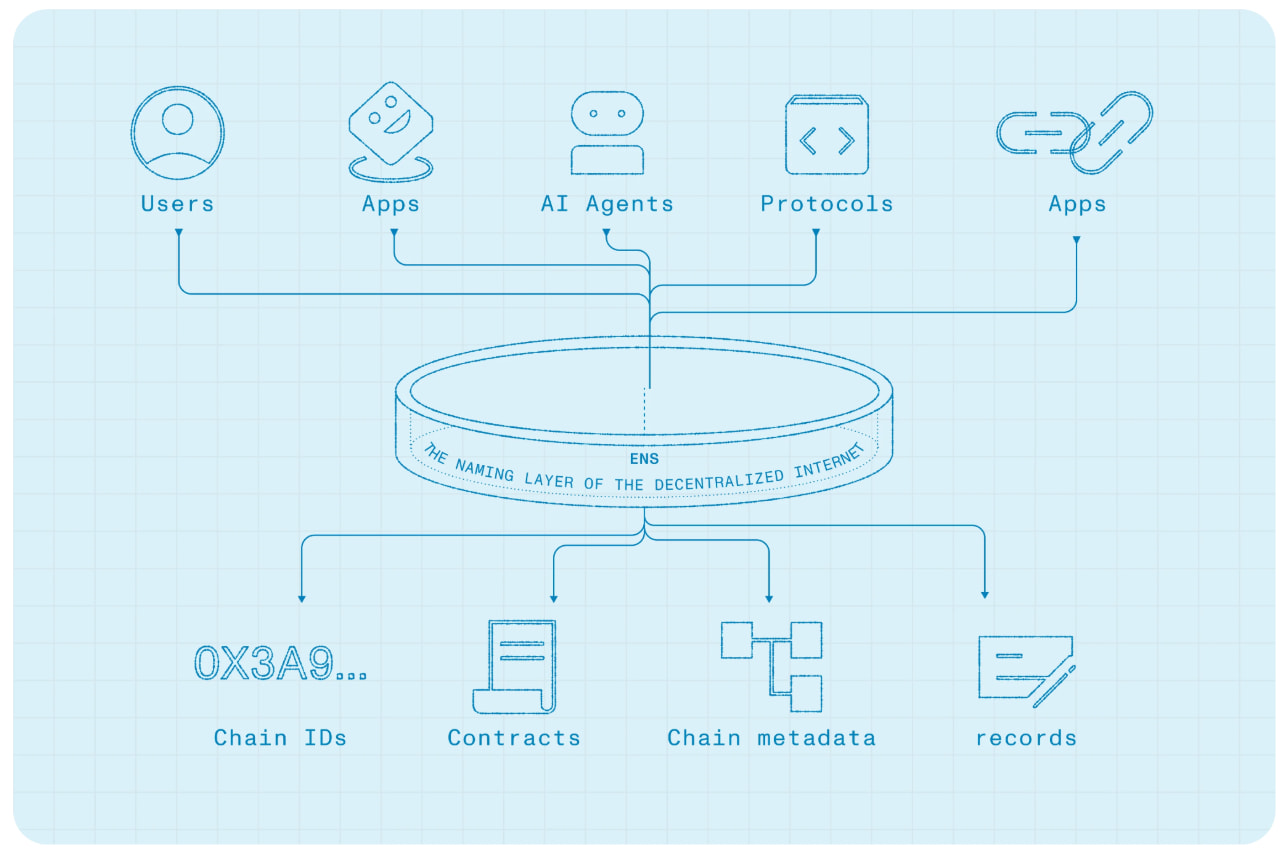
Additionally, came the newly launched The Reverse Record newsletter in Q1. A strategic publication designed to distill everything happening across the ENS ecosystem into something thoughtful, readable, and most importantly useful.
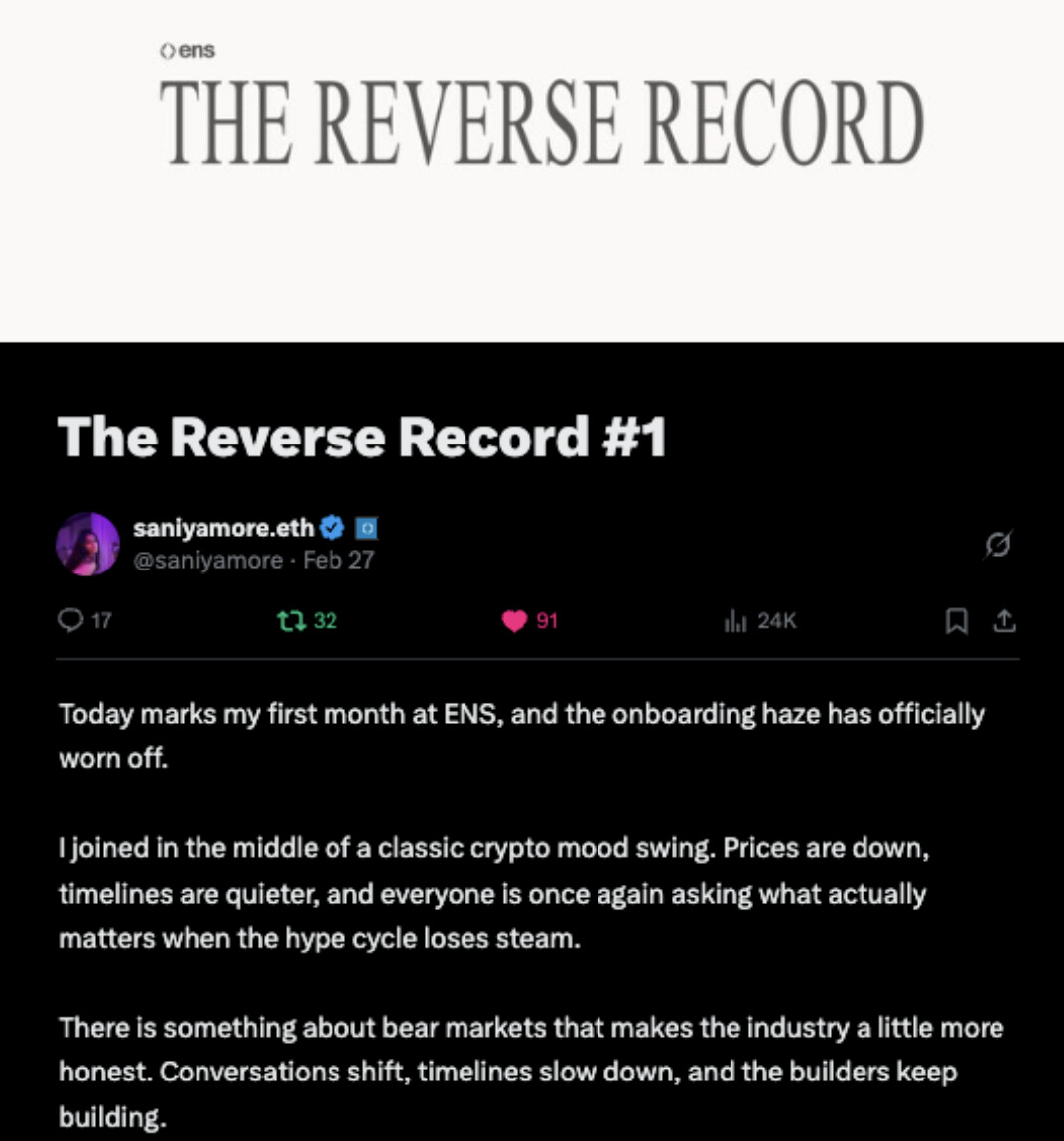
Across Q1, we continued to deliver against three strategic pillars: making ENSv2 tangible for users and developers, establishing ENS as the neutral identity layer for the emerging AI agent economy, and reinforcing our role as foundational internet infrastructure.
ENS Subname Ecosystem
Q1 brought continued momentum across the ENS subname ecosystem, especially with Basenames which grew to 2.7 million names. Key partners include:
- World App (world.id): 17.5M+ names
- Caldera (calderans.eth): 9.6M+ names
- Base (base.eth): 2.7M names
- Uniswap (uni.eth): 2M names
- Linea (linea.eth): 530K names
Social & Media
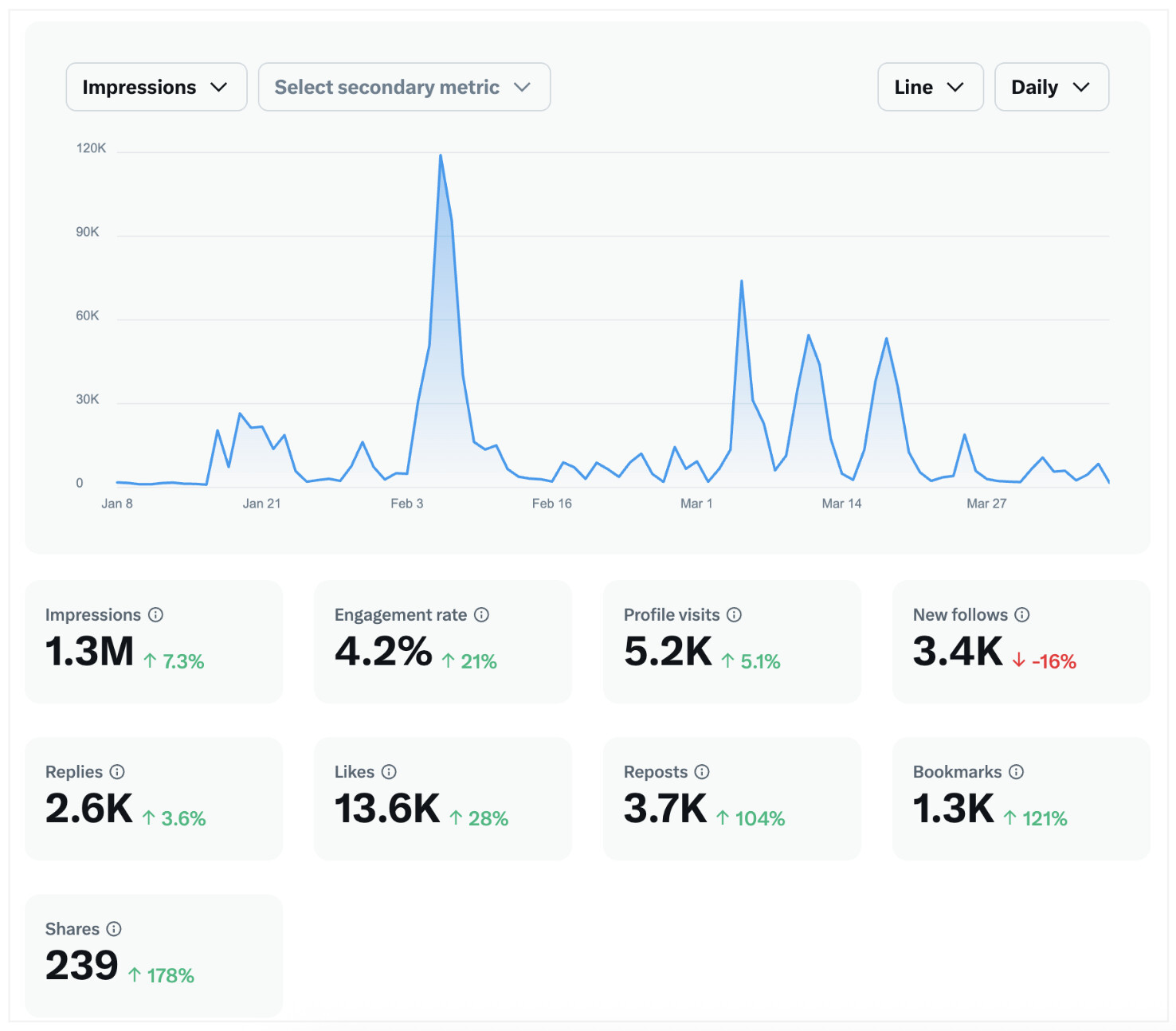
On X, ensdomains saw 1.3M impressions (up 7.3% QoQ), with our engagement rate up 21% to 4.2%, reposts up 104%, bookmarks up 121%, and shares up 178%.
Financial Reporting
Income
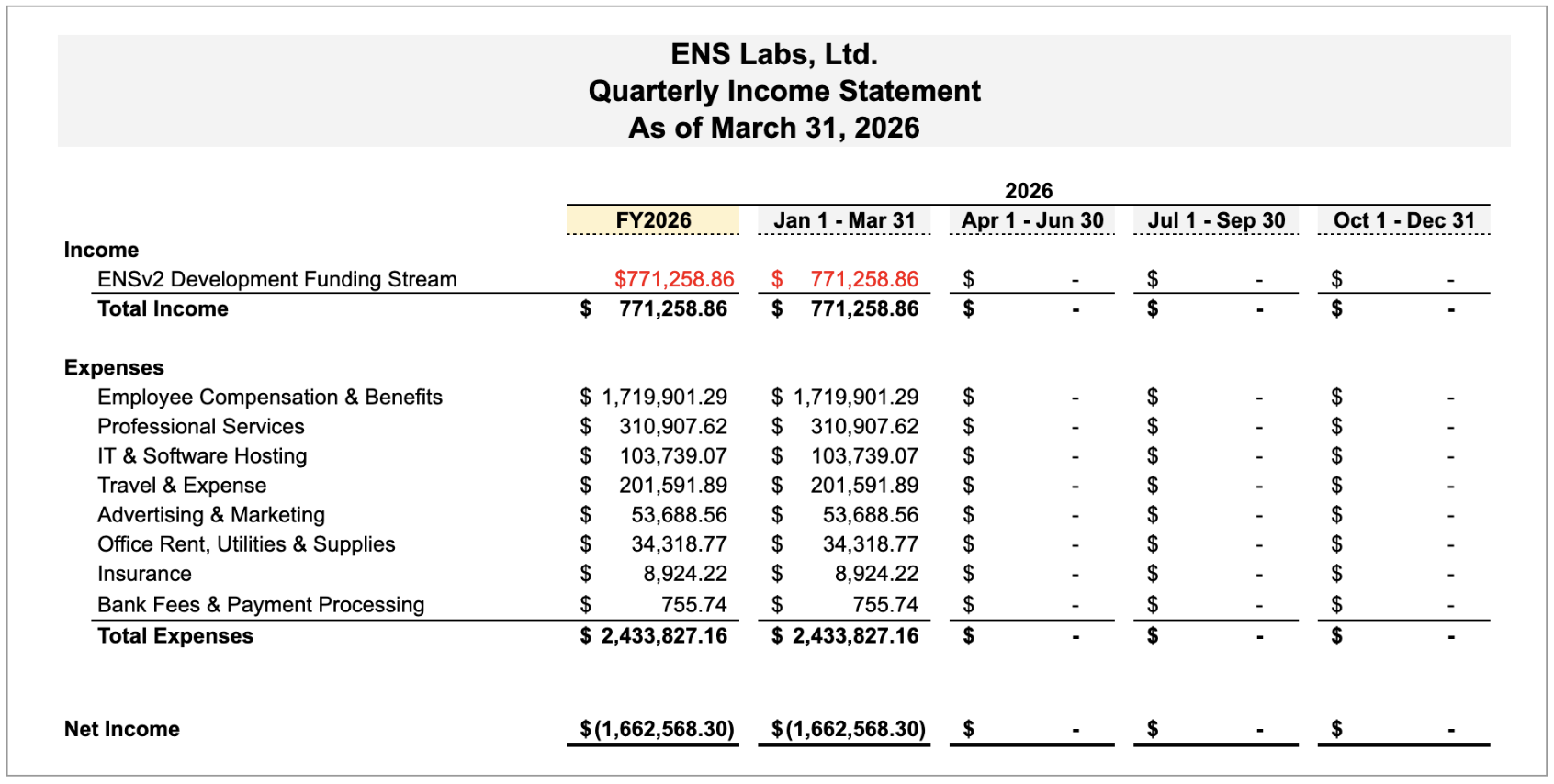
As of Q1 2026 close on March 31, 2026, we have received 771,258.86 USDC (32% of the Q1 stream) from the ENS DAO.
At the time of this report being posted, ENS Labs is still awaiting 2,391,164.00 USDC (68% of the Q1 stream) from the DAO for 2026 thus far that has been delayed due to an insufficient balance of USDC in the DAO wallet. We are hopeful that the new funds flow operation as outlined in [EP 6.39] [Executable] Treasury Flow Automation will minimize delays like this in the future.
Expenses
Q1 2026 expenses totaled $2,433,827.16 USD, resulting in a Net Income of $(1,662,568.30).
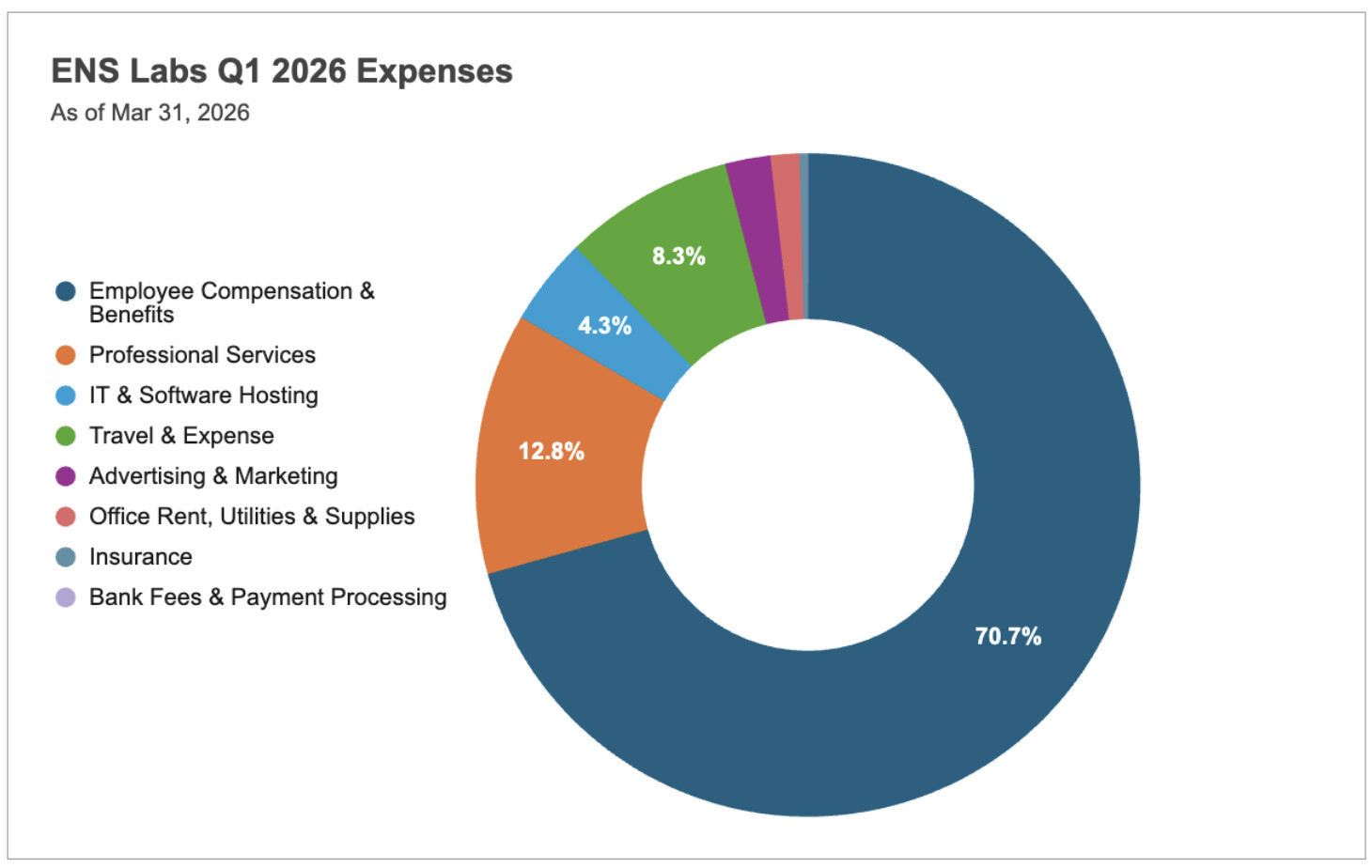
Top Q1 expense categories were:
- Employee Compensation & Benefits (70.7%) for payroll, benefits, and employer contributions for our team of 39 headcount.
- Professional Services (12.8%) included ENSv2 infrastructure and audit teams, as well as regular expenses to our operational external agencies and firms (e.g. Legal, Recruiting, PR).
- Travel & Expense (8.3%) inclusive of our company wide in-person offsite, plus conference and hackathon travel related expenses.
Incoming: ENSv2 Beta
As Q1 closes, every team at ENS Labs is aligned behind a single priority: launching ENSv2 to the world. With beta targeted for May and mainnet as a fast follow, the countdown is on.
Our Q2 priorities include:
- Ship the production ready ENS App and ENS Explorer as the core pillars of the v2 upgrade
- Deliver a clear, well supported migration and upgrade experience for existing .eth holders
- Finalize ENSv2 developer documentation, migration guides, and SDKs ahead of launch
- Execute co-marketing and partner activation campaigns to make launch day feel ecosystem wide
- Drive ENSv2 ecosystem readiness to 100% across wallets, libraries, and dApps
- Continue advancing the .ens gTLD application with ICANN, including attendance at key DNS aligned and ICANN events
- Deepen ENS x AI positioning as foundational identity infrastructure for agents
- Expand hackathon presence at ETHPrague and beyond
- Explore growth use cases including payments, verified credentials, AI agents, and real world registries
ENSv2 is the most significant upgrade in ENS’ history. What we built in Q1 (public alphas, ecosystem readiness tooling, architectural clarity, a team now fully resourced for delivery), puts us in the position to ship.
We appreciate the ENS DAO’s continued support and look forward to sharing ENSv2 launch milestones soon.