Executive Summary
2025 marked the second full calendar year of operations for the ENS Endowment and a meaningful step-change in operating maturity. Compared to 2024, the Endowment operated at a larger scale, generated more consistent revenue, and reduced operational risk through clearer diversification limits, refined permissions, and stronger policy guardrails.
Over the course of the year, Endowment revenues covered approximately 20% of ENS DAO operating expenses, reinforcing the Endowment’s role as a structural contributor to ENS’s long-term sustainability rather than a supplementary yield program. Treasury management for ENS has now moved beyond its initial experimental phase into a stable, governance-aligned system.
This review summarises the Endowment’s current state, performance over 2025, key strategic and risk management developments, and priorities looking ahead to 2026.
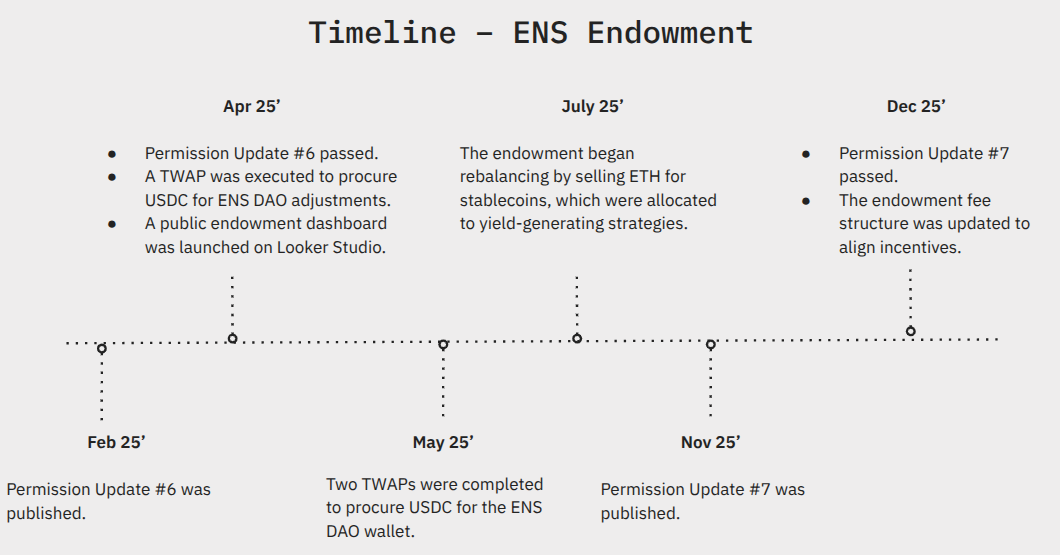
To begin the 2025 review, we present a summary tracing the timeline from the Endowment’s Request for Proposal (RFP) to the current state:
December 2025 Update
ENS Token Update
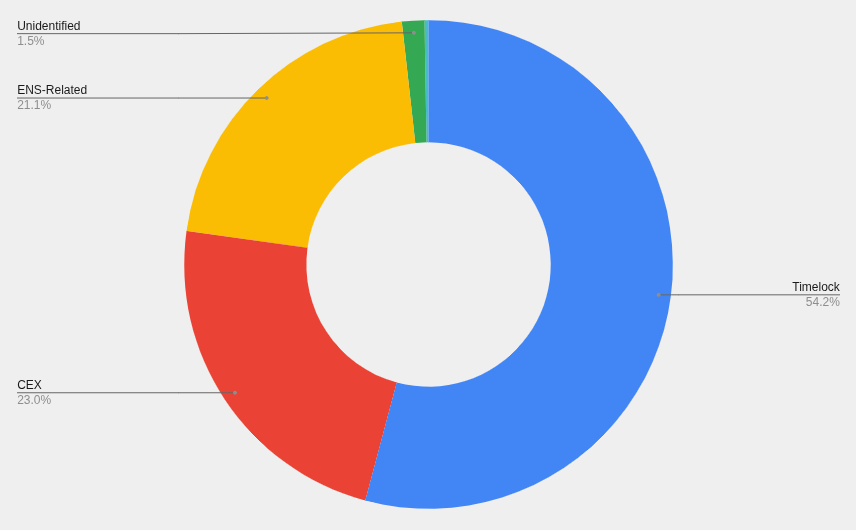
Token holder distribution among the top 50 ENS holders remained stable in December, with ownership concentrated primarily in centralised exchanges and ENS-affiliated wallets, including the DAO and ENS Labs.
The ENS token declined roughly ~17% over the month, strongly underperforming both BTC, which fell approximately ~3%, and ETH, which declined around ~2%.

Trading activity for ENS softened in December, with total monthly volume reaching 5.17M ENS (~$53.25M). On centralised exchanges, Binance’s ENS/USDT spot market recorded average daily volumes of 166.82K ENS/day, down from November’s activity (312.7K ENS/day).
December DAO Financial Update
Please refer to the December kpk monthly report for further details.
- Asset Allocation
- Assets under management (AUM) of $113,86M, with a capital utilisation ratio of 100%.
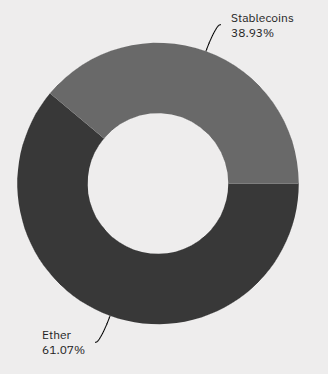
- Endowment Allocation split into ~61% ETH ($69,45M) and ~39% stablecoins ($44,40M), in line with the 60/40 mandate and minimum stablecoin runway requirements.
- Yield Generation (“DeFi Results”): $300,04k gross yield generated in December.
- Marked-to-market (“MTM”) valuation: decreased by $696,87k, driven by the decline in ETH price.
- Protocol Distribution
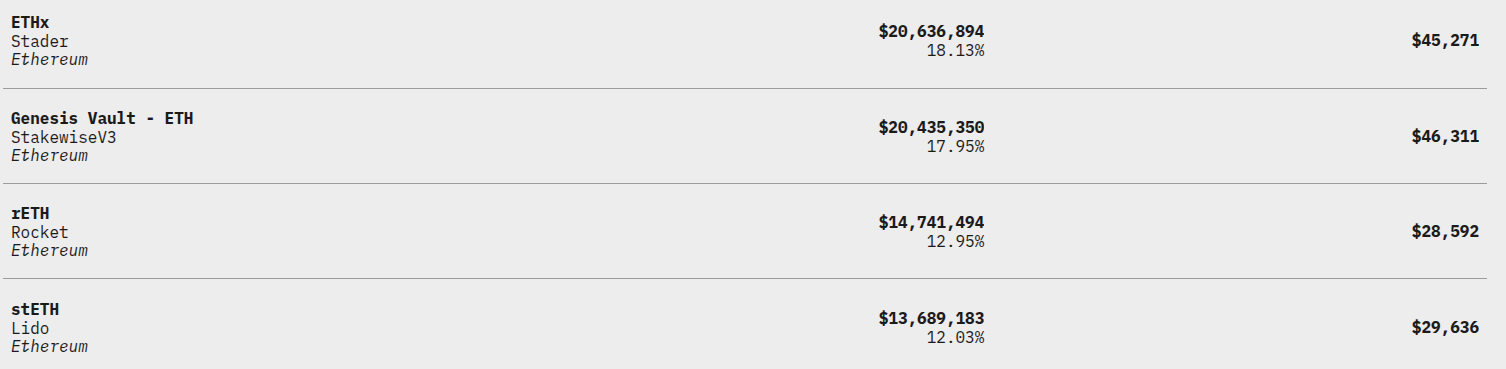
- The Endowment’s largest position (protocol exposure) consists of sUSDS (Sky Savings Rate), which accounts for 27.2% of the total funds. On the staked ETH side, staking in Stader (18.1%) and Stakwise v3 (18.0%), continues to be the largest ones.
- Across the Endowment’s various positions, no single protocol exceeds 30% of the Endowment’s total exposure.
2025 Endowment Lookback
Endowment Update
For 2025, the Endowment has achieved (net of fees):
- Yearly DeFi Results: 3.56M
- Yearly Average APY (gross): 3.45% (or 3.40% weighted)
- Yearly Average APY (net of fees): 3.39% (or 3.34% weighted)

Additionally, based on the latest monthly financial report compiled by @steakhouse, the following financial details were noted for 2025:
- Operational Revenues for the DAO amounted to $18.22M
- Operational Expenses for the DAO amounted to $17.54M, with a 20.3% of expense now covered by Endowment revenues
- DAO reserves concluded the year at $113.77M, indicative of an 6.5-year operational runway
Furthermore, as per the December 2025 report, the distribution of funds by asset-class can be seen in the following graph:
Subsequently, the protocol distribution of the Endowment’s funds is as follows:

The Endowment established a maximum limit of 20% for its Ether (ETH) holdings to be allocated to Lido’s staked Ether (stETH). Below is a breakdown of the current ETH allocations.
Strategy & Implementation
Since the beginning of 2025, kpk has submitted several proposals to the ENS DAO, reflecting a consistent approach to professional treasury management. This approach prioritises capital preservation through disciplined risk management, alongside diversified allocations designed to deliver competitive risk-adjusted APY.
Compared to 2024, proposals submitted in 2025 focused less on establishing baseline permissions and more on incremental refinement such as tightening diversification, conservatively expanding execution, and removing permissions no longer required as the Endowment matured.
The proposals submitted are as follows:
- [EP6.2] Endowment expansion, aiming at expanding the Endowment by funding a third tranche, comprising 5,000 ETH, from the ENS DAO to the ENS Endowment.
- [EP 6.23] PuR #6 introducing updated permissions for the Endowment, with a continued focus on diversification and alignment with the evolving market landscape and liquidity.
- [EP 6.27] PuR #7 introduces a routine update to the permissions for the Endowment Manager. These updates continue to evolve diversification to lending markets. This update also removes a permission no longer needed.
- [EP 6.8] PuR #5 aiming at introducing new permissions for deploying Endowment funds, with a continued focus on diversification and alignment with the evolving market landscape and liquidity.
- [RFC] Target Allocations for Endowment
Key Events
On 4 November, our monitoring systems identified abnormal activity on Compound, including the pause and unpause of stablecoin markets. To limit further exposure and mitigate potential contagion risk linked to the deUSD depeg, $5.1M USDC was withdrawn from the protocol and reallocated to lower-risk venues.
As a result, kpk reduced the Endowment’s exposure to Compound to zero during the period of market disruption.
Risk Management
To support the strategic and operational initiatives outlined above, kpk maintains a layered, onchain-native risk management framework on behalf of the ENS DAO. This framework is designed to address DeFi-specific risks, including composability, fast-moving threat vectors, and continuous onchain execution.
As the Endowment scaled in 2025, risk management increasingly emphasized real-time monitoring, clearer response processes, and faster execution when risk conditions shifted.
kpk is an early adopter and power user of onchain security monitoring infrastructure, including strategic partners such as Hypernative and Cyvers. These systems analyse transaction data at the block level across monitored chains, applying machine learning to detect malicious or anomalous patterns and surface alerts directly to kpk’s execution and monitoring stack.
The risk framework is structured around three core components:
- Exposure modelling: Custom monitoring tools, agents, and live dashboards track protocol, smart contract, liquidity, collateral, counterparty, and oracle-related risks across all active positions. All protocols and deployed contracts are monitored in real time.
- Policy guardrails: Protocol-specific limits, thresholds, and permissions define the allowed operational envelope for each position. Alerts are configured at the position level, aligned with the Permissions Policy, to trigger early warnings or automated responses when conditions deviate from predefined parameters.
- Crisis response: Predefined emergency playbooks are maintained and regularly reviewed, enabling rapid reduction or suspension of exposure when required. These procedures are supported by a multi-timezone team and complemented by recurring internal risk reviews and structured external reviews with monitoring partners.
In parallel, kpk conducts continuous research into new protocols prior to deployment, with risk assumptions translated into monitoring rules and alerting logic before capital is allocated.
Community, Reporting & Accountability
Across our recent and ongoing work, we have remained committed to active participation in the ENS community and to maintaining high standards of reporting and accountability. The following highlights summarise this work across 2025:
- Since its inception, the Endowment has become a meaningful additional revenue stream for ENS DAO, contributing directly to the protocol’s long-term financial stability. In 2025, the endowment generated ~20% of ENS’s total revenue after fees, making it the DAO’s third-largest revenue source. This positions the endowment as a materially important contributor to ENS’s long-term sustainability.
- Throughout 2025, kpk has provided regular endowment updates during the weekly MetaGov Working Group calls. In response to delegate and community feedback, these updates were expanded to include benchmark comparisons and more granular breakdowns of DeFi-generated yield by strategy, improving transparency and decision-making context.
- Over the past year, we worked closely with the Meta-Governance Working Group to review and optimise the endowment’s fee structure. We are pleased to have reached an outcome that reflects delegate priorities and provides clearer long-term cost visibility for the DAO. We view this change as a constructive evolution of the endowment and a practical example of transparent, iterative governance.
Future Roadmap
Looking ahead to 2026, kpk has identified several priority areas across the ENS DAO where it aims to expand or refine its efforts to support the DAO’s financial resilience and long-term objectives. These include:
- Continued monitoring of ENS’ financial position, alongside active oversight of the $ENS token and potential governance attack vectors affecting the Endowment, with recommendations for open-market mitigation measures where appropriate.
- Continued assessment and expansion of the Endowment’s exposure to liquid staking tokens (LSTs), supporting validator diversity and integrating protocols and strategies aligned with the Endowment’s risk profile and long-term mandate.
- Introduction and evaluation of additional DeFi protocols, building on recent integrations such as Fluid and Morpho, to further diversify execution venues and improve capital efficiency within defined risk parameters.
- Ongoing vigilance on market conditions and selective exploration of new investment opportunities (private deals, etc) for the Endowment.
- Development of a new public reporting dashboard to improve transparency and enable more granular tracking of treasury balances, performance, and allocation changes over time.
- A review and revision of the Investment Policy Statement (IPS) to ensure continued alignment with the Endowment’s evolving needs and to better serve the DAO over time.
The transition to an AUM-only fee model aligns with ENS’s conservative Investment Policy Statement, reduces structural complexity for the DAO, and preserves the level of active risk management required to continue outperforming passive benchmarks on a net basis.
As this annual review concludes, we reiterate our appreciation for the trust ENS DAO has placed in kpk. We aim to continue setting a high standard for DAO service provision and value the collaborative approach demonstrated by the Meta-Governance Working Group throughout this process.
Thank you for reading.