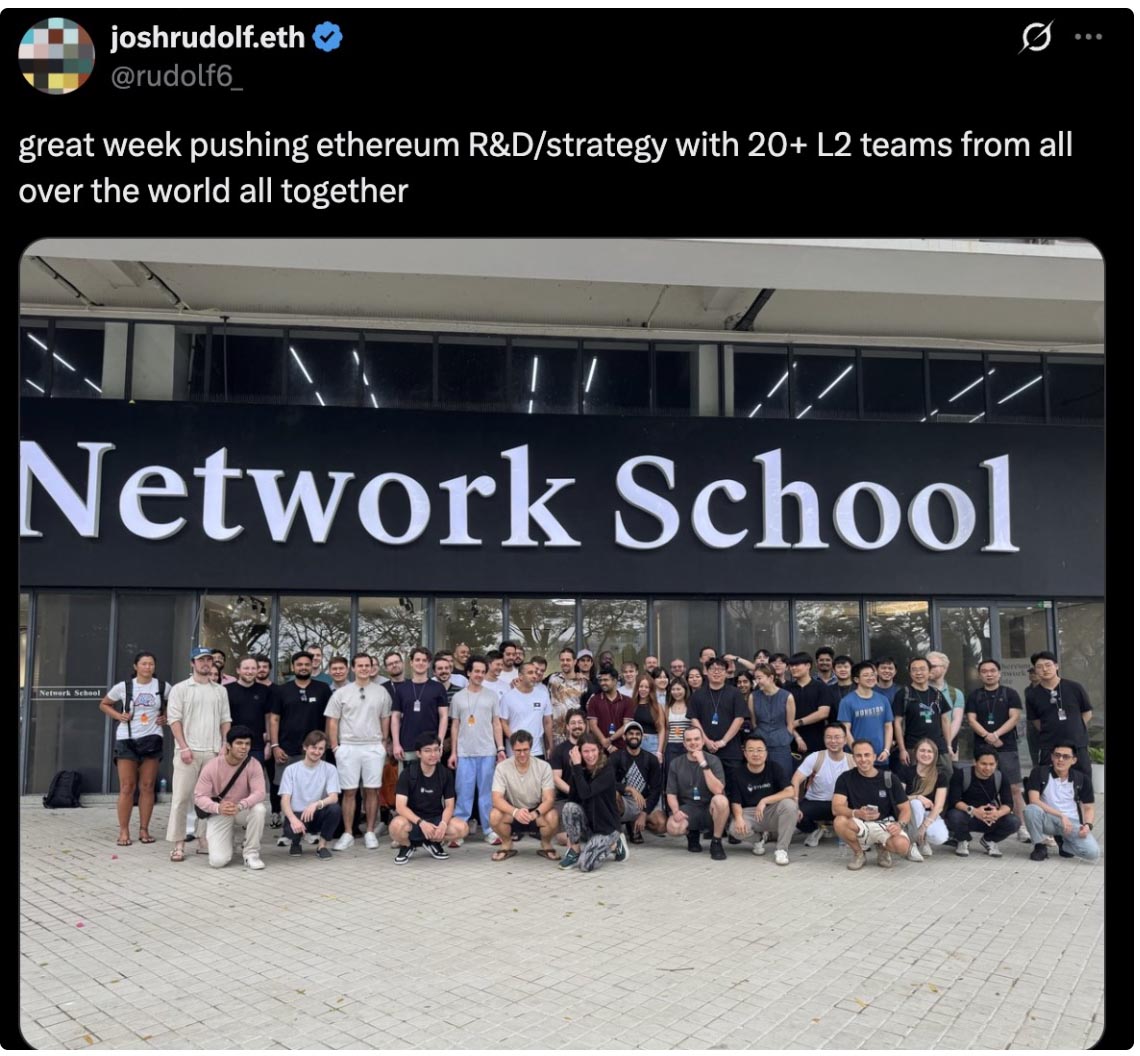
20+ L2 teams together at the Network School, pushing Ethereum R&D this quarter.
On the AI side, the foundational standards we have been building moved into production: ERC-8004 went live on Ethereum mainnet with ENS as a first-class identity layer; we shipped ERC-8217 Agent NFT Identity Bindings with the Adapter8004 singleton contracts deployed across Ethereum, Base, and Sepolia (now with OpenSea support); and ERC-8121 trust-and-reputation hooks reached production through our partnership with Eth.limo. ENS Labs also published an article on agent identity that cites our ERC-8122 Minimal Agent Registry.
On the interoperability side, we took the on.eth chain registry from a deployed system to a public, DAO-approved launch, announced on the ENS blog and paired with ERC-7828 interoperable names such as vitalik.eth@base.



ERC-8004: Trustless Agents, the agent identity, reputation, and validation standard led by the Ethereum Foundation with MetaMask, Coinbase, and Google, went live on Ethereum mainnet in late January 2026. Our contributions (the on-chain metadata section and the ENS integration) mean ENS names are treated as first-class agent identifiers within the standard.
This was reinforced by ENS Labs, who published The Identity Problem in Agentic Commerce on January 22, 2026, positioning ENS as the neutral naming and discovery layer for agents and explicitly citing our work.
eips.ethereum.org/EIPS/eip-8004 →

We drafted ERC-8217: Agent NFT Identity Bindings (ERCs PR #1648) and shipped the implementation: the Adapter8004 singleton contracts, deployed and live on:
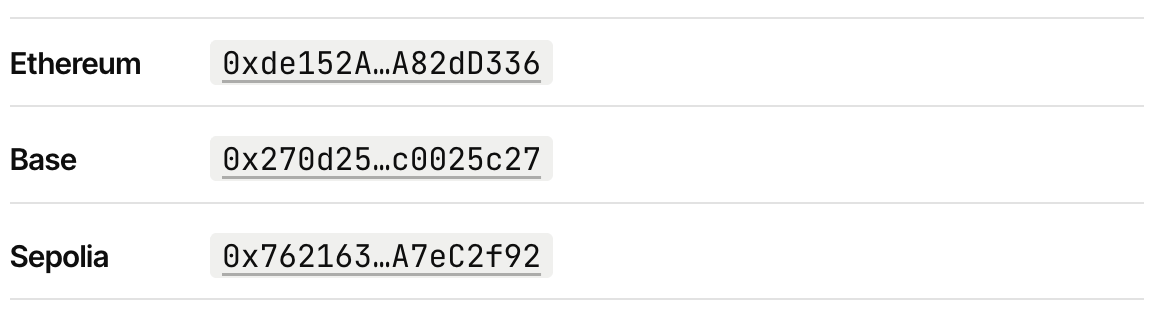
ERC-8217 lets an NFT, including an ENS name, “control” an ERC-8004 agent record. When the NFT is transferred, control of the agent moves with it, making the NFT the root of control for the onchain agent. OpenSea recently rolled out support for the standard across Ethereum and Base. Docs, FAQ, and source are at adapter8004.xyz and github.com/nxt3d/adapter.
eips.ethereum.org/EIPS/eip-8217 →

ERC-8121: Agent Trust and Reputation provides the “web” in web-of-trust for AI agents and agent context data. In Q1 it moved into production through our partnership with eth.limo. Their eth.limo Q1 2026 update reports a v1 release of ens-hooks and production support for DataURI/DataURL via ERC-8121 hooks, enabling fully on-chain dwebsites served through the eth.limo / eth.link gateways.
eips.ethereum.org/EIPS/eip-8121 →

We proposed ERC-8122: Minimal Agent Registry, a lightweight, deployable onchain registry for discovering AI agents, useful where the one-registry-per-chain model of ERC-8004 doesn’t fit, such as curated collections, specialized domains, or fixed-supply registries. ENS Labs cited it directly in their January agent-identity article.
ethereum-magicians.org/t/erc-8122-minimal-agent-registry/27405 →

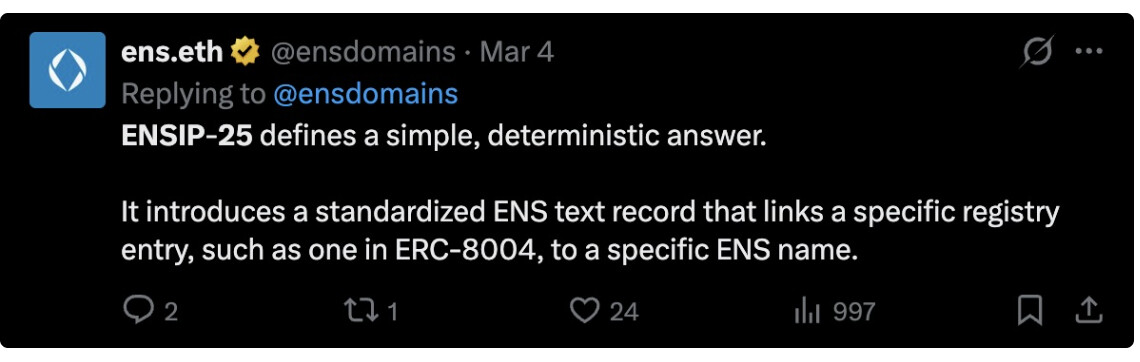
ENSIP-25 shipped, defining a simple, deterministic answer to linking agent registries with ENS. It introduces a standardized ENS text record that links a specific registry entry, such as one in ERC-8004, to a specific ENS name, closing the loop between onchain agent records and ENS identity.

Working with Eth.limo, we advanced DataURL support for ENS names, allowing fully onchain context data and package manifests. This underpins a new draft, the ENS Package Manifest (ensips PR #80), a JSON package-manifest format that lets an ENS name point, via its contenthash, to a versioned, signed package (npm/yarn/bun-style metadata, distributed over IPFS or other ENS-compatible storage). This is the data layer for resolving secure AI context data.
discuss.ens.domains/t/add-ensip-ens-package-manifest/22158 →

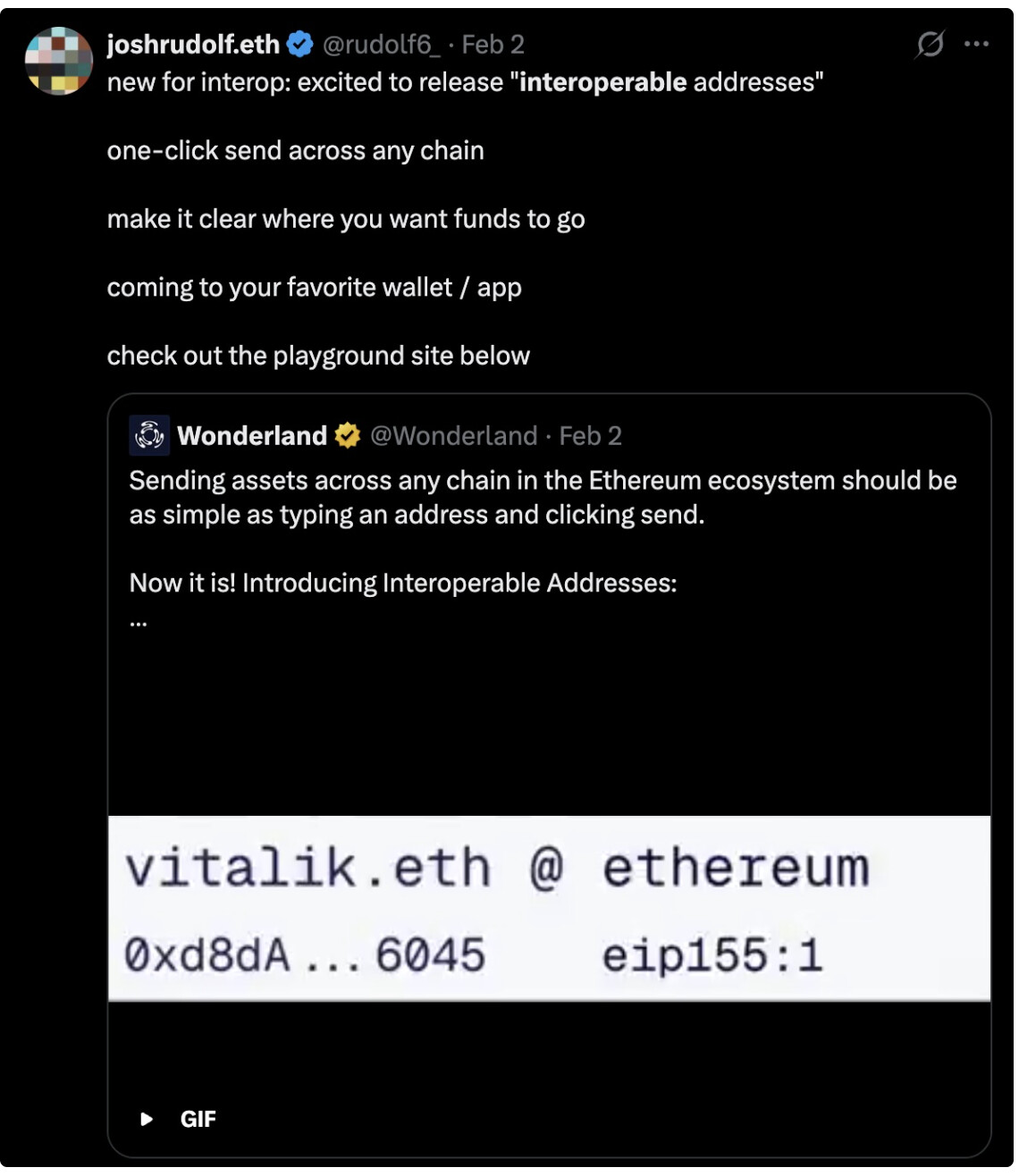

The headline of the quarter. on.eth went public on March 11, 2026 with a dedicated ENS blog post, introducing a canonical, ENS-native registry for chain identities.
A formal proposal prepared by Unruggable was submitted to the ENS DAO and approved through a DAO vote (proposal). Under the adopted model, the ENS DAO remains the owner of the on.eth name, with operational management delegated to a multisig and, ultimately, to individual chain operators for chain specific info.
Each chain receives a subdomain, optimism.on.eth, zksync.on.eth, ethereum.on.eth, and others, resolving verifiable metadata (ERC-7930 Interoperable Address, CAIP-2 identifier, website, social handles) through the on.eth Chain Resolver, which we built as the reference deployment. Resolution uses standard ENS flows starting from the Universal Resolver on mainnet, with chain metadata stored as ENSIP-5 text records and ENSIP-24 binary data records.
ens.domains/blog/post/on-eth-chain-registry →

Prem presented on ERC-7930 (Interoperable Addresses) and ERC-7828 (Interoperable Names) at the Ethereum Foundation’s L2 Feb2 event, sharing the on.eth interoperable-naming approach with the L2 and interoperability community.
efdn.notion.site/L2-Feb2-Event-2c6d9895554180ed9c20e127ddb4bc57 →
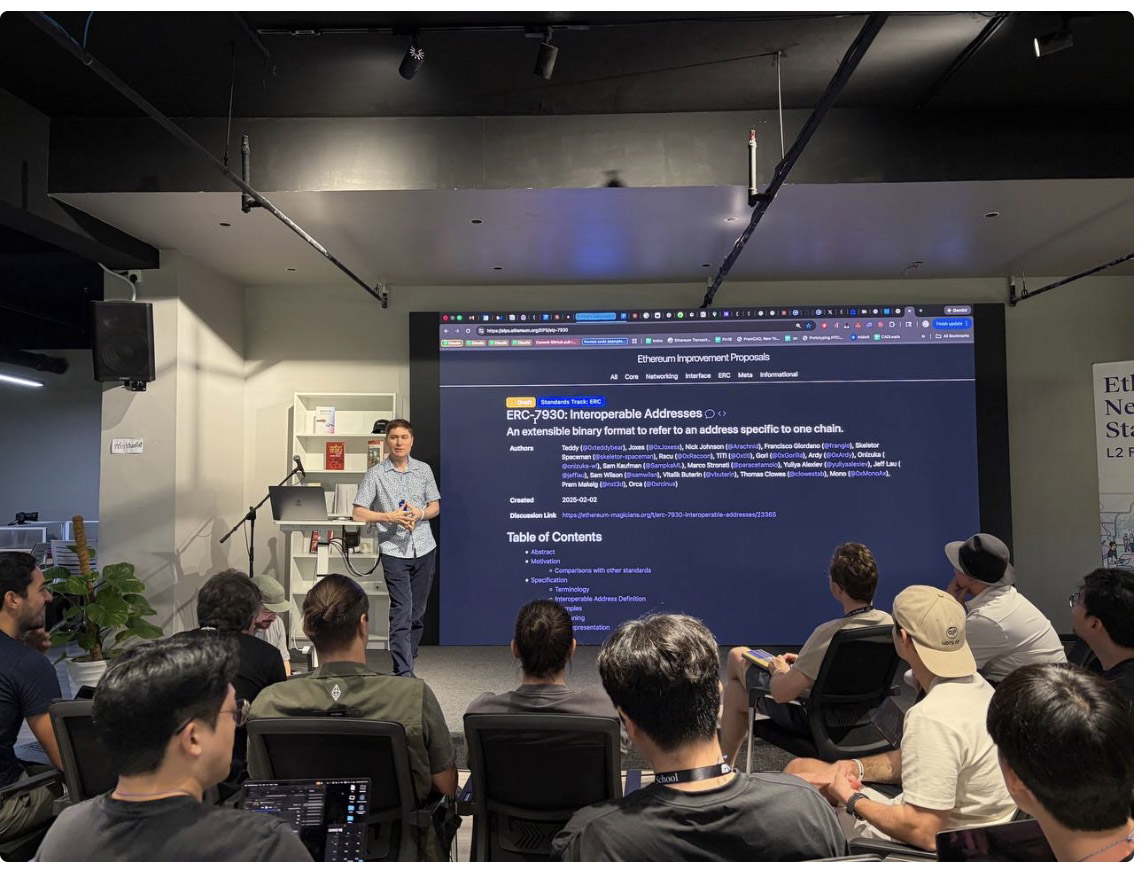
Presenting ERC-7930 & ERC-7828 — L2 Feb2, Network School.

Prem continued to co-host the ENS×AI working group he founded with cap.eth of Namespace. Weekly public calls with 10+ teams building on ENS for agent identity.

ENSIP-25 (AI Agent Registry Verification) shipped this quarter, while ENSIP-26 (Agent Text Records) remained in active discussion within the group, alongside updates from the ERC-8004 team.

None of this work happens without the ENS DAO and the delegates who continue to back it. We’re grateful for the trust, the funding, and the steady stream of feedback that keeps us pointed at the right problems. And to partners and collaborators including the Ethereum Foundation, Wonderland, ENS Labs, Namespace, and eth.limo, thank you for moving Ethereum and ENS forward with us!
— Unruggable (premm.eth, clowes.eth)
Prior reports
-
Q1 2026 Report — this document