ENS Protocol – LTM Financial & Governance Tracker

This thread tracks ENS protocol fundamentals using five indicators. The financial indicators use Last Twelve Months (LTM) data to smooth short-term volatility. The objective is to monitor:

  • Operating performance
  • Fiscal discipline
  • Valuation relative to revenue
  • Treasury sustainability
  • Governance decentralization

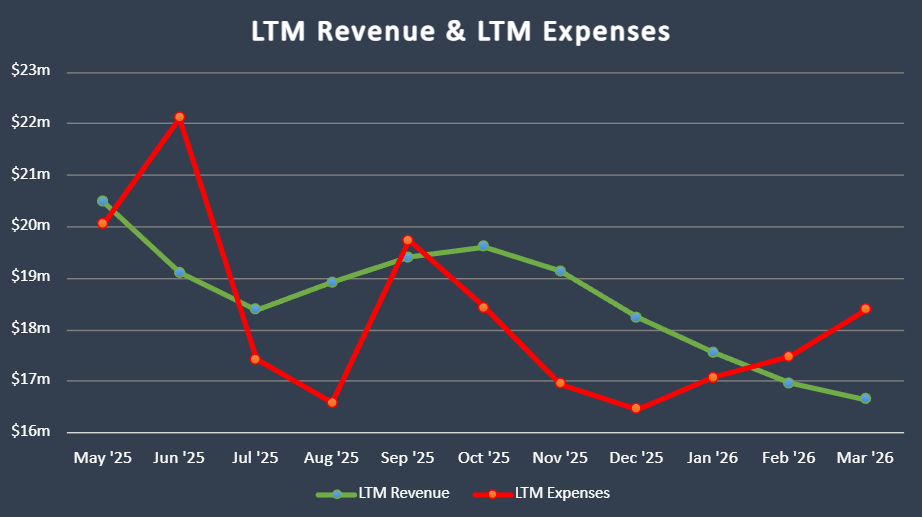
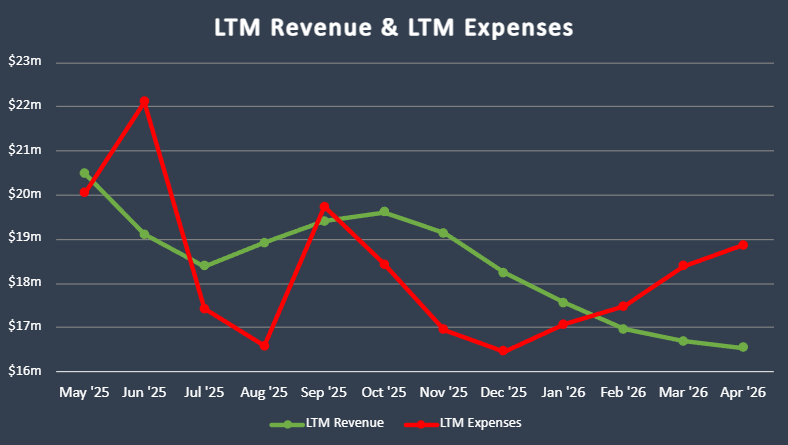
:one: LTM Revenue vs LTM Expenses ($)

Tracks the operating engine of the protocol. FX, currency effects, and investment P&L are excluded to focus on operating dynamics.

Revenue = registrations + renewals
Expenses = operating costs (excluding FX, currency effects, and investment P&L)
LTM = sum of trailing 12 months

This chart shows structural revenue trends versus cost structure.


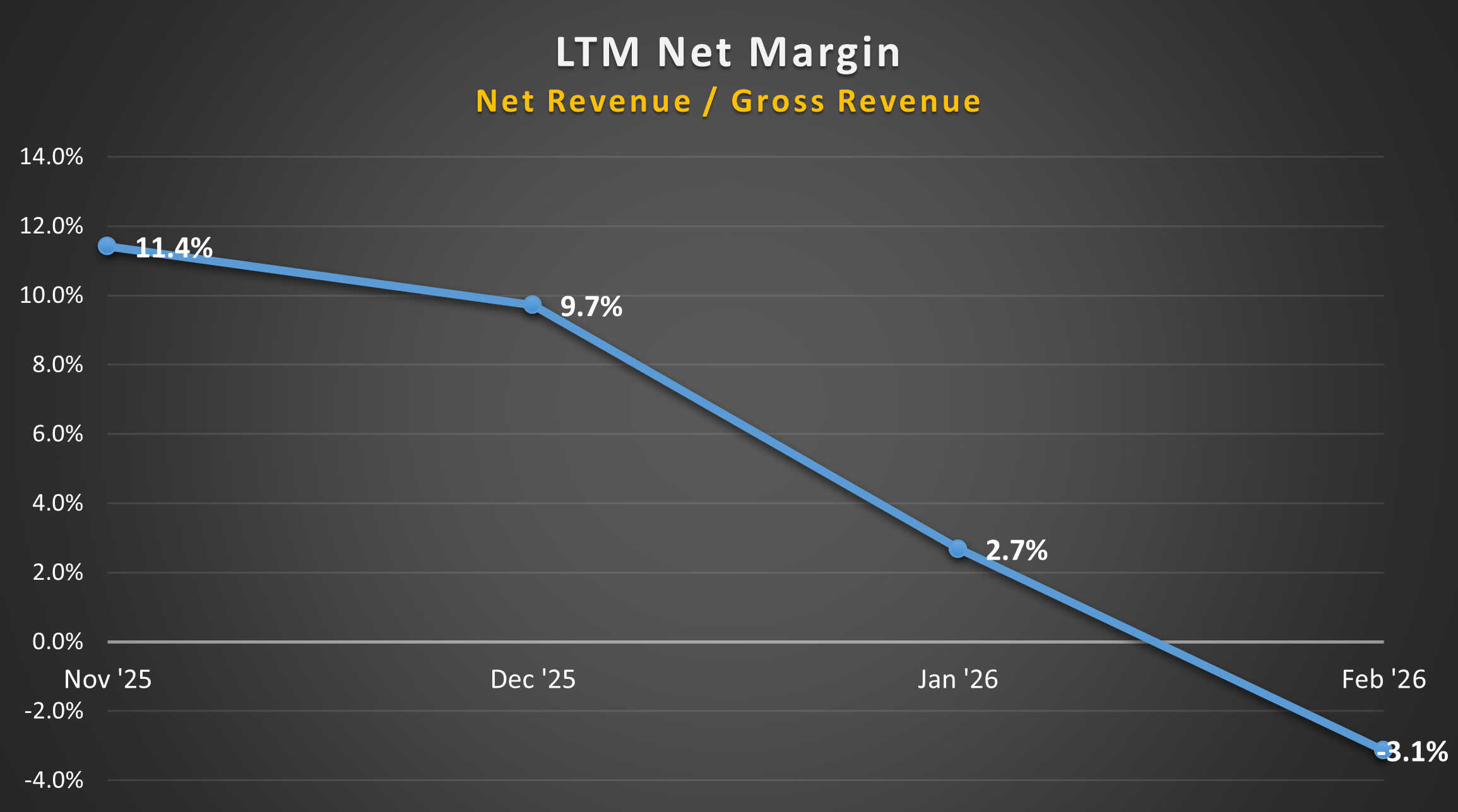
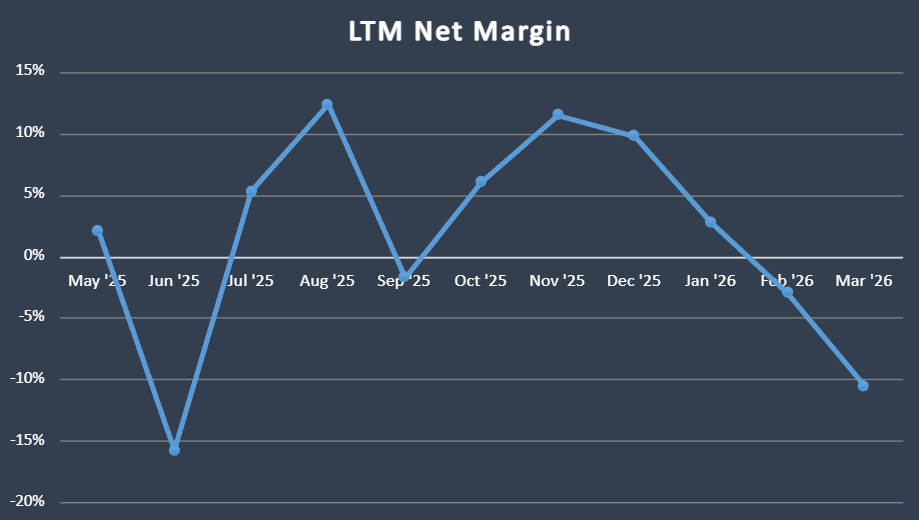
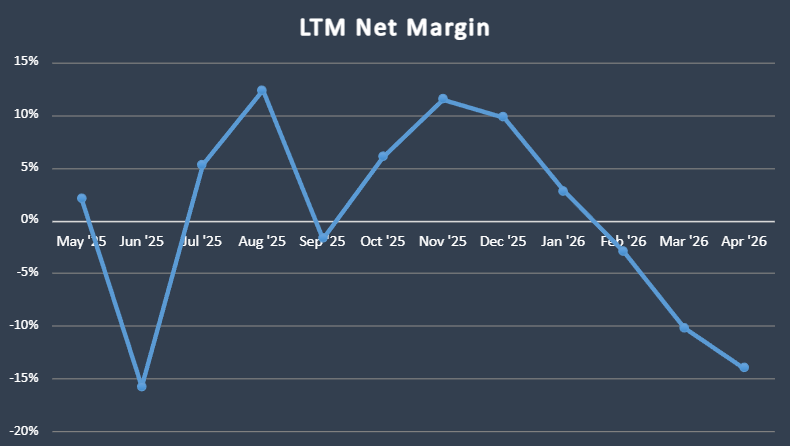
:two: LTM Net Margin (%)

Defined as: LTM Net Revenue / LTM Revenue
LTM Net Revenue = LTM Revenue - LTM Expenses

This captures fiscal discipline and operating efficiency over time.


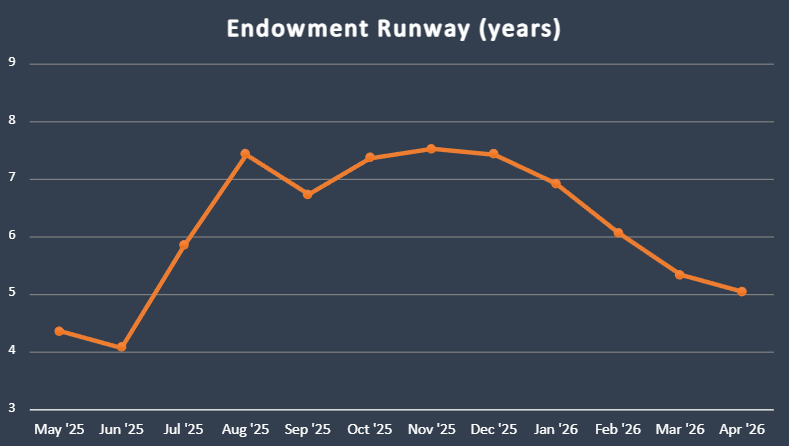
:three: ENS Endowment Runway (years)

Tracks treasury sustainability relative to the current expense base.

Defined as : ENS Endowment (100D EMA basis) / LTM Expenses

ETH-denominated Endowment components are adjusted using ETH 100-day EMA prices, while stable and other non-ETH components are included at face value.

This chart shows how many years of current LTM operating expenses are covered by the Endowment. It should be interpreted as a treasury sustainability indicator, not a precise liquidation runway.


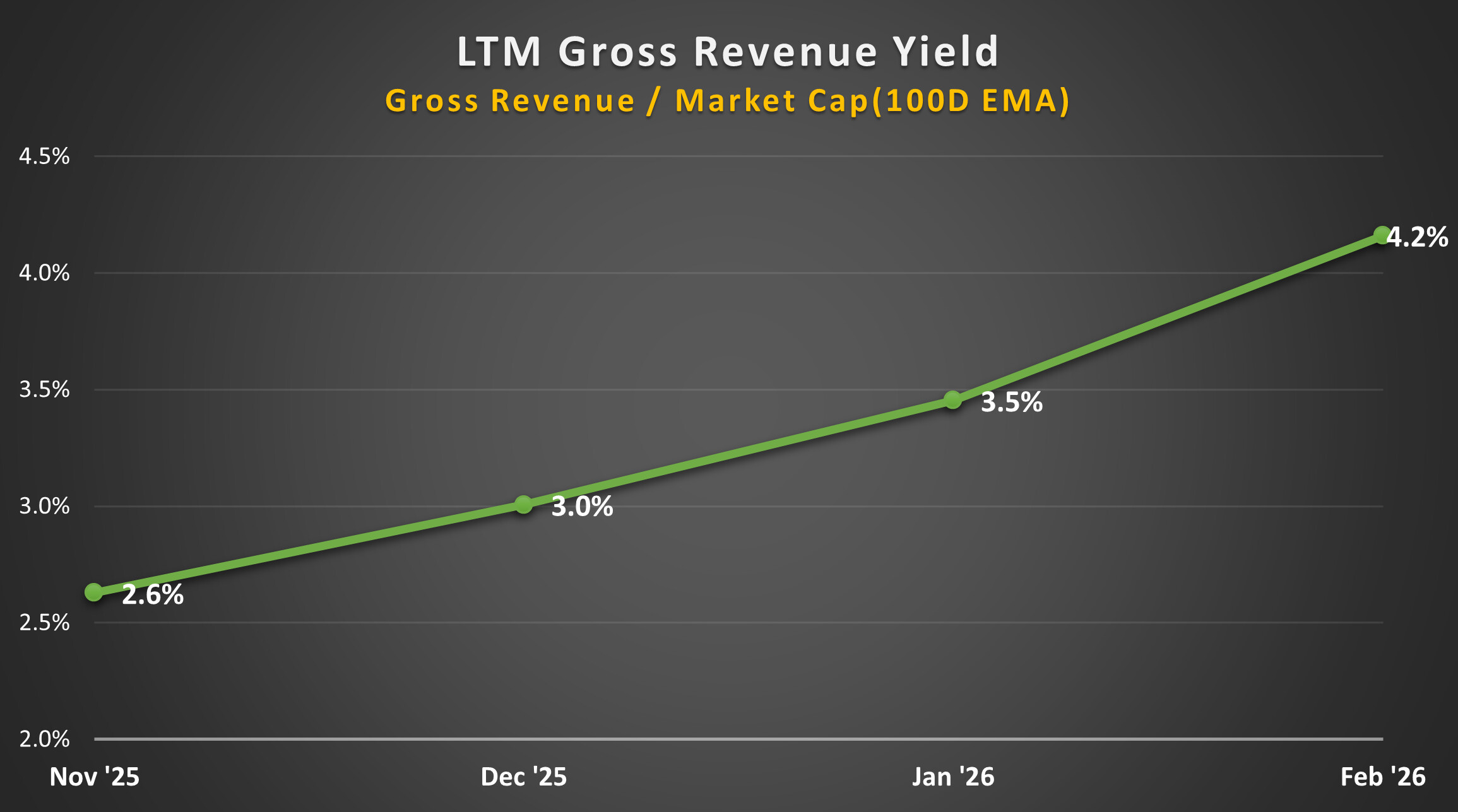
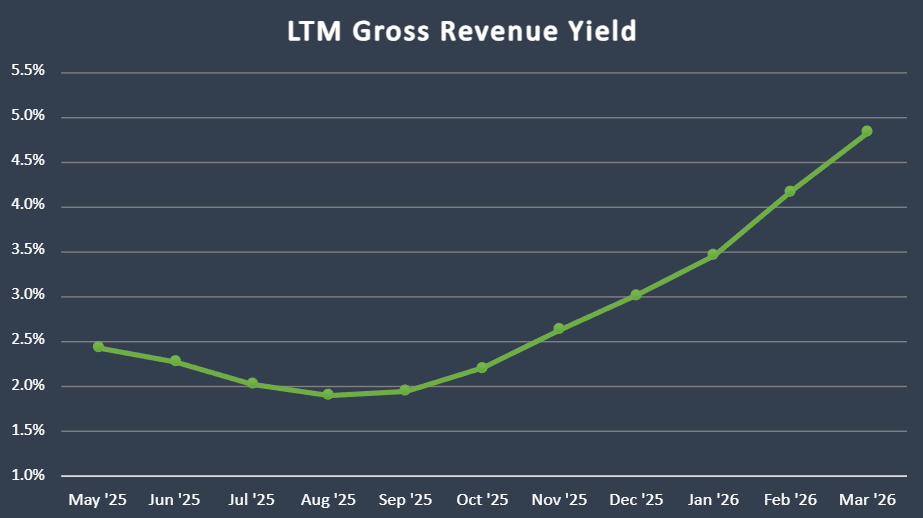
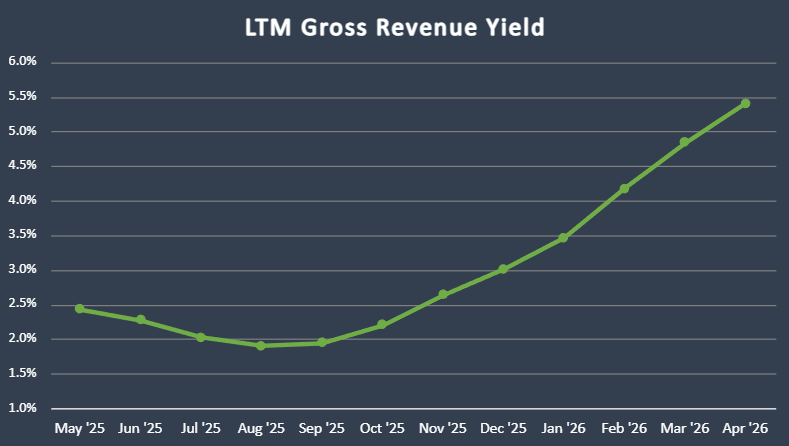
:four: LTM Gross Revenue Yield (%)

Defined as: LTM Revenue / ENS Market Cap (100-day EMA basis)
ENS market cap is calculated using ENS 100-day EMA price.

This functions as a structural valuation anchor for the token relative to protocol revenue generation.


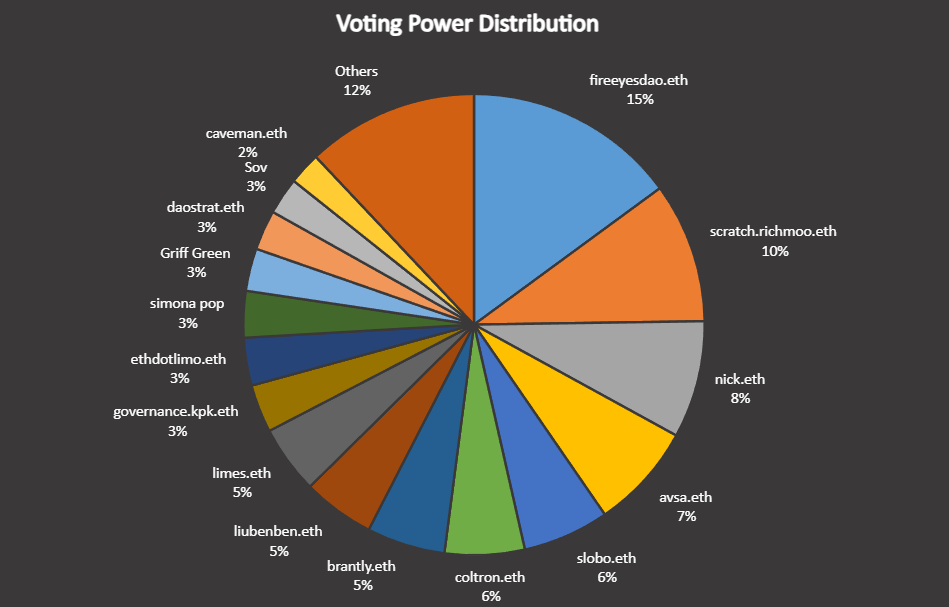
:five: Voting Power Distribution

Tracks governance decentralization.

Voting Power Distribution is based on the ENS proposal with the highest participation over the trailing three months.


Methodology Notes

LTM = Last Twelve Months.

Revenue, Expenses, and Endowment data are sourced from dune.com/steakhouse/ens-steakhouse.

Token supply includes all supply except DAO controlled portion. ENS tokens held by ENS Labs are also included, as they are not under DAO control.

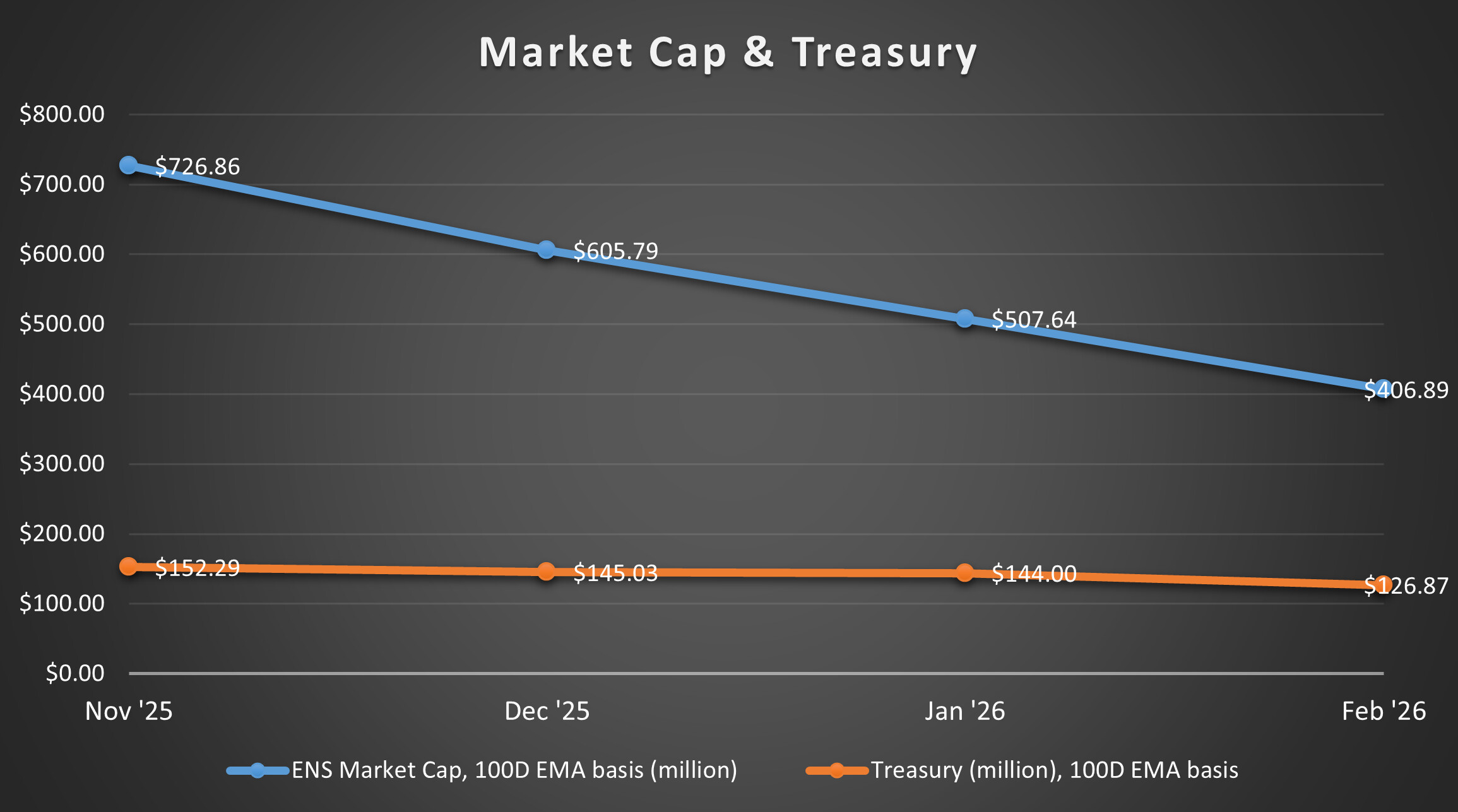
Beginning with the April 2026 update, the previous Market Cap vs Treasury chart has been replaced with Endowment Runway.


This thread will be updated at each month-end with refreshed charts.
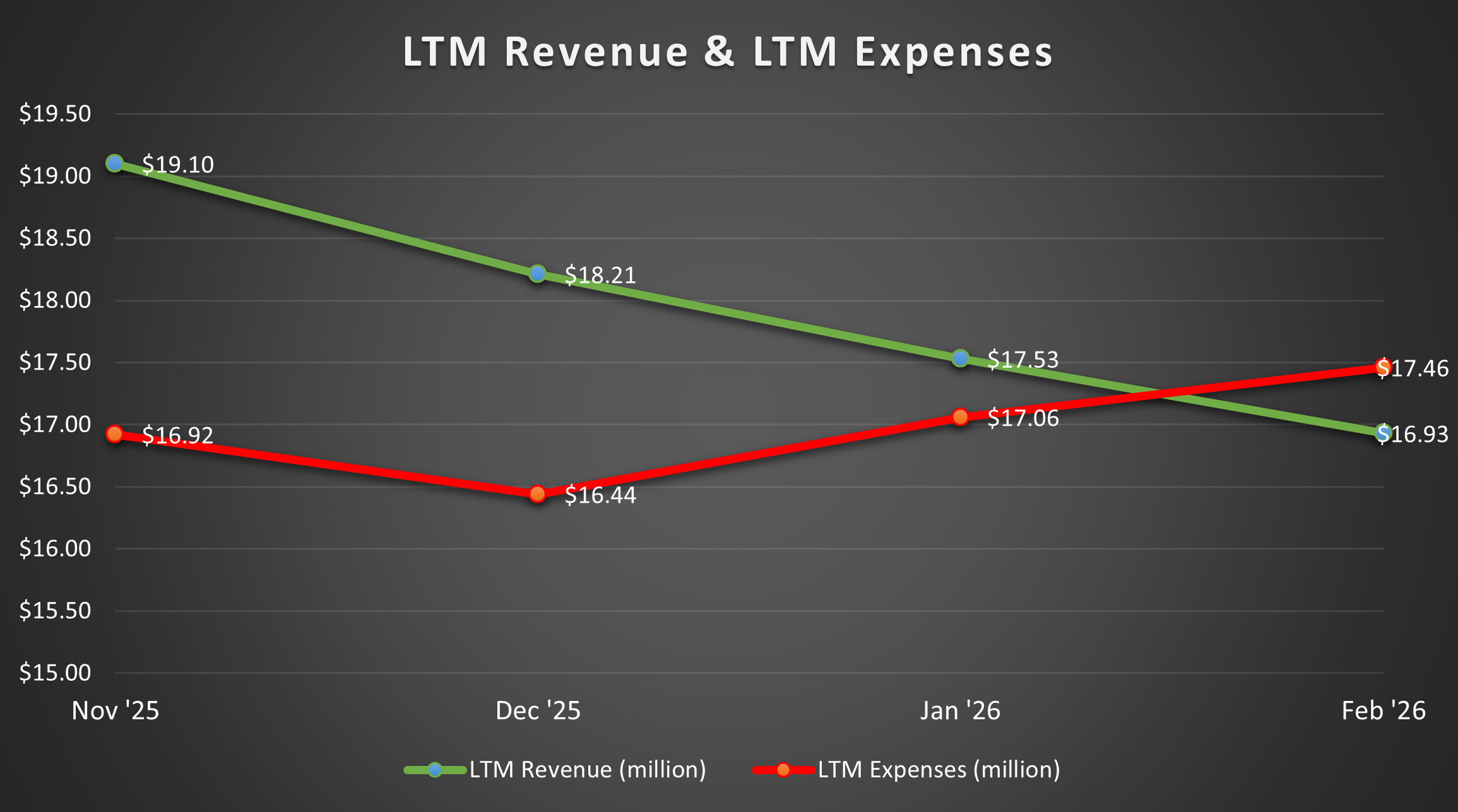
Revenue trending down while expenses gradually increase.

Consistent compression, recently negative.

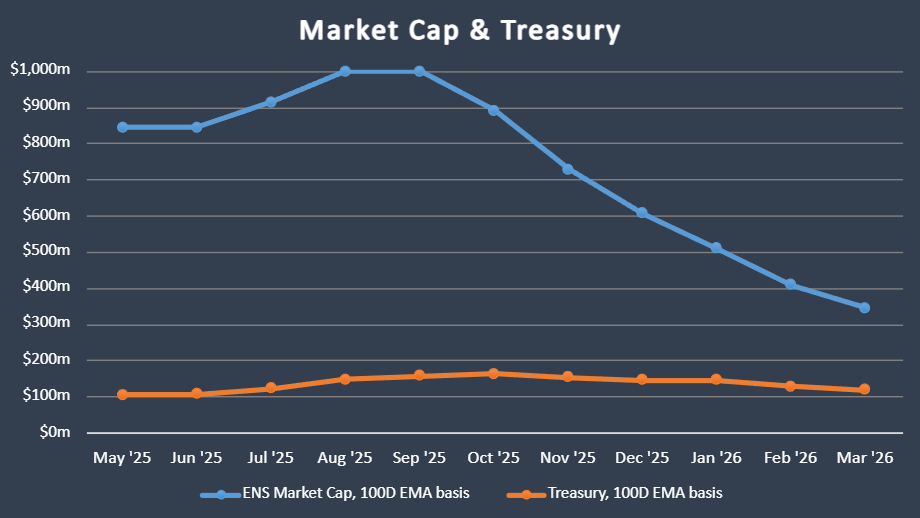
Market cap moving closer to treasury value.

Gross revenue yield expanding as valuation compresses.

Full Data Table
*(LTM = Last Twelve Months) Nov '25 Dec '25 Jan '26 Feb '26
LTM Revenue (million) $19.10 $18.21 $17.53 $16.93
LTM Expenses (million) $16.92 $16.44 $17.06 $17.46
LTM Net Revenue (million) $2.18 $1.77 $0.47 -$0.53
Net Margin 11.4% 9.7% 2.7% -3.1%
Circ. Supply (million) 43.24 43.24 43.24 43.24
LTM Circ. Supply Change (million) 4.88 4.54 4.36 3.74
LTM Circ. Supply Change 12.7% 11.7% 11.2% 9.5%
ENS 100D EMA $16.81 $14.01 $11.74 $9.41
ENS Market Cap, 100D EMA basis (million) $726.86 $605.79 $507.64 $406.89
Gross Revenue Yield 2.6% 3.0% 3.5% 4.2%
ETH 100D EMA $3,604 $3,353 $3,185 $2,677
Treasury (million), 100D EMA basis $152.29 $145.03 $144.00 $126.87
Treasury Runway (years) 9.0 8.8 8.4 7.3
1 Like

Revenue is still trending down, while expenses re-accelerated in March:

Operating efficiency worsened materially:

Valuation compression continues:

Yield keeps rising because market cap is falling faster than revenue:

Voting power appears reasonably distributed across multiple active voters, but effective decentralization may be lower than the chart suggests because some voting power remains clustered around core ENS contributors and socially connected delegates.

Voting power distribution is based on the proposal with the highest participation in the last quarter.
Reference proposal: Feb 8, 2026, 1.79m ENS voted

1 Like

Beginning with this update, the Market Cap & Treasury chart has been replaced with Endowment Runway. The objective is to track treasury sustainability relative to the current expense base.

The April update points to a weaker operating profile: declining revenue, rising expenses, negative margins, and falling Endowment Runway.

  1. Revenue continues to decline, while expenses have re-accelerated since late 2025.

  1. LTM Net Margin has moved deeper into negative territory as revenue weakness and rising expenses compound.

  1. Endowment Runway has declined by more than 30% from its recent peak, reflecting both lower Endowment value and higher LTM expenses.

  1. Gross Revenue Yield continues to rise because ENS market cap has compressed faster than LTM revenue.

  1. Voting Power Distribution is not updated in this post because the same reference proposal remains the highest-participation vote over the trailing three-month period.