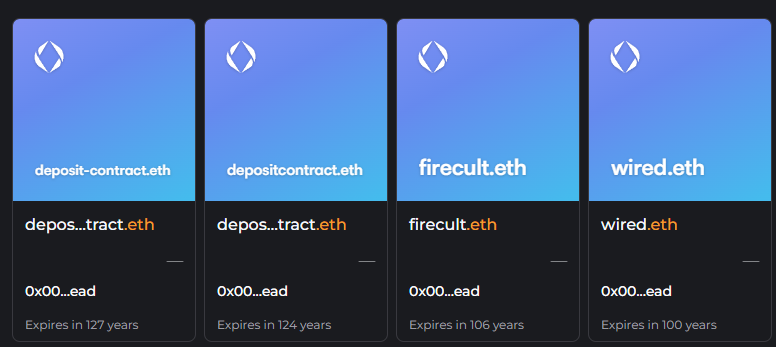
Tell me, what address do burned wrappers get sent to? What address does every service use to burn things on ETH? What address did a ~1000 ENS domains end up at to be “burned” and removed from circulation? I think the consensus is pretty clear on that, no?
As I said above, even with the re-claim option - people could bypass the reclaim option at 0x0000dead by just extending names in their own wallets. Could also send it to any random wallet and lose the keys to it. It’s not the consensus burn address, but would work the same and would bypass the reclaim. That would bypass the reclaim option anyway, but reclaim functionality would largely mitigate the issue of griefing names.
Either way, there is a clear consensus on what address people use to remove things from their wallets to “burn” them. This effectively forfeits ownership of the asset. This is also the case for ENS names.
But while other assets are permanently stuck in the burn address, ENS names can be re-registered once the lease ends.
The issue is that burned names often have a lease on them, especially when burned maliciously and timelocked to prevent others from registering them - thus permanently locking them out of circulation even though nobody owns them.
As already said, there are around ~1000 names like that - with some being stuck for over 100 years. A CENTURY! That’s more than a lifetime some names will get locked out for. And in my lifetime the number of names affected will probably grow beyond the ~1000 names it affects today.
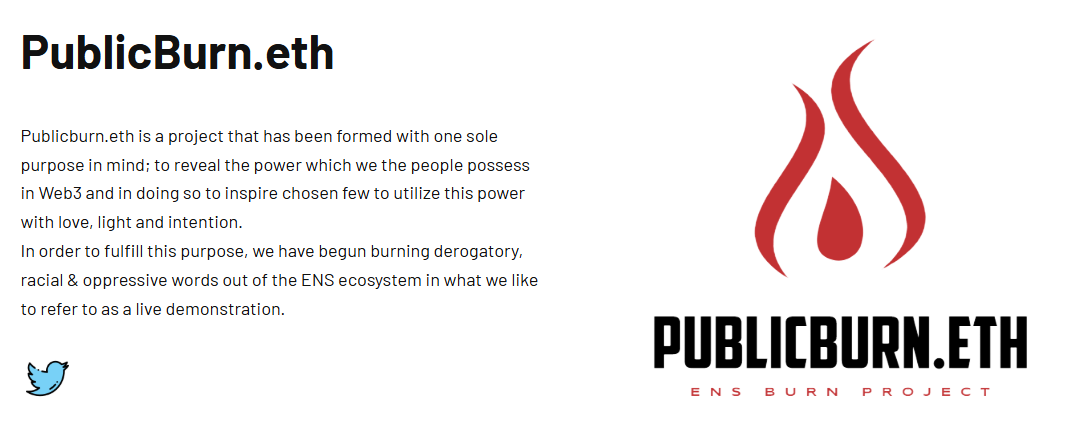
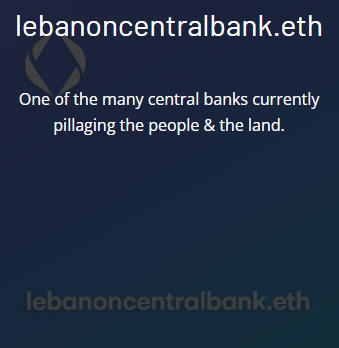
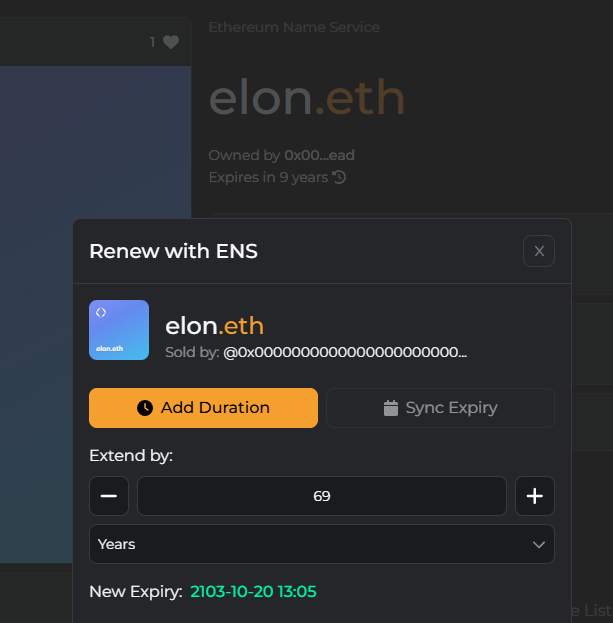
Right now it affects like a ~1000 names, over time that number will grow. We’ve seen it during the war (names like “ukrainian.eth” being burned) and we’ve seen it with initiatives like publicburn (removing names they personally deem offensive). We’ve seen it with Elon being lock-burned because someone personally dislikes him lmao
I’ve seen it with my company name for some reason.
All of those names were maliciously burned. It’s worse than squatting, because a squatter will at least want to sell the names they own. But those people just don’t want to own a certain name, and want to prevent others from owning it as well. And there is a clear consensus where those names end up at - an address widely known as the burn address.
Burned names with active leases create a griefing vector that could be exploited to slow adoption. And this will happen over time. But it could be mitigated on v2 namechain. At least for the consensus burn address - people who still want to, would probably bypass it by just holding those names.
But anyone who would burn it in the way everyone burns things - would just make the name re-claimable again.
Both the reclaim trigger as well as lease extend prevention for burn address owned names are beneficial for ENS.
And btw saying things like:
ENS governance will not enact any change that infringes on the rights of ENS users to retain names they own, or unfairly discriminate against name owners’ ability to extend, transfer, or otherwise use their names.
Is also not really true. To bypass someone burn-locking my company name I grabbed a malformed / case sensitive version of it. And while I can see owning it on Vision for example, I cannot edit it on ENS. Nor can I add records to it. Same with a display image.
OS and ENS manager just show a hash, but that name is basically useless and cannot be edited nor used in any beneficial way / a way that ENS names are being normally used.
This could have let me use the capitalized version of my company name which someone maliciously burned to prevent from having my onchain brand - aka competitor acting maliciously - but ENS prevents me from using that :)))
I guess you’re gonna say it’s a different thing because “we added name normalization for a reason and prevent name editing for a reason”.
(Sure, you can justify anything if you try hard enough - but it still prevents users from using the names they own and want to use.)
But guess what? Adding a re-claim functionality for burn address owned names also has a reason - reclaiming forfeited names people abandoned and maliciously time locked. Some of which were timelocked for a goddamn century.
ENSv2 could have some features that prevent time locking domains in a burn address. Like making them reclaimable when burn address owned and having a remaining lease, zeroeing the lease when burned, preventing name extension when burn address owned. Not adding that functionality is certainly a weird choice, and “not wanting to impact owners” is not a good argument given the fact the ownership of those names was forfeited by sending them to an address widely known as the BURN ADDRESS where you send assets that you don’t want to own.
Saying that it’s to not “impose on the will of the owner” when those people aren’t owning those names because they forfeited the ownership to the burn address, while at the same time imposing the will re: malformed case sensitive names that people actually own - is kind of hypocritical. Because if an actual owner of a name, actually wants to use a name - they should be able to. Instead they get an unusable namehash that cannot be edited and is unusable.
Kind of hypocritical, but whatever. I’m definitely biased because of my company name being burned and not even being able to use the case sensitive version of it - but even BEYOND that - ENSv2 should have that functionality, otherwise name griefing will become a bigger and bigger issue over time as adoption grows.
Global conflicts making people burn names, company competition name burns, malicious burning over petty things once someone forgets to extend a name, social justice name burning like public burn, etc - this will become a bigger and bigger issue. And while it cannot be fully prevented (see above re: time-locking names outside of burn address) - it can certainly be mitigated just via the functionality mentioned above - reclaim, lease zeroeing, extension prevention on burn address owned names.
If you can’t see this becoming an issue over time then you’re not thinking in the right timeframe. Once blockchain adoption is truly mainstream, and I really mean mainstream, you have no idea how awful it will become. One example being existing companies preventing every single emerging competitor from owning a usable brandname. And that’s just one example.