[Temp Check] Next Era of ENS DAO: Empowering the ENS Foundation

I want to be very clear upfront:
I am not against empowering the ENS Foundation.

I think there is a valid case for the Foundation to be stronger as an executor, coordinator, legal/policy steward, standards advocate, and public representative for ENS.

But I am strongly against transferring practical treasury custody/control away from the onchain ENS DAO, (without a much narrower mandate, explicit red lines, and a separate high-threshold constitutional vote).

  • That distinction matters.
  • The Foundation can be empowered as an agent of the DAO.
  • But the DAO should remain the constitutional principal over the treasury.

The constitutional issue

  • The ENS DAO Constitution is not just a symbolic statement of values.
  • It is what ENS tokenholders signed onto. It defines the boundaries of legitimate ENS governance.

The proposal says protocol control stays with tokenholders. That is good and important.

But the proposal also says that day-to-day treasury operation and long-term capital strategy would be delegated to Foundation governance, including:

  • the DAO operational wallet
  • the ENS tokens currently held by the DAO
  • the Endowment
  • the Endowment Manager relationship
  • public-goods grants
  • broader DAO operating-envelope allocation

To me, that is not merely an operational cleanup.

That is a constitutional-level change in where practical power sits.

The DAO may still retain formal protocol votes and director removal authority, but if the Foundation Board controls treasury strategy, grants, Labs funding, the Endowment relationship, and the DAO operating envelope, then the DAO risks becoming less of a sovereign governance body, (and more of a backstop that can only object after power has already moved).

That cuts against the spirit of the ENS DAO Constitution.

Article I: Name ownership shall not be infringed

Article I says:

ENS governance will not enact any change that infringes on the rights of ENS users to retain names they own, or unfairly discriminate against name owners’ ability to extend, transfer, or otherwise use their names.

I fully support the Foundation having the ability to defend ENS users, defend the protocol, respond to phishing/drainers, push back against overbroad legal demands, and represent ENS in policy and standards settings.

That is the supportive version.

But there is also a hostile version.

If the Foundation becomes the offchain legal/compliance/trademark/security layer that can pressure wallets, registrars, marketplaces, gateways, apps, or infrastructure partners to treat certain valid ENS names differently, then name ownership can be infringed without a direct protocol-level seizure.

That is how soft power becomes hard power.

  • It does not require changing the ENS contracts.
  • It can happen through brand policy, legal posture, sanctions posture, threat-intelligence feeds, marketplace coordination, registrar pressure, app-layer defaults, or “recommended” enforcement.

This is why Article I needs explicit red lines.

  • The Foundation should not be able to create a discretionary path to suppress, blacklist, burden, or selectively disadvantage valid ENS names without transparent, neutral, DAO-approved rules that are consistent with the Constitution.
  • Name ownership shall not be infringed.
  • That principle should not be narrowed to “the smart contract did not seize your NFT”.

Article II: Fees are primarily an incentive mechanism

Article II says registration fees are primarily an incentive mechanism to prevent speculative over-registration, with a secondary purpose of funding ongoing ENS development and improvement.

The proposal says fee structures remain with tokenholders. Good.

But if the Foundation becomes responsible for a much larger operating structure, grants program, policy shop, legal strategy, standards operation, Endowment strategy, and Labs funding envelope, then there is a risk that future fee conversations become about feeding an institution, (rather than preserving the proper incentive structure of the namespace).

The supportive version:

  • Tokenholders retain fee authority.
  • Fees continue to be justified by namespace health and reasonable ENS operating needs.
  • The Foundation operates inside a DAO-approved budget.

The hostile version:

  • Expanded Foundation obligations create budget pressure.
  • Registration revenue becomes treated as institutional revenue first.
  • Fees slowly become a growth lever for the Foundation rather than an incentive mechanism for the namespace.

I am not saying this proposal directly changes fees.

I am saying the structure we create now affects the incentives future governance will face.

Article III: Income funds ENS and other public goods

This is the core issue.

Article III says ENS treasury income must first ensure the long-term viability of ENS and fund continuing development and improvement of the ENS system.

It also says surplus funds may be used for other web3 public goods “as ENS governance sees fit”.

That phrase matters:

  • as ENS governance sees fit.
  • Not “as the Foundation Board sees fit”.
  • Not “as the Executive Director sees fit”.
  • Not “as a five-person board with two ENS Labs-affiliated seats and three independent directors selected through a Foundation/Labs-influenced process sees fit”.

ENS governance.

  • The DAO.
  • The onchain treasury.
  • Tokenholder sovereignty.

I agree that the DAO has operational problems. I agree that working groups have had issues. I agree that long-term capital strategy needs professionalization. I agree that grants can be improved. I agree that accountability between the DAO and funded entities has been weak.

But the cure should not be to move practical treasury control away from the DAO.

  • The Foundation can propose an annual budget.
  • The Foundation can administer programs inside DAO-approved envelopes.
  • The Foundation can coordinate grants under DAO-approved rules.
  • The Foundation can manage vendors, legal work, policy work, standards work, and reporting.
  • The Foundation can publish annual plans, audited financials, and quarterly reports.

…but the DAO should remain the constitutional principal over the treasury.

The hostile version of Article III is this:

  • ENS income flows into a treasury nominally for ENS governance.
  • Practical control moves to the Foundation.
  • Grant-making consolidates under Foundation governance.
  • ENS Labs funding is determined by a Foundation Board that includes Labs-affiliated seats.
  • Tokenholders retain only indirect director removal authority.
  • “ENS governance sees fit” becomes “Foundation governance sees fit”.

That is not a small operational adjustment.

That is a change in the constitutional settlement of the DAO.

Article IV: ENS integrates with the global namespace

Article IV says ENS should integrate with the legacy DNS namespace to the greatest extent possible without sacrificing decentralization of ENS.

This is one of the strongest arguments in favor of empowering the Foundation.

  • ENS needs serious representation in ICANN, IETF, W3C, DNSSEC, special-use-name discussions, name-collision work, policy forums, courts, and regulatory environments.
  • ENS Labs alone may not always be the right voice in those rooms. A mission-level ENS Foundation could be very valuable here.

But again, there is a supportive version and a hostile version.

The supportive version:

  • The Foundation defends ENS as credibly neutral infrastructure.
  • The Foundation pushes back against overbroad demands.
  • The Foundation advocates for decentralized naming, encryption, key control, censorship resistance, and user ownership.
  • The Foundation helps ENS integrate with the global namespace without compromising ENS’s decentralization.

The hostile version:

  • The Foundation trades decentralization for institutional acceptance.
  • The Foundation becomes the compliance interface that makes commitments the protocol community never approved.
  • The Foundation’s policy posture becomes more important than the DAO’s constitutional posture.
  • ENS becomes more acceptable to legacy institutions by becoming less credibly neutral.

Article IV does not say “integrate with the global namespace at any cost”.

  • It says to do so without sacrificing decentralization.
  • That red line should be explicit.

Article V: Constitutional amendments require a higher threshold

If this proposal were only about hiring an Executive Director, expanding legal/policy capacity, improving grants administration, and giving the Foundation a clearer operating mandate, I would view it as ordinary governance reform.

But if the proposal transfers practical treasury custody/control, then I believe it should be treated as constitutional-level reform.

That means it should not be bundled into one broad temp check.

  • It should be separated.
  • It should be explicit.
  • It should have clear red lines.
  • It should have an objective diff against the current constitutional/governance model.

…and if it materially changes the DAO’s treasury sovereignty, it should require the appropriate high-threshold constitutional process.

My concern about ENS DAO capture

I am not alleging bad faith.

  • But governance design should assume good people can still create bad structures.
  • This proposal is being advanced by ENS Labs leadership.

The proposed Foundation Board includes Nick Johnson, who is the founder and CEO of ENS Labs.

  • It includes Alex Urbelis as Executive Director, who has been serving ENS through Labs legal/security work.
  • The proposal says the initial slate is assembled by the existing Foundation Board with input from ENS Labs leadership.
  • The proposal also gives the Foundation Board authority over Foundation operations, grants, treasury/Endowment stewardship, and the broader DAO operating envelope, including Labs funding as one component.

Even if everyone involved has good intentions, this is exactly the type of structure where DAO capture can happen.

  • Not through one malicious vote.
  • Not through an admin key attack.

But through institutional consolidation:

  • budget control
  • grant control
  • standards/policy control
  • legal posture
  • brand/trademark control
  • Endowment strategy
  • Labs funding oversight
  • contributor access
  • public-goods prioritization

That is practical power.

And practical power should remain accountable to the DAO in more than a theoretical “remove the directors later” way.

A cleaner path forward

I would support a narrower version of this proposal.

1. Foundation operations mandate

Approve the Foundation to hire an Executive Director and staff for:

  • legal coordination
  • policy and regulatory engagement
  • ICANN/IETF/W3C/standards work
  • public transparency reporting
  • trademark/brand stewardship
  • security coordination
  • ecosystem coordination
  • vendor management

This is where the Foundation can be very useful!

2. DAO-approved annual budget envelope

The Foundation should receive an annual operating budget approved by the DAO.

  • The Foundation can execute inside that budget.
  • But the DAO should approve the envelope.

3. Treasury remains onchain and DAO-controlled

The DAO operational wallet, DAO-held ENS, and Endowment control should not be transferred into Foundation governance by broad mandate.

  • The Foundation can propose strategy.
  • The DAO should approve material treasury actions.
  • The DAO should retain custody/control as the constitutional principal.

4. Endowment changes require explicit DAO approval

The Foundation may coordinate with the Endowment Manager and publish recommendations.

  • But manager changes, mandate changes, major asset movements, ENS-token policy, or material Endowment restructuring should require explicit DAO approval.

5. Grants can be administered by the Foundation, but only under DAO-approved rules

A Foundation grants program can work.

But it needs:

  • public eligibility criteria
  • transparent review process
  • conflict-of-interest rules before launch, not after
  • recipient commitment to the ENS Constitution
  • quarterly reporting
  • appeal/review process
  • clear categories for ENS-critical work vs broader public goods

6. Hard conflict-of-interest rules before approval

The conflict policy should not be deferred until after the structure is approved.

It should be part of the proposal.

Especially for:

  • ENS Labs funding
  • director compensation
  • grant applicants connected to directors
  • venture investments
  • affiliated organizations
  • legal/vendor relationships
  • Endowment-related counterparties

7. Separate constitutional vote if treasury sovereignty is moving

If the intent is to move effective treasury control from the DAO to the Foundation, then say that directly.

  • Do not frame it as operational reform.
  • Make it a constitutional question.
  • Give tokenholders a clean vote on that question.

My position

I support strengthening the ENS Foundation.

  • I support professionalizing legal, policy, standards, and coordination work.
  • I support improving grants and accountability.
  • I support better long-term planning.

But I do not support transferring treasury custody/control away from the onchain DAO through a broad governance restructuring.

  • The DAO should not become only a protocol-upgrade electorate and director-removal backstop.
  • The DAO governs the ENS protocol and treasury.

That is the constitutional settlement we signed onto.

  • The Foundation can be empowered as executor, coordinator, and legal/policy steward.
  • But the DAO must remain the constitutional principal over the treasury.

Name ownership shall not be infringed.

  • Fees should remain an incentive mechanism.
  • Treasury income should be allocated as ENS governance sees fit.
  • Global namespace integration should not sacrifice decentralization.

And any material change to that constitutional settlement should be handled as a constitutional-level vote, not bundled into a general operational reform.
8 Likes

As stated in X I am very strongly against this proposal.

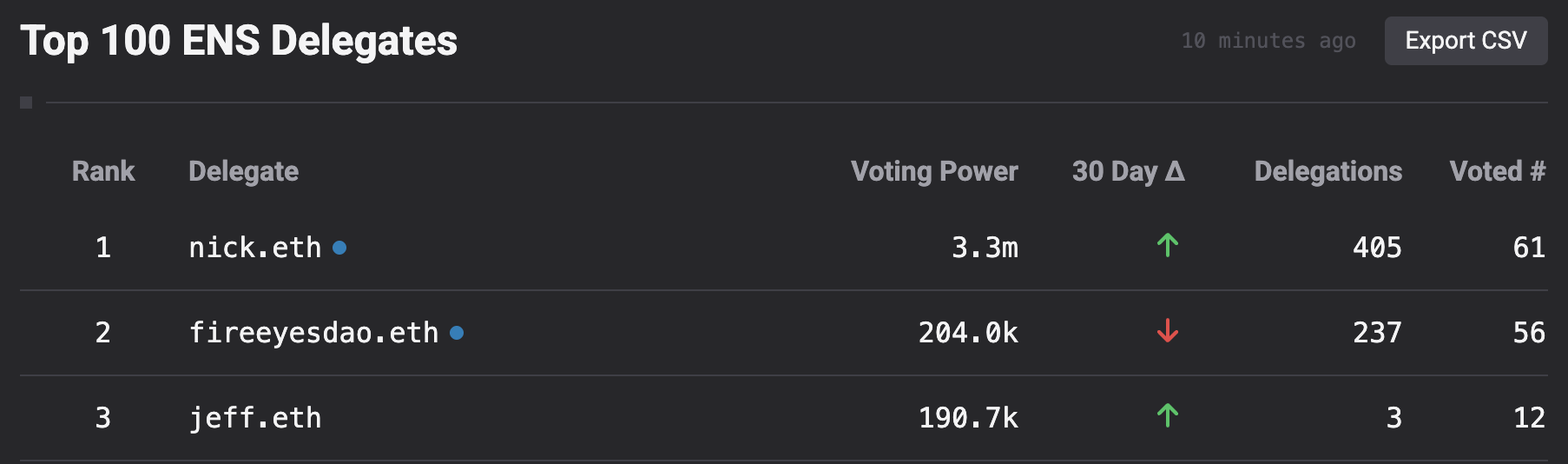
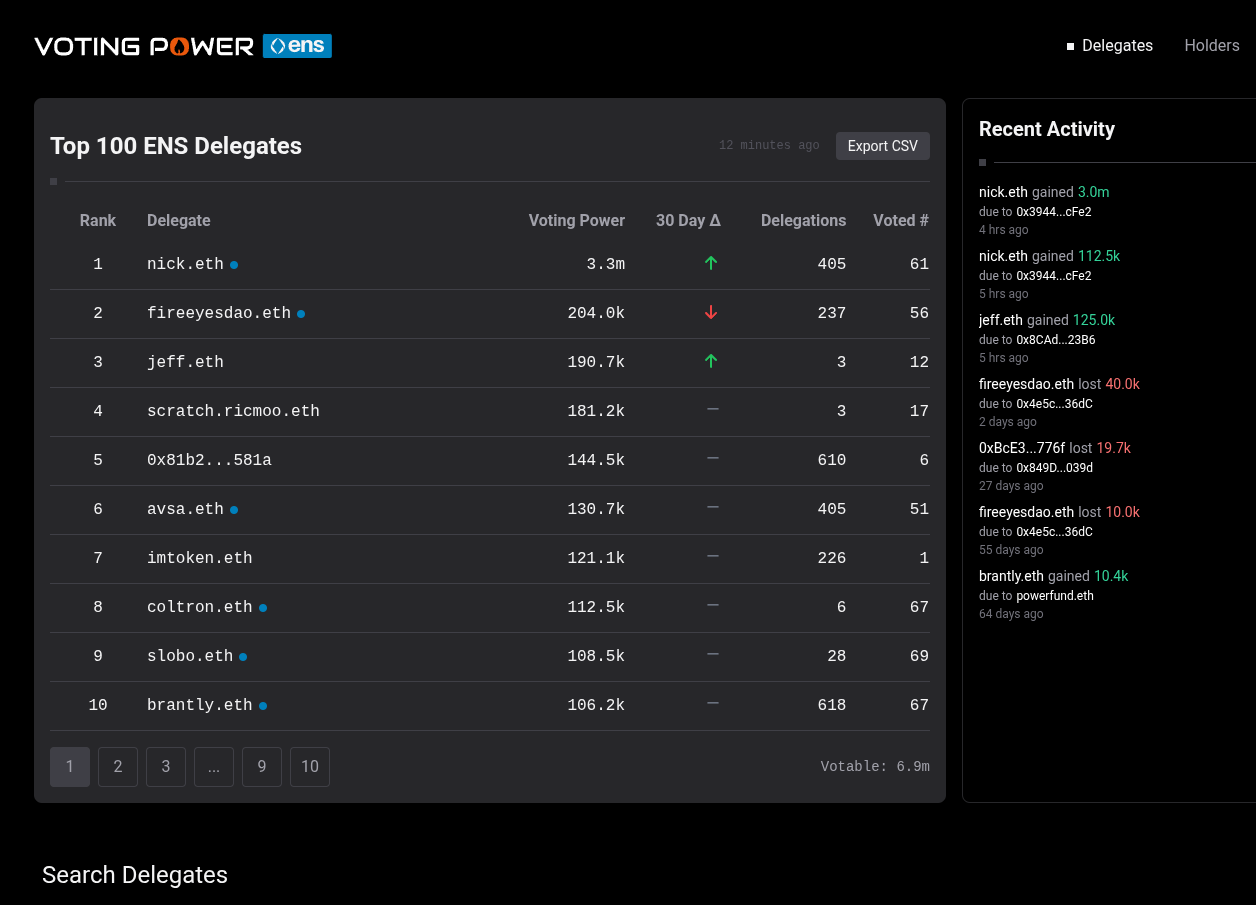
I am alarmed that at the same time as this proposal has materialized @nick.eth delegated ~50% of the voting supply to himself essentially becoming the DAO.

I expressed my views quite strongly on Twitter. Read backwards from here: nick.eth on X: "@LefterisJP @A_Leutenegger @ENS_DAO I had a <6% allocation. I challenge you to find another DAO that launched with its primary founder having less - unless it was already diluted by VC funding (which ENS has never taken any of)." / X

In the end Nick has all the voting power right now so there is no DAO anymore. I can only appeal to his common sense here and hope that he and the ENSLabs and foundation people realize they are essentially killing ENS as a DAO and as a community by this.

When ENS was about to become a DAO I remember criticizing the need for a DAO. It was a profitable business. Why bother with DAO theatrics? Back then @nick.eth your answer had me moved. You said you still wanted to give this to the community as it’s too big of an infrastructure project in Ethereum to be at the hands of a single entity.

With what you are doing right now, you are taking it back. I can’t stop you unless we activate the security council and even that would only be temporary until the security council expires. In the end you are going to do whatever you want.

I am just sad and disapointed. Really sad.

15 Likes

Is this a governance attack? My perspective and plan as a member of the Security Council

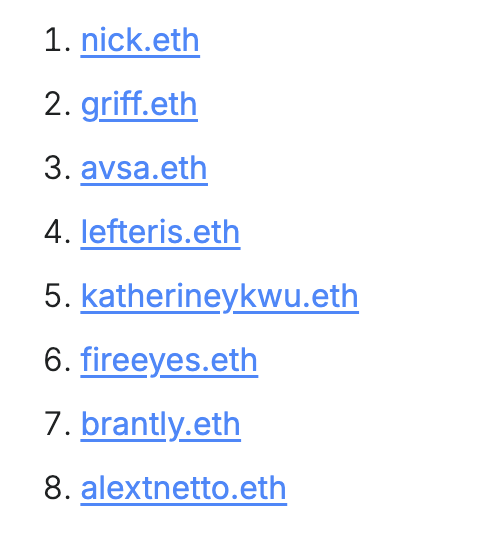
I am 1 of the 8 members of the ENS DAO Security Council. The Security Council is a 4 of 8 multisig that has onchain veto power over onchain proposals of the ENS DAO. It is a negative power only. We are charged with preventing governance attacks.

Here’s a list of the current members:

Screenshot 2026-06-22 at 5.21.15 PM

Some people have questioned whether the above proposal, along with Nick’s self-delegation of 3 million tokens, is a governance attack.

Here is my perspective:

As I explained in my earlier comment on this thread, this proposal made by Labs is for the creation of an expanded ENS Foundation, led by a 5 person board where 2 of the members are from Labs, and the 3 remaining are hand picked by them; and then for the ENS DAO to turn over the treasury to this Labs-controlled/aligned entity. I consider this to be the equivalent of treasury capture by ENS Labs. Why I think they are doing this I explained in my earlier comment.

Important to understanding what’s going on now is that in a comment above Nick said he planned on delegating a large portion of his ENS tokens to himself to vote on this proposal.

And as we can see in this screenshot below he did so, giving himself more votes than are usually cast in total for a proposal. This indicates he expects this proposal to be controversial and not have wide support.

Screenshot 2026-06-22 at 6.26.47 PM

If this proposal goes to a vote, there are two possible outcomes:

(1) Not a governance attack: If this proposal goes to a vote and passes with wide support from the community, including non-Labs and non-Labs-aligned delegates, then I consider the proposal legitimate and not a governance attack. In this case, the Security Council should do nothing.

(2) Yes a governance attack: If however the proposal passes mostly just with support from Labs and Labs aligned delegates, with most non-Labs and non-Labs aligned delegates voting against - then it would essentially be a single entity (in this case ENS Labs) voting themselves the treasury against the wishes of the rest of the community. That is, by all common definitions, a governance attack.

In the case of outcome #2, as a member of the Security Council I will create an onchain txn to veto the transfer. This would require at least 3 additional Security Council members to sign for the veto to pass, something I would encourage my fellow Security Council members to do.

A wrinkle to all of this: Security Council expiration

The ENS DAO Security Council was set up about 2 years ago and was set to expire in 2 years, at which time it would need to be renewed. This means that, as of right now, the existing Security Council expires in about a month on July 24, 2026.

The only way the Security Council continues past that point is if it is renewed. @netto.eth who led the creation and management of the Security Council has said he has been getting ready to submit to the DAO a proposal for its renewal.

How will that impact this controversy? Right not it’s unclear. Will Nick with his 3 million delegated tokens vote to renew a Security Council which might then veto the ENS Foundation treasury proposal he says he supports so strongly? Or will he block the renewal of the Security Council, which would mean there would be no way to veto the Foundation treasury proposal, but it would also open ENS to other governance attacks at the same time? We’ll see over the next few weeks.

16 Likes

I’m very opposed to the current proposal. I support the initial idea of empowering the Foundation to provide accountability over DAO spending.

In corporate governance, the board of directors is the body elected by shareholders to oversee the company on their behalf. Here, almost the opposite is happening.

Why this proposal fails to reach that goal:

It’s not independent from Labs, which has by far the largest budget

  • 2 members from ENS Labs
  • 1 Aragon-related members, who could have an interest in becoming a service provider and having their stack implemented. This is a high conflict of interest.
  • 1 ETHGlobal founder/VC. Kartik is great, but ENS is a relevant client of ETHGlobal, mainly because of Labs’ influence. This is also a huge conflict of interest.
  • 1 VC. Seems like the most independent here. He didn’t get to work on Aragon with the other board member.

How is this composition supposed to hold Labs accountable if there are no incentives to do so? Arguably, it makes things worse because access to resources becomes easier, especially since the proposal also moves the treasury to the Foundation.

The current composition looks more like a capture than an ENS development.

ENS Labs should have a seat, of course, mainly Nick as a Founder and lead developer. But if we wanna truly hold everyone accountable, then we need more independence.

Strategic value of the board

One of the main questions to ask here is:

If we think about a world-class board for a protocol that sells domains, provides identity, and is focused on consumers (B2C), would you choose this board?

We should aim to have world-class entrepreneurs with successful businesses in the areas where we want ENS to grow: the domain industry, consumer apps, and so on. This is an amazing opportunity to get stewardship from people who are where we want to be.

With all due respect, Aragon has cool tech, but its business is unrelated to ENS’s. It is a completely different challenge and on a different scale.

ENS has no VCs, but having 1 very successful crypto-native VC might help with thinking about the token, connecting with other projects.

Nick and Urbelis are both incredible good fits, but I’d limit the ENS Labs-related seat to 1.

Treasury moving to the foundation

Within this lower accountability environment, we’re then moving $100M to the custody of this new, unproven structure. It’s also removing governance ownership that the token has. The mix of both factors bring a very obvious result, which is the token being less valuable to own.

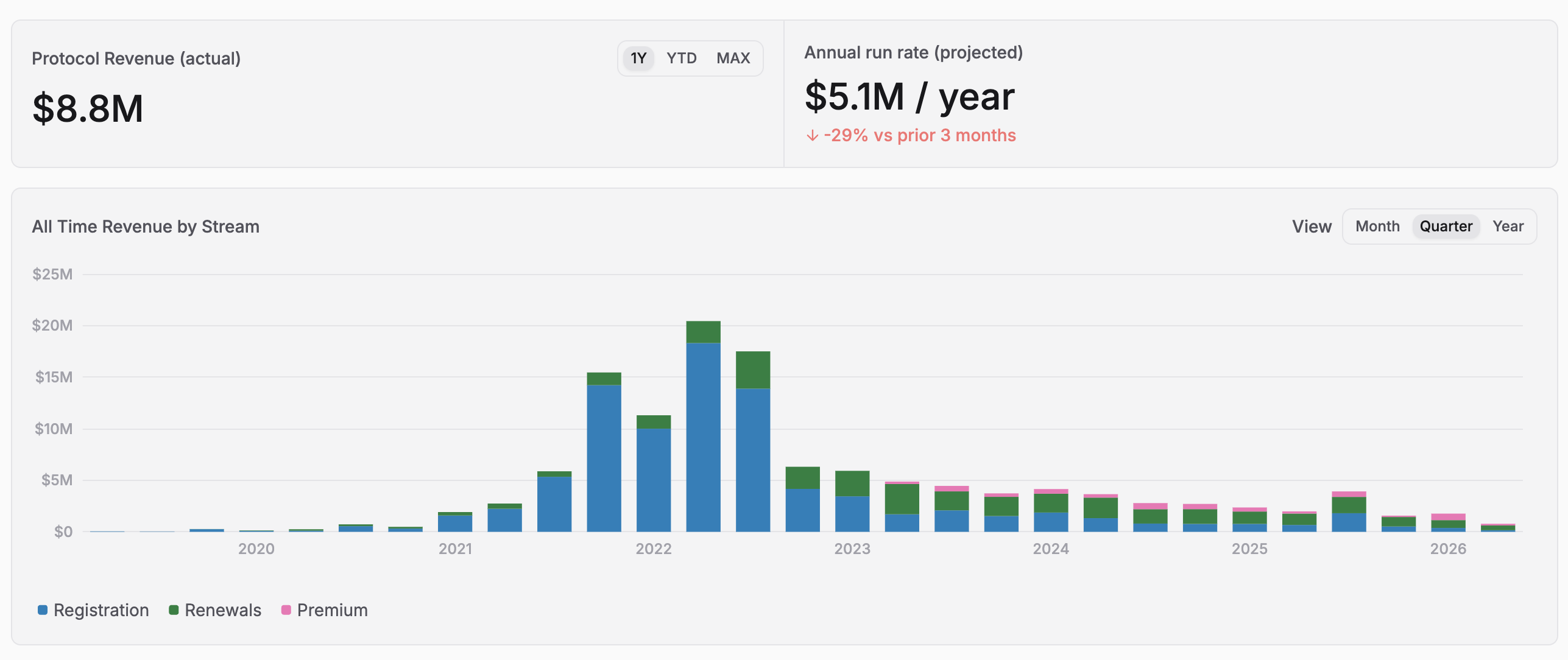
And please, let’s be realistic here, we can’t even talk about fee distribution here if our yearly run rate is almost half of current Labs budget per year.


Image source


We could dream much higher. ENS can achieve much more. If this passes, I’m afraid it marks the downfall of ENS. I’ll post more details soon, but for now, that’s what I have.

12 Likes

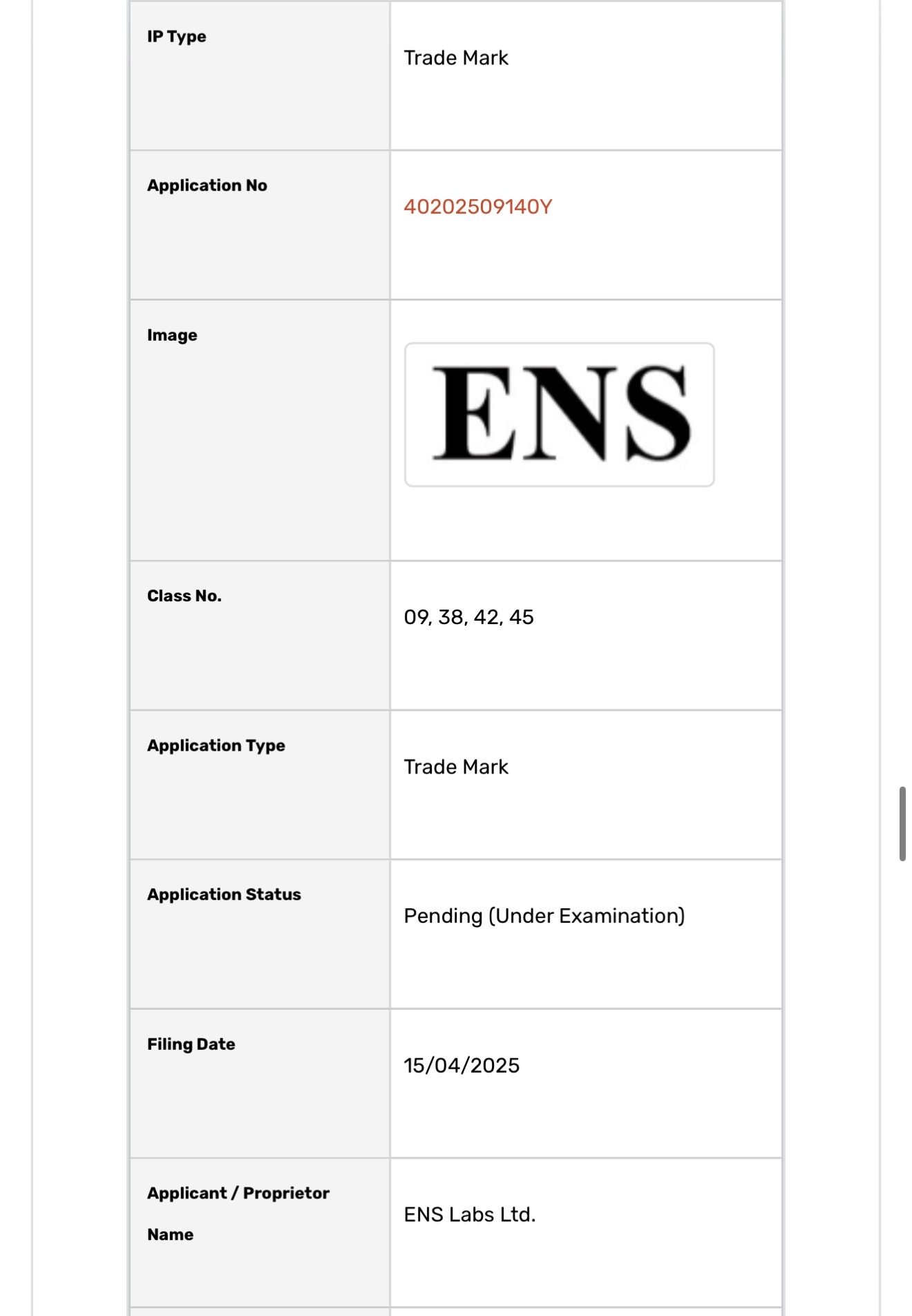
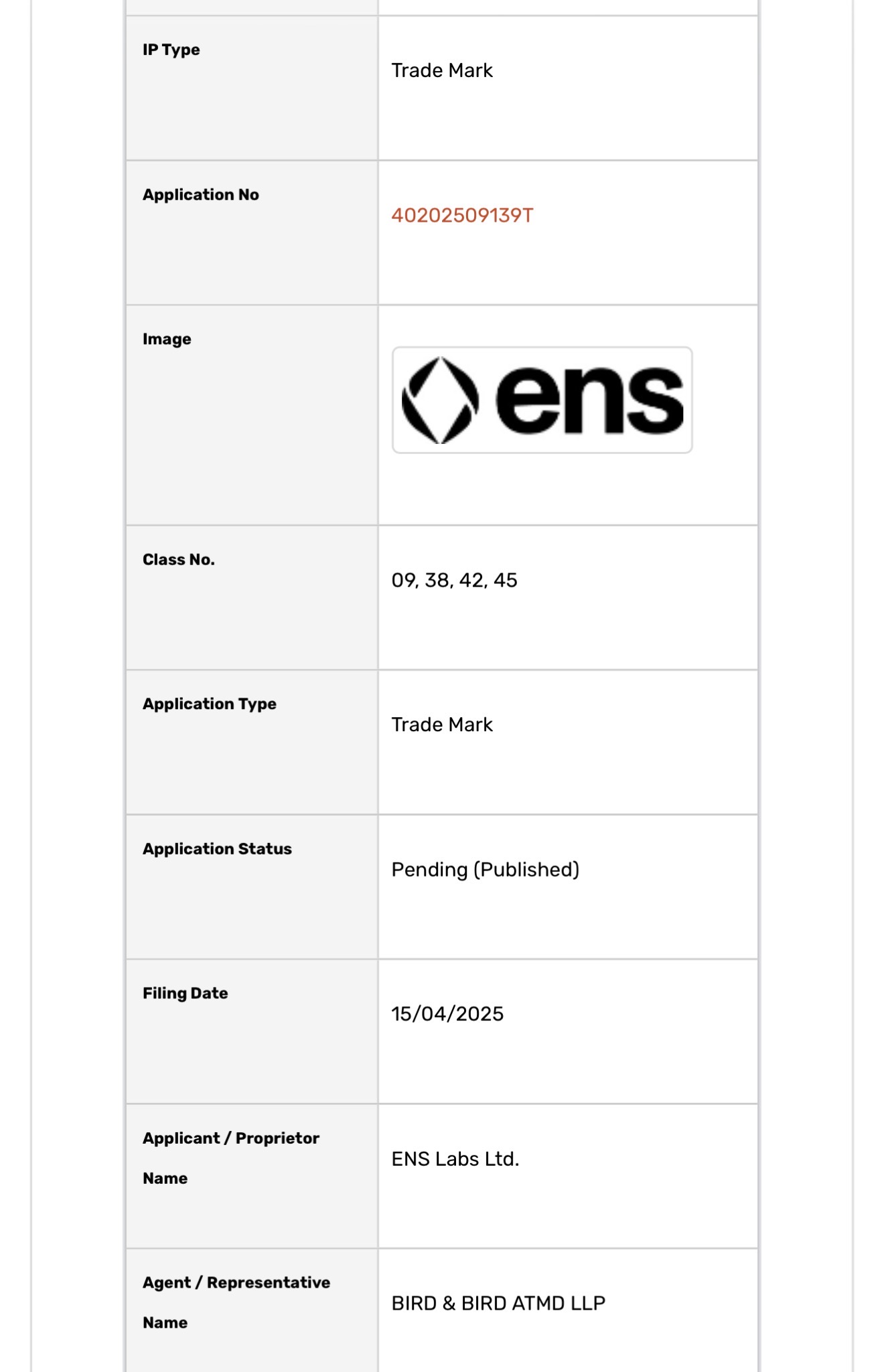
Is ENS Labs going to assign the ENS trademarks to the Foundation and then the Foundation going to turn around a license it back to Labs?

Anyone know if the DAO/Foundation authorized, via vote or any other mechanism, Labs as a service provider to file the ENS word mark and stylized logo (which was just filed last year)? Did any other service providers file/own ENS trademarks?

The proposal seems to suggest the intent is for the Foundation to own the ENS trademark(s) and brand assets, which I have historically said made sense to proactively protect ENS IP broadly (patents and trademarks). I am curious though, did I miss a DAO vote authorizing Labs to file the ENS trademarks on behalf of the DAO and/or Foundation? Or is this something Labs did unilaterally.

1 Like

I oppose this proposal in its current form

I support strengthening the ENS Foundation’s ability to serve ENS. The Foundation can play an important role in legal, operational, grants, policy, standards, and public goods work.

But this proposal appears to go much further than operational support. As clarified in this thread, treasury custody would be transferred to the Foundation. That is the core issue for me.

Moving practical custody and control of DAO assets from onchain governance to an offchain Foundation board is a material governance change, not a minor administrative change. Even if tokenholders retain some formal rights on paper, it changes who controls the treasury in practice.

That deserves much more scrutiny than this [temp check] proposal currently provides.

My main concern is conflict of interest.

ENS Labs is a major funding recipient in the ENS ecosystem. At the same time, Labs leadership and Labs-adjacent individuals appear to have meaningful influence over the proposed Foundation structure, including the board design and composition. That board would then have authority over budgets, Labs funding, treasury strategy, endowment oversight, grants, service providers, and operational spending.

Even assuming good faith from everyone involved, that is a serious structural conflict.

A party that benefits from treasury funding should not be perceived as helping design or influence the body that will control that treasury unless there are very strong independent safeguards. Disclosure alone is not enough. If conflicted people can disclose a conflict and then still participate in decisions that benefit affiliated parties, the process remains vulnerable.

There is also a significant legal-liability issue here.

If treasury custody moves to the Foundation, the Foundation is no longer just a support entity or legal wrapper. It becomes the practical custodian and steward of DAO assets. That means the Foundation, its directors, officers, and decision makers would assume responsibility for treasury custody, asset management, endowment oversight, grants, contracts, reporting, tax, sanctions, regulatory compliance, and legal process.

If something later goes wrong, those same parties could become the obvious targets for claims. Possible claims could include: breach of fiduciary duty, misuse of assets, negligent treasury management, conflicted decision-making, failure to maintain adequate controls, breach of governing documents, or acting beyond proper authority.

That creates unnecessary risk for everyone involved: the Foundation, its directors, ENS Labs, delegates, tokenholders, service providers, and the ENS ecosystem as a whole.

That risk could also extend beyond the Foundation.

ENS Labs and Labs-affiliated individuals could be exposed if this is later characterized as a conflicted restructuring of DAO treasury control. If Labs remains a major funding recipient while also influencing the structure that controls treasury funding, it becomes trivial to argue that Labs benefited from or participated in an improper transfer of control.

The same concern applies to directors, delegates, multisig signers, endowment managers, service providers, or anyone else involved in implementing the transfer. If the custody transfer is later challenged as unauthorized, insufficiently disclosed, unconstitutional, or conflicted, the people who helped execute it could be pulled into that dispute.

It is about governance design and legal exposure, not about assuming bad faith.

The proposal appears to preserve tokenholder control formally, but it reduces tokenholder control practically. Removing directors after the fact is not the same as retaining direct custody and approval authority before treasury assets are moved.

The ENS treasury belongs under a process that is clearly and directly accountable to ENS governance, ie the ENS DAO. A proposal that materially changes who controls that treasury should meet a much higher standard of disclosure, independence, conflict management, and legal clarity than this temp check currently provides.

For these reasons, I oppose the proposal in its current form.

4 Likes

To be clear, Alex will be moving from Labs to the Foundation full-time. Both Alex and I will adopt the Foundation’s Conflict of Interest policy regarding votes that directly impact Labs.

There’s been no discussion of transitioning the DAO over to Aragon to the best of my knowledge. If there were I would expect those board members to also adhere to the CoI policy.

Most decisions the DAO (or the Foundation) makes don’t impact on our ETHGlobal sponsorship, and I would expect Kartik to likewise adhere to the CoI policy.

The bar you’re setting would effectively make it impossible to select a board member that has any connection to Web3, since ENS has integrations or partnerships with a very large number of projects in the space.

If its business was related to ENS’s business, wouldn’t that constitute a large conflict of interest?

We deliberately selected a structure that is not new or unproven - as Katherine outlines, it’s well established both inside and outside Web3.

1 Like

I think this whole matter is a bit more nuanced than just “attack on ENS treasury” as it can be seen by some observers.

TGE is essentially IPO - you issue some sort of token / paper / stone with picture on it and in return you get cash / eth / flock of goats etc. In case of IPO you have to go through a myriad of hoolahups, like audits, investment bankers, bureaucracy and so on and such on, however in case of TGE there is nothing of the sort.

However lack of regulation should not in principle absolve agents from any liability whatever the structure was chosen - be it a DAO or tribal weekly tribal gathering in a cave by cozy fire.

By all means I’m not accusing @katherine.eth or @nick.eth of any wrong doing, on the contrary, despite maybe some disagreements in the past, I strongly feel that @nick.eth commands huge respect in my eyes - ENS is a monumental project, and as time goes by this ship becomes larger but waters are not becoming more welcoming. As Kain from SNX once put it in his tweet - “If no one is actively suing you, then just keep building”.

Over the past decade since I’ve been around this space I’ve seen one single scenario over and over again - founders come up with some idea, raise money, build a tiny boat then just slowly graciously swim away into the sunset, after all why bother if you are already rich. @nick.eth on the other hand just keeps building and building and building like there is no tomorrow, that alone deserves recognition.

I guess what I’m trying to say here is that maybe with this move there is more than meets the eye.

DAO as organizational form on paper is a great idea, however any project should seek such organizational form which best fits the purpose to achieve its goals given myriads variables, and DAO in its purest form as was seen by many visionaries around the space is not necessarily the best fit to reach intended goals in this particular case.

DAO in its purest form is an abstraction if you will, what we call in economics “a perfect world”, but in real life “perfect world” just cannot exist because there is always various forms of friction shaping and bending that “perfect world”. It’s always a good idea to model your approach and benchmark it against “perfect world”, but in reality you would always deviate from it.

2 Likes

The proposal is being very contentious but I would argue that it doesn’t need to be, if we could agree to change three things:

  • Have the board election a proper selection by the DAO, with independent candidates proposed by others, and not simply a ratification on the ones chosen by ENSLabs
  • The foundation should get oversight and auditing of the treasury, but not direct control. Instead they would submit an annual budget for DAO approval (much like working groups were) and it’s their responsibility to properly distribute and track the spending
  • Endowment would be still be a separate entity, with the sole focus on long term financial viability of the protocol. The foundation - nor anyone for that matter - should be able to withdraw more than 5% yearly from it.

I believe those points would not impact so much the mission of the foundation, but would combat most of the worries about it.

However – the whole point is moot since Nick has delegated the 3M votes. Even if we did agree on these three points it’s clear the result would simply be whatever he voted on and the result would be the same.

I do not consider this a governance attack, as some have said, but a clear governance failure. During my tenure as Metagov, I focused a lot on governance distribution, trying to make sure that past stewards and projects in ENS had a say in the future of the project, but looking back, it was clearly not enough. We didn’t give or delegate enough and even for those who received it, many sold or never used them for proper voting. With this one delegation, Nick has demonstrated that decentralized governance has always been theatrics and he always had the ultimate power - and he intends to use it. Does he have the absolute right to do it? Of course he does, it’s inherently what token voting is about, but the fact that one entity can out vote every one else, just shows the DAO never achieved its ultimate goals.

15 Likes

1. Mathematical Misdirection on the “Independent Veto”

The proposal states that any allocation to ENS Labs above the threshold requires an affirmative vote of 4 out of 5 directors, claiming this ensures “the three independent directors have a structural veto over material Labs funding decisions.”

This is mathematically inaccurate. For the independent directors to possess a true veto, any single independent director should be able to block a vote. Because only 4 votes are needed to pass, ENS Labs only needs to convince 2 out of the 3 independent directors to approve their funding (assuming the Founder and the Executive Director vote in favor). A single dissenting independent director is powerless, significantly weakening the promised accountability layer.

2. Structural Insidership and Capture Risk

The proposal positions the Foundation as an independent oversight body tasked with holding ENS Labs accountable. However, the proposed composition creates a tight-knit circle of historical insiders.

The nominated Executive Director currently serves as the General Counsel and CISO of ENS Labs. Moving the current chief legal officer of the development company into the Executive Director seat of the Foundation creates an immediate conflict of interest regarding institutional independence. Furthermore, the independent slate features heavy overlapping ties to the Aragon ecosystem, which the proposal itself notes is one of the largest integrators of ENS. This creates an echo chamber where the overseer and the overseen share deep professional and financial DNA.

3. The Tokenholder Removal Catch-22

The text explicitly promises that tokenholder removal authority over directors remains unchanged. Under Clause 15 of the ENS Foundation’s Articles of Association, the DAO (The Council) currently holds the absolute power to remove directors by notice.

However, the proposal immediately introduces severe procedural prerequisites into the bylaws, mandating that a removal petition must allege a specific “mission violation supported by documentary evidence.” This directly undermines Clause 15 by stripping tokenholders of strategic recourse. If the DAO loses confidence in a director due to poor financial strategy or bad management that does not explicitly violate a written text, tokenholders are legally blocked from removing them. Because the incumbent Board controls the evaluation of whether the evidence meets the threshold, the Board effectively acts as the gatekeeper to its own removal.

4. Centralizing the Regulatory Target

The proposal lists a massive array of “Mission Driven Advocacy” tasks, including acting as the explicit legal counterparty for the protocol layer, managing OFAC/sanctions postures, and handling court orders.

While a decentralized DAO is a difficult target for regulators due to its diffuse nature, a centralized foundation with a public Executive Director, a 5-member board, and total control over the Treasury and Endowment is an easily targetable legal chokepoint. Openly inviting legal processing and concentrating the capital strategy under a corporate board heavily exposes the namespace to regulatory capture, asset freezes, and aggressive enforcement actions.

5. De-democratization and Contributor Brain Drain

The proposal dissolves the Working Group model and the Service Provider Program (SPP), absorbing all funding into a unified Grants program managed strictly top-down by the Executive Director.

This disenfranchises the decentralized contributor ecosystem that built the protocol. Instead of community-elected stewards allocating capital via working groups, all operational capital is concentrated. Shifting from a community-driven ecosystem to a traditional corporate grant model risks driving away open-source contributors, resulting in a severe loss of institutional knowledge.

6. Vague Mission Metrics

The entire framework relies heavily on protecting the “ENS Mission,” yet the proposal never explicitly defines what constitutes a mission violation versus a strategic disagreement.

If the Foundation decides to fund a highly controversial namespace initiative or make a high-risk investment with the Endowment, there is no clear standard to judge whether that is a strategic mistake or a mission violation. Because the boundary is ill-defined, the incumbent Board can dismiss any legitimate community dissent or removal petitions simply by labeling them as mere strategic disagreements.

4 Likes

Many thanks for the detailed critique. I would to address Point 2 directly, since it concerns the ED role and I am the person nominated for it.

To be clear about the practical reality if the proposal is ratified: as Nick mentioned earlier in the Forum, I would be moving full-time from ENS Labs to the Foundation. I would not retain the GC or CISO roles at Labs. Labs would bring on a fractional GC to take over the day-to-day commercial legal function, and I would lead that transition personally. The Foundation ED role is a full-time position at the Foundation, with all the fiduciary obligations to the Foundation that the role would entail under Cayman law and the bylaws being drafted.

On the institutional independence concern: I understand why a former Labs officer moving into the Foundation ED seat could be perceived as insidership on the surface. There are two reasons why this is not the case: (i) the Foundation’s Conflict of Interest policy would require my Labs affiliation to be disclosed in my Statement of Interest, refreshed annually, and (ii) recusal mechanics would apply where my prior Labs role would create a transactional conflict. The supermajority requirement for material Labs allocations is a separate question about the slate composition as a whole, which Katherine and Nick have addressed elsewhere; I will not re-litigate it here.

One additional clarification: I was not the architect of my own appointment. I was identified for the role based on the work already being done at the protocol-institutional layer: ICANN engagement, threat-intelligence sharing, partnerships with SEAL and the DNS-infrastructure community, standards-body work, regulatory and policy advocacy, etc. The continuity of that work is really the case for the appointment, and the COI policy is how I would handle my prior Labs role going forward.

I hope that clarifies matters, and I thank you all for your consideration.

My Thoughts on the ENS Foundation Proposal

I appreciate the Temp Check and want to thank everyone who has voiced their opinion.

As an ENS name holder, my primary stance is aligned with the safety of my (and everyone’s) ENS names, ENS adoption, and the long-term health of the ENS ecosystem.

Overall, I believe this proposal is a step in the right direction, striking a good balance between operational efficiency, accountability, reliably decentralized governance, and transparency. That said, I think the concerns raised by the community are also highly valid and worth consideration.

Here is my take on how we might approach the core problems:

  • Problems 1 & 2 (Delegate Fatigue & Small Decisions): These could potentially be solved by alternatives that don’t require the DAO to relinquish control. For example, we could implement a “proposal criteria + time-decay quorum” voting mechanism. Under this system, proposals with higher voter turnout would close faster. If turnout is low, the proposal would remain open longer, eventually requiring a smaller quorum to pass after a certain period—but still pass.
  • Problems 3 & 5 (Accountability Layer & Capital Strategy): These might be solvable through other concrete mechanisms outside of a formal ENS Foundation structure.
  • Problem 4 (Slow Coordination): This is where an ENS Foundation makes the most sense. Transitioning day-to-day operations from ENS Labs to an ENS Foundation would be highly beneficial.

The Treasury Debate & Accountability

One of the most heated debates is whether the treasury should be moved to the ENS Foundation.

My Stance: I believe it is better for the treasury to remain under the DAO’s direct control, with the DAO approving and moving a budget to the Foundation on an annual basis.

Similarly, critical assets that may affect the enforcement of the ENS Constitution, such as the trademark, brand, and public portal-related domains like ens.domains and discuss.ens.domains, should remain under the control of the DAO. Meanwhile, day-to-day operational assets—such as one year of operating capital, the power to enter contracts, and the ability to employ talent—maybe a good fit to be moved to the ENS Foundation under the Executive Director and (optionally) a overseeing board.

Just as people currently question the accountability of entities funded by the DAO, the moment the ENS Foundation becomes the primary entity receiving DAO funds, its own accountability will inevitably be questioned as well. Keeping the treasury under DAO control serves as a necessary check and balance.

In a sense, I support the direction where an entity (possibly a ENS Foundation) to take some of the responsibilities and roles off ENS Labs, to keep ENS Labs more lean and neutral in the eyes of the ENS DAO, and take some of the power from the ENS DAO that enable faster moving and day to day operation that DAO is not the best vehicle to execute.

I deeply appreciate the DAO, the Labs, the delegates, the stewards, and everyone who made ENS possible, and I look forward to an even better future for it!

That’s my two cents!

The core of the critique regarding “Structural Insidership” was not about your personal integrity, nor was it about whether you would technically hold two titles at once. It was about the structural reality of the architecture being built.

Here is why a Conflict of Interest (COI) policy and a resignation from Labs do not resolve the structural capture risk:

1. The Recusal Paradox You noted that recusal mechanics would apply where your prior Labs role creates a transactional conflict. But as the Executive Director, holding ENS Labs accountable and managing its funding envelope is one of the Foundation’s primary mandates. If you strictly recuse yourself from material decisions involving Labs to honor the COI policy, the Foundation loses its Executive Director on its most consequential votes. If you do not recuse yourself, the Foundation’s oversight consists of a former Labs executive evaluating the funding and performance of their former Labs colleagues. Either way, the DAO does not get the independent accountability layer it is being promised.

2. Procedural Compliance vs. Credible Neutrality
A transition from Labs GC to Foundation ED works in traditional corporate law, but ENS is supposed to be credibly neutral public infrastructure. If the Foundation Board consists of the Labs Founder, the former Labs General Counsel as ED, and a slate of independent directors deeply tied to major ENS Labs integrators, the Foundation will be viewed by regulators, ICANN, and the broader market as a de facto subsidiary of ENS Labs, regardless of where the Cayman legal boundaries are drawn.

3. Expertise Does Not Mandate the ED Seat The institutional work you highlighted—regulatory advocacy, SEAL partnerships, and standards-body engagement—is exactly what a world-class General Counsel or dedicated Service Provider should be doing. But being the best person to handle ICANN diplomacy does not necessitate holding the Executive Director seat of the overarching financial and governance oversight board. Those are two entirely different mandates.

1 Like
  1. Suppose a project founder acquired approximately 4% of the total token supply (8% of the circulating supply) via the TGE.
  2. Suppose a period of about four years has elapsed since his tokens began unlocking.
  3. Suppose the token price once approached $50 during this time but is currently below $5.
  4. Suppose we observe that he still hold at least 80% of his original allocation (over 3.3% of the total supply).

I would not be disappointed that he currently hold and utilize this 3.3% stake; on the contrary, the fact that he so highly value his holdings commands respect and trust.

6 Likes

I haven’t followed every detail of the proposal, so take this as more of an outside perspective. I also haven’t formed a final opinion yet.

IMHO, the debate is bigger than “DAO vs Foundation”. The real question is whether ENS wants to remain primarily a governance experiment or evolve into critical internet infrastructure for identities, organizations, agents and digital assets.

Infrastructure requires continuity, accountability and the ability to execute over decades. At the same time, ENS should continue building institutions that are resilient beyond any individual contributor, delegate or leader.

The best / strongest institutions are the ones that remain effective long after their founders step aside…. :roll_eyes:

3 Likes

you have a conflict of interest presently built-in because of the consequences of the vote, is it not?

For context, I’ve helped almost 20 DAOs navigate governance systems and changes to structure, and navigate progressive decentralization strategy. At Agora, we try to stay neutral, however this is pretty big, and I personally want to see ENS win, so I’ll share some thoughts…

RE: Foundation

A foundation should be much faster at making decisions than a DAO.

And because ENS is a product, it needs to maintain product-market-fit.

I think a Foundation would help, because it would be more competitive than a pure-DAO, which inevitably struggles with consensus-finding overhead. I strongly believe one of the major weaknesses of DAOs is the signal-to-noise problem, impeding decision making, giving an edge to competitive centralized organization and techniques. A foundation is one solution. Although, I can think of other ideas too.

RE: Named Candidates

Maybe an election for the seats, or at least some of the seats, would help?

RE: The Treasury Transfer

I don’t think this has to be a big bang. Transferring the intangible assets (Eg. brand, legal) to the foundation, makes a ton of sense. Figuring out how to fund it’s going concern, can be decoupled in a variety of ways. It doesn’t have to be 100% of the the treasury right away, and it doesn’t need all of the inflows. The splits protocol (no affiliation) likely have some cool techniques that could be used. And, it could also be gated in other ways (eg. measurable KPIs). This does seem like a constitutional level change, which as an ENS-name holder, maybe should be put to a vote with higher quorum.

RE: Partnerships Should be Easier

I personally, would love a centralized team to pitch partnership ideas to that create win-win situations. I have 2 in my back pocket right now, which I awkwardly injected into Agora’s recent SPP3 bid, but they really didn’t fit there elegantly. It’s much harder to find a win-win with a DAO, because every delegate’s utility function and risk appetite is different.

RE: Completing SPP3

Allowing it to run it’s course out of respect, sounds inefficient. As an applicant, my pricing and team’s intrinsic motivation are both heavily tied to the probability of a going concern, yet some fraction of my proposal would likely stop making sense if the customer is a Foundation rather than a DAO, beyond mid-2027. Naturally, some fraction of the scope still makes sense, but what is being optimized for changes. This proposal materially changes the customer and opportunity profile, in my opinion. As a supplier, we all must prepare for the risk of changes that go against our business model. I would rather be invited into the pivot conversation, rather than knowingly spend a year building towards a target that no longer makes as much sense as it did a month ago.

PS - In an effort to build tooling that helps DAOs with the signal-to-noise problem, I invite readers to check out a community I seeded with conversation starters from this thread. Maybe it helps quantify changes to this tempcheck. Try it out here: h/ensunof.ficial.eth ¡ holders.vote

1 Like