ENS Labs Quarterly Report - Q3 2025
Abstract
Q3 continues to build on the momentum from 1H2025 and was marked by strong execution and significant cross-team alignment. Across Product, DevRel, Design, and Engineering, we made tangible progress on the core mission that has guided ENS from the beginning: building a human-readable, decentralized identity system for Ethereum. Legal, Operations, and Growth worked in lockstep to prepare for the next phase of maturity for ENS Labs, while our ecosystem of developers and partnerships expanded faster than any previous quarters this year.
ENSv2 moved from concept to coordination: contracts, interfaces, and infrastructure all began to take shape in unison. We launched the first production-ready L2 Primary App, completed the majority of core ENSv2 contracts, and are bringing the next generation of the Manager and Explorer interfaces into testing.
Looking ahead, Q4 will be a pivotal bridge between development and delivery across every team in order to hit year-end goals. Q3 has built upon the momentum from H1 of 2025 and the next 3 months will be a push to close out a transformative 2025 while tightening operational excellence within the organization.
Team Updates
As of Q3 end, the ENS Labs team remains at 30 full-time hires. Our team growth continues to be a priority—if you are passionate about ENS, check our open roles. We’re hiring across Engineering, DevRel, Growth & Operations!
Building ENSv2: From Code to Coordination
Protocol engineering made decisive progress this quarter. The core contract suite is now roughly 80% complete, with migration coverage nearing full readiness. This work establishes the baseline architecture that will power ENS for the next decade, a modular system built for flexibility, auditability, and L2 interoperability.
ENSv2 migration strategy progressed significantly in Q3. The upcoming launch is currently planned for early 2026, and will enable seamless migration of existing ENSv1 names to new contracts supported on either Ethereum L1 or Namechain L2. We have intentionally designed it so that there is no end date for the migration process and that ENS names that remain on the L1 may be supported indefinitely. This ensures that all existing names will transition smoothly, maintaining resolution compatibility while enabling the richer data structures introduced in ENSv2. That being said, migrating will allow users to take advantage of new V2 functionality, including gas cost savings if they choose to migrate to Namechain, and we will strongly encourage users to consider migrating.
The overall migration sequence begins with ENSv2 contract deployment on Ethereum Mainnet and Namechain for launch, then migration of all existing ENSv1 .eth 2LD registration data to the corresponding Namechain contract. However, the exact process and requirements may vary based on audit and formal verification, with external partners scheduled to begin review in early Q4. As we look forward to ENSv2 and migration preparation, we would welcome any commentary or questions you may have here.
On the Namechain development side: the rapid evolution of the L2 space continues to make Namechain a complicated and ambitious undertaking. Our focus is to pursue the best innovations in the space and to remain committed to building out Namechain’s technical infrastructure to be as decentralized as technically possible. We have always believed that a based sequencer model is the right design for Namechain, as it is the best design for a rollup to inherit both the liveness and decentralization of the Ethereum L1. This remains a goal that we are committed to and look forward to sharing more detailed chain design updates in Q4.
As the ENSv2 codebase grows in size and complexity, we continue to identify new areas for optimization (including existing infrastructure of ENS) and mitigate unforeseen complications. Though this may consume significant time, we believe it is necessary to ensure the best end result.
Apps: L2 Primary Name App + Manager + Explorer
While the Protocol team focused on the technical foundations of ENSv2, Product and Design teams orchestrated the next layer, focused on the front-end and UX that make ENS accessible to everyone.
Q3 marked the successful launch of the L2 Primary Name App following a successful vote by the ENS DAO to enable ENSIP-19. This allowed us to ship the L2 Primary Name app, our first production interface that empowers users to set and manage primary names on their chosen Layer 2 without paying L1 gas fees. The L2 Primary Name App was launched with initial support on Base, Arbitrum, Optimism, Linea, and Scroll (and hopefully more to come!). Users can also designate a default primary name that applications will reference automatically when no L2-specific name is set, thereby extending the idea of an ENS name as a universal “web3 username” across all major Ethereum L2s.
For step-by-step instructions on how to Set Default & L2 Primary Names, follow the link here. Our friends over at Base also wrote about supporting L2 Primary Names here and details what it means for Basenames. We also have a video tutorial on how to set an L2 Primary Name to manage where it’s active across chains, with optionality to assign unique names per chain or a default address.

Beyond the user-facing app, this launch required substantial backend coordination. The team alongside Unruggable had implemented CCIP-Read gateways for each supported L2, a critical piece of infrastructure that enables cross-chain data resolution. The successful deployment of these systems marks an important technical achievement for ENS and validates the approach we are taking toward scalable, multi-chain name resolution.
The new Manager and Explorer Apps also advanced substantially. The Manager will streamline onboarding for new users with simpler flows, credit-card payments, and auto-renewal management. While Explorer will cater to developers and power users, emphasizing transparency and decentralization. Together, these two apps will replace the legacy Manager and give the ENS ecosystem a modern, resilient interface stack.
In addition to these new apps, updates and improvements are continually made to existing services. The Frontend team expanded the Namechain DevNet and test environment, building edge-optimized metadata services to improve response times and began implementing a new notification system. This infrastructure will power real-time expiry reminders and cross-account monitoring in future releases.
Strengthening the ENS Ecosystem
While Engineering remains deeply committed to advancing ENSv2, Growth and DevRel initiatives drove forward ENSv2 visibility, rolling out new ENS supporting content, and clarifying the migration and features of Namechain.
In Q3, our DevRel team strengthened ENS in the Ethereum ecosystem through sponsoring almost a dozen conferences and hackathons. From EthCC and ETHGlobal Cannes in July, ETHGlobal New York in August, to ETHAccra and ETHTokyo in September, and finally ETHGlobal New Delhi to round out Q3.
We also focused on driving our Universal Resolver Migration strategy, developing supporting documentation for L2 primary names, and driving AI tooling for developers. Here’s some highlights:
-
Upgraded Universal Resolver Guide to simplify the process of resolving ENS names and make the transition to ENSv2 seamless.
-
Upgraded L2 Primary Names documentation to include the latest on ENS protocol.
-
Released the Ethereum MCP: ethereum-mcp, added ENS to context7, and added an AI chatbot to the docs.
Growth Indicators
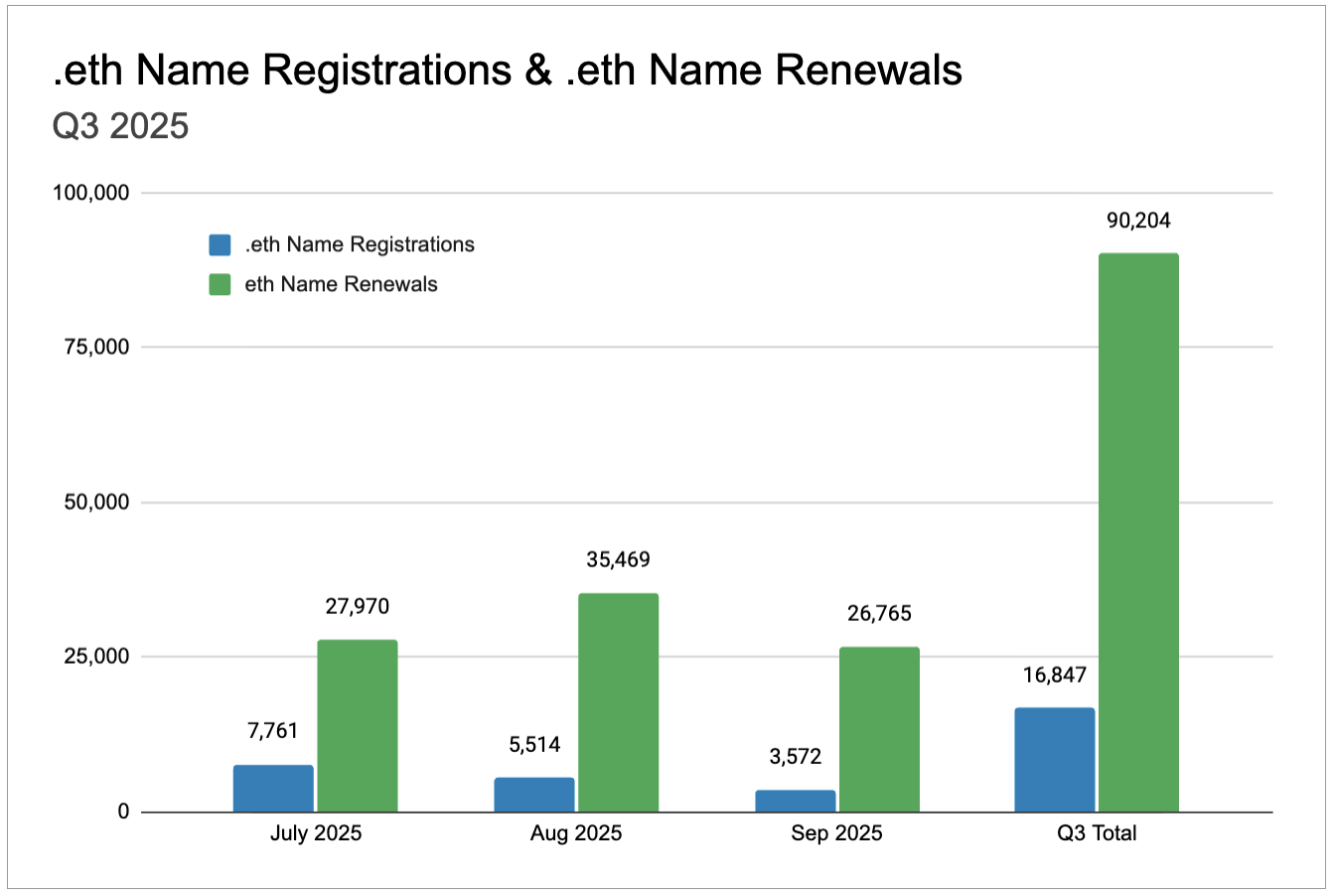
Q3 was a standout quarter for ENS, with 90K+ .eth renewals (up 45% from Q2) fueled by strong momentum in July and August. The ecosystem hit new milestones, with over 1.6M active names, 978K+ primary names, and 728K unique participants.
(Source: https://dune.com/ethereumnameservice/ens)
Ecosystem & Developer Growth
In Q3, ENS representation and attendance was prevalent across global conferences and hackathons including ETHGlobal Cannes, ETHGlobal NYC, ETH Accra, ETH Tokyo, ETH New Delhi and a few others.
We’re also excited to sponsor DevConnect in Buenos Aires this November. You can find us in the Social District where we’ll be hosting live demos and UX sessions. We’ll also be hosting a quest at our booth focused on subname integrations, which you can mint a POAP for!
ETHGlobal Cannes 2025
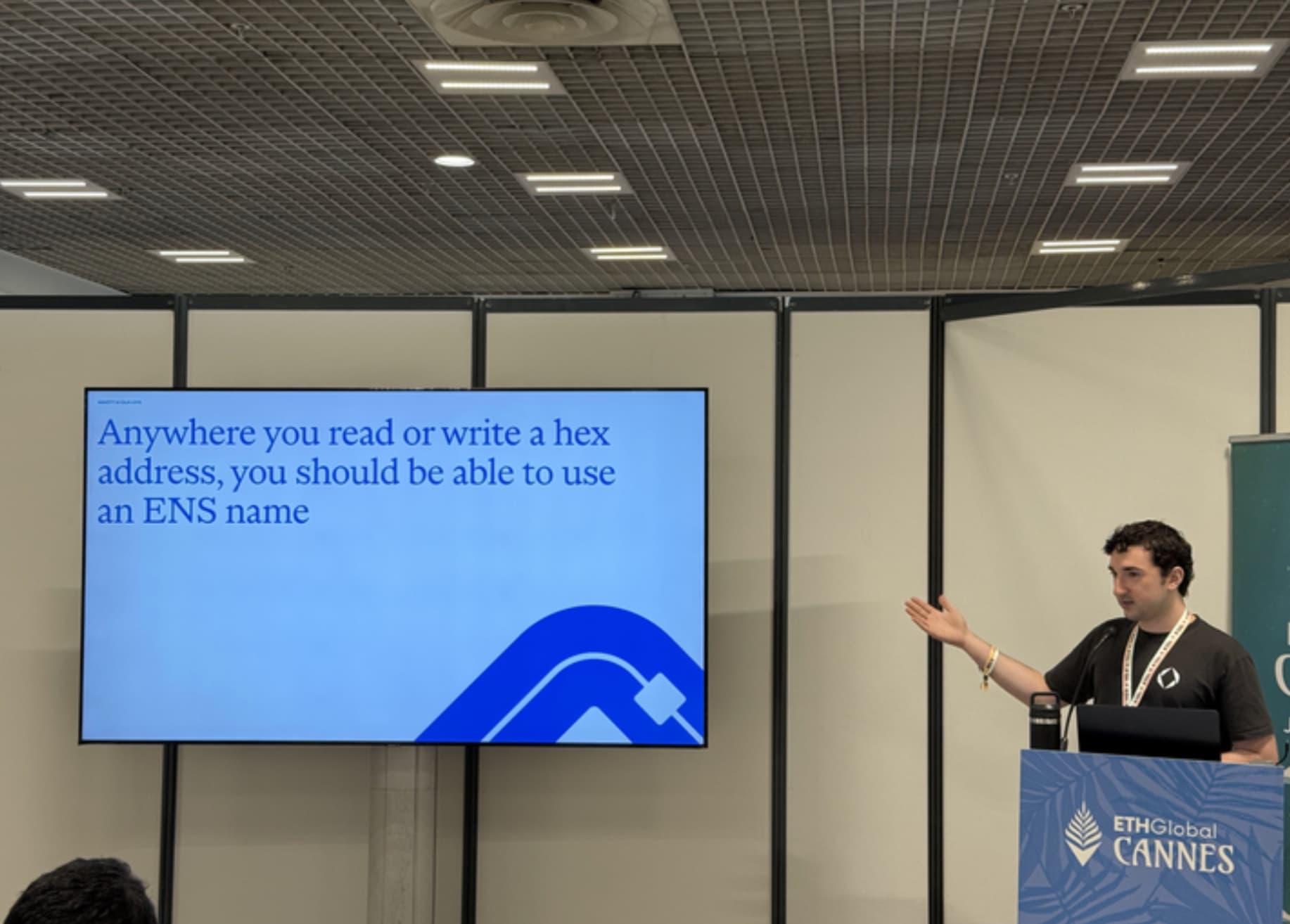
Shout out to the participants in Cannes this year, including 26 projects with 7.8% built on ENS, with 60+ participants and $10K awarded in bounties.
The hackathon kicked off with Greg’s Identity in Your Apps workshop on ENS, new L2 primary names, and an overview of bounties. Then with Erin Beaudoin (Snr Product Designer & Researcher) presenting on the product strategy for ENSv2.
Winning projects were awarded to GitVault (code censorship) for the Best Use of ENS, and a tie between Substream (get paid to your Substream ENS) and Elara (one-click decentralized AI agents) for Most Creative Use Cases.

ETHGlobal NYC 2025
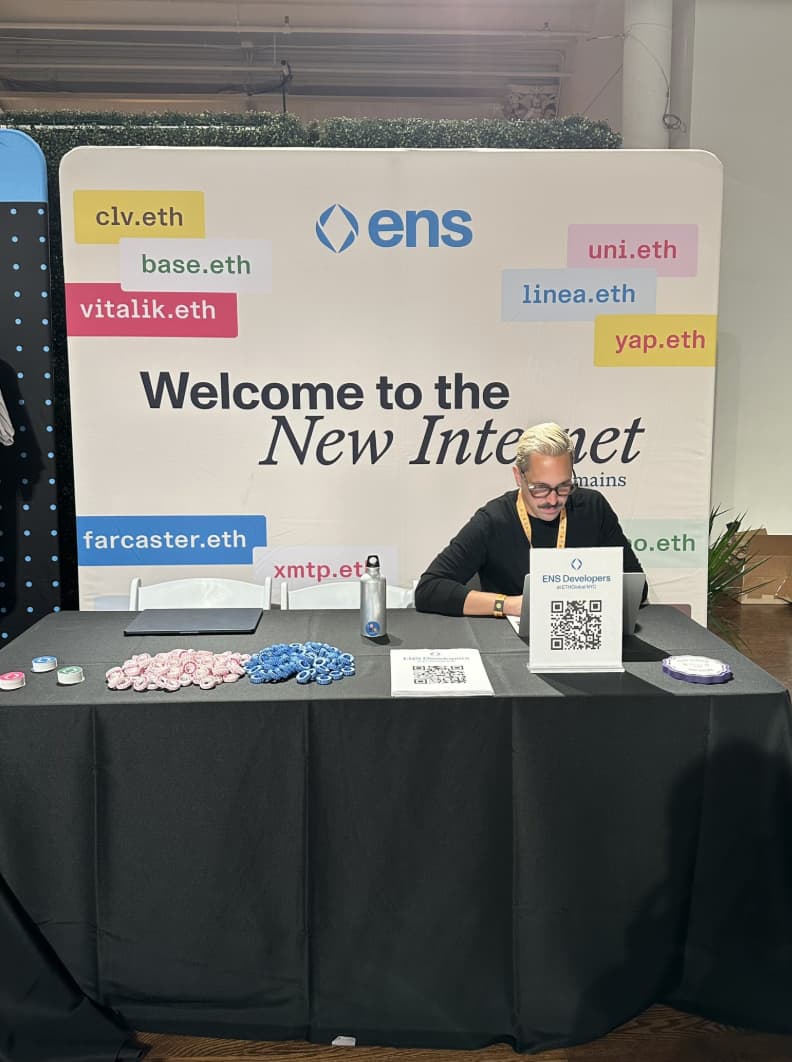
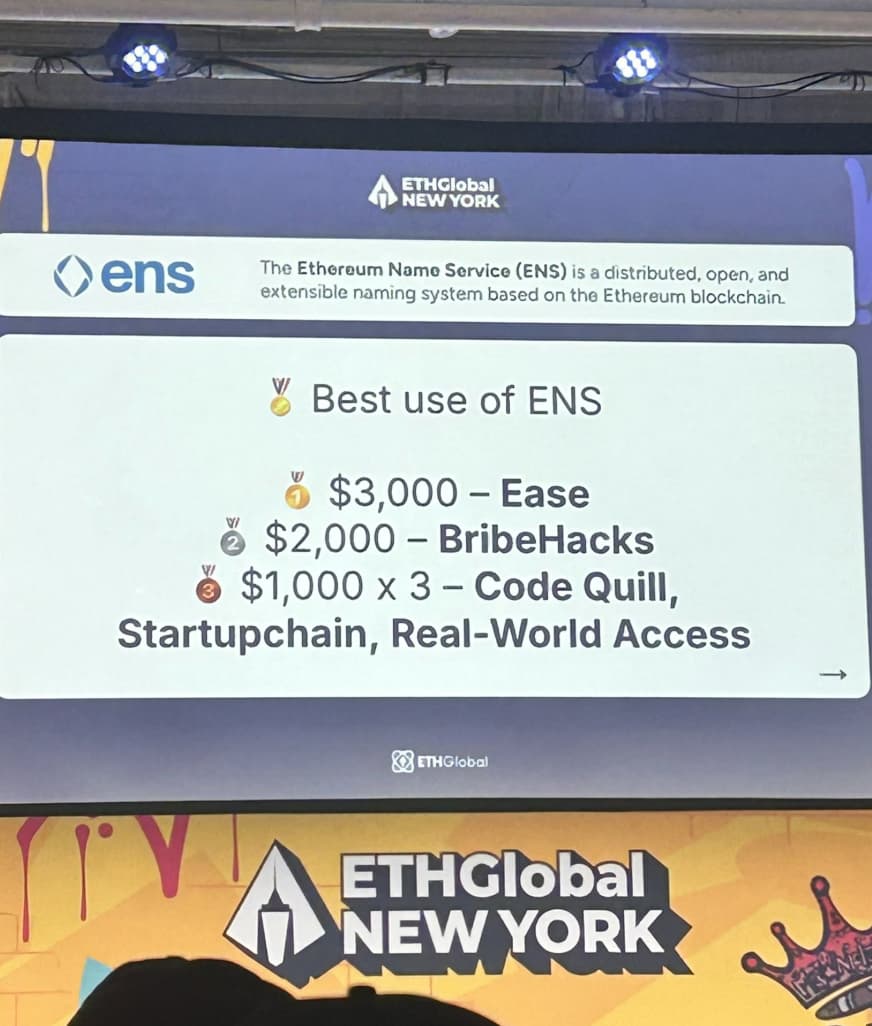
At ETHGlobal NYC this year, we had an impressive 36 projects with 11.6% built on ENS, with 47 participants and $10K awarded in bounties.
Some of the winning projects included Ease (biometric ENS checkout) awarded Best Use of ENS, with BribeHacks (hackathon marketplace) coming in next, and Real-World Access (decentralized access control for RWAs), Startup Chain (startup bootstrapping dApp), and Code Quill (authorship layer for devs) tied for third.
Finally Simon (Head of DevRel) connected with the Gemini team in NYC. Check out our Gemini subname launch stream, one of our first implementations of ERC-7579 modular smart account framework with passkeys!
ETHAccra 2025
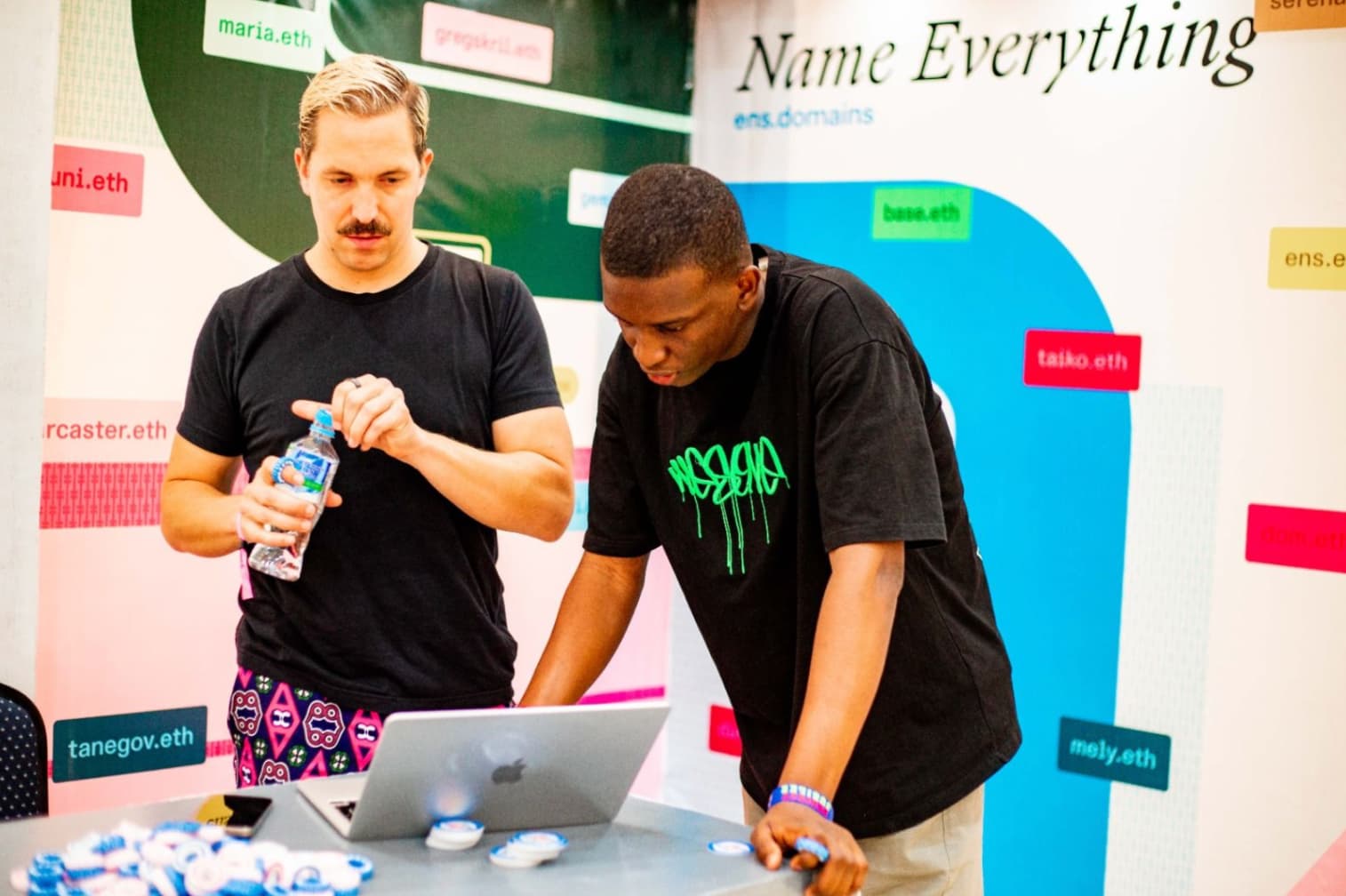
In September, ENS showed up big at ETHAccra sponsoring five events that brought together 600+ builders and developers, and driving ENS’ usage rate at hackathons +50%! Here’s where we showed up:
-
The Magma Builder Summit kicked things off, a 3-day unconference hosted by Yoseph Ayele of Lava VC and Borderless Africa.
-
ETHAccra Builders Day drew 100+ attendees for talks and workshops from Celo, Gnosis, Base, and ENS, followed by ETHGlobal Happy Hour, where hackers and builders were able to connect.
-
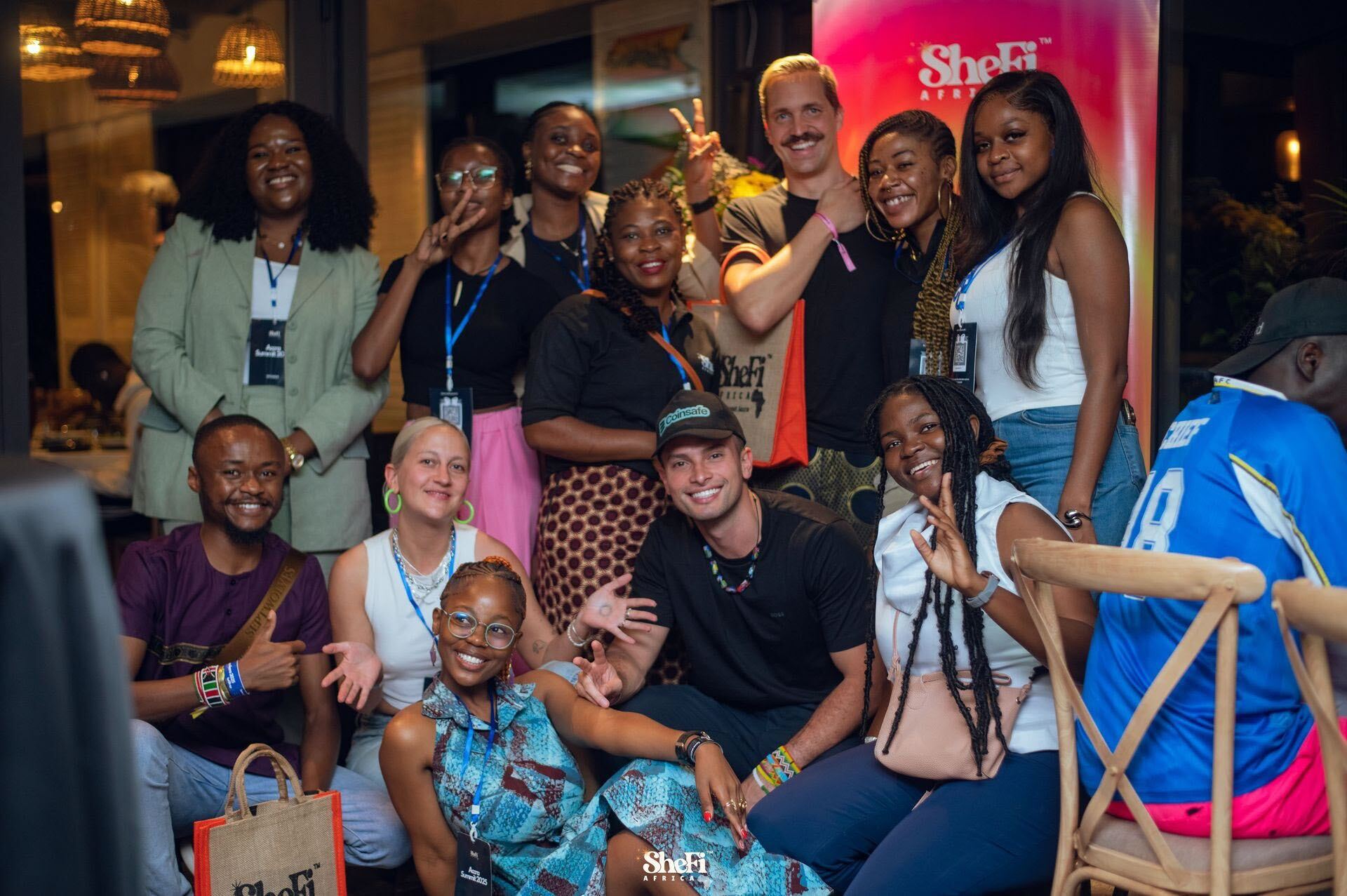
SheFi Africa Summit brought together 50+ attendees for panels, dinner, and a shefi.eth subname minting session, highlighting women leading Africa’s Web3 movement.
-
Finally, the main event ETHAccra saw 400+ attendees and 250+ builders. ENS as a Gold sponsor, saw success in 70% of submissions integrating ENS and 80+ new hacker connections. Winning projects included FusionENS (iOS keyboard + browser extension and EnRouteApp (subname payment routers).
Overall ENS’s presence at ETHAccra reinforced our commitment to empowering builders and supporting Africa’s growing on-chain ecosystem. For more details, check out our ETHAccra recap.
ETHTokyo
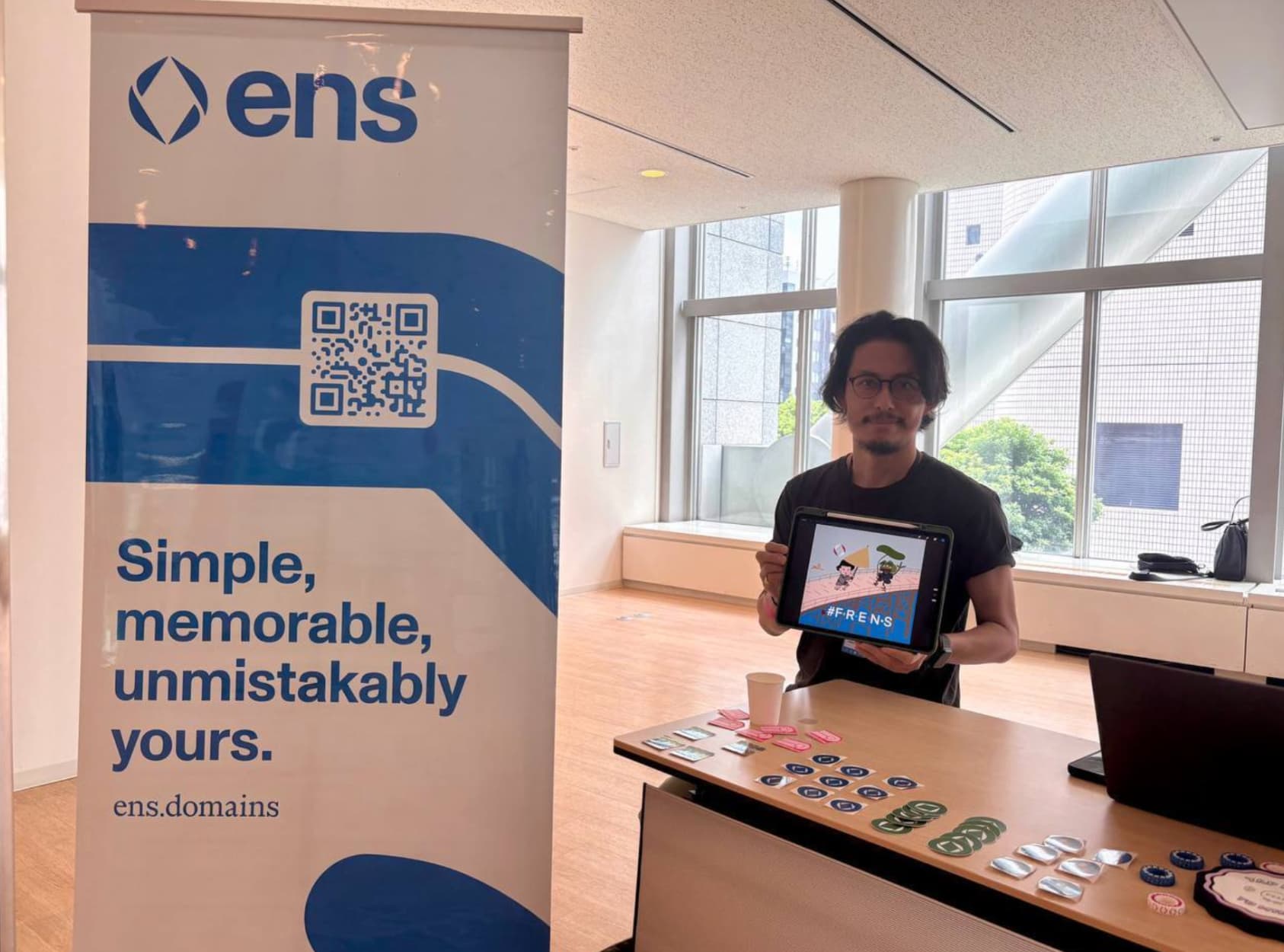
For three days in September in Tokyo, Japan, the ENS team pursued the program’s goals of “Technology for Humanity” and “Allies for Freedom.” ENS’ presence at ETHTokyo was a joint effort between Labs and the DAO’s Public Goods Working Group (“PG WG”).
Key highlights included exploring different ways to integrate ENS ahead of the 1K+ participant hackathon, included ENS use cases spanning across: primary names & multichain resolution, using DNS domains as ENS names via DNSSEC, smart contract naming, decentralized websites (e.g. eth.limo), ENS profiles and records, and subnames.
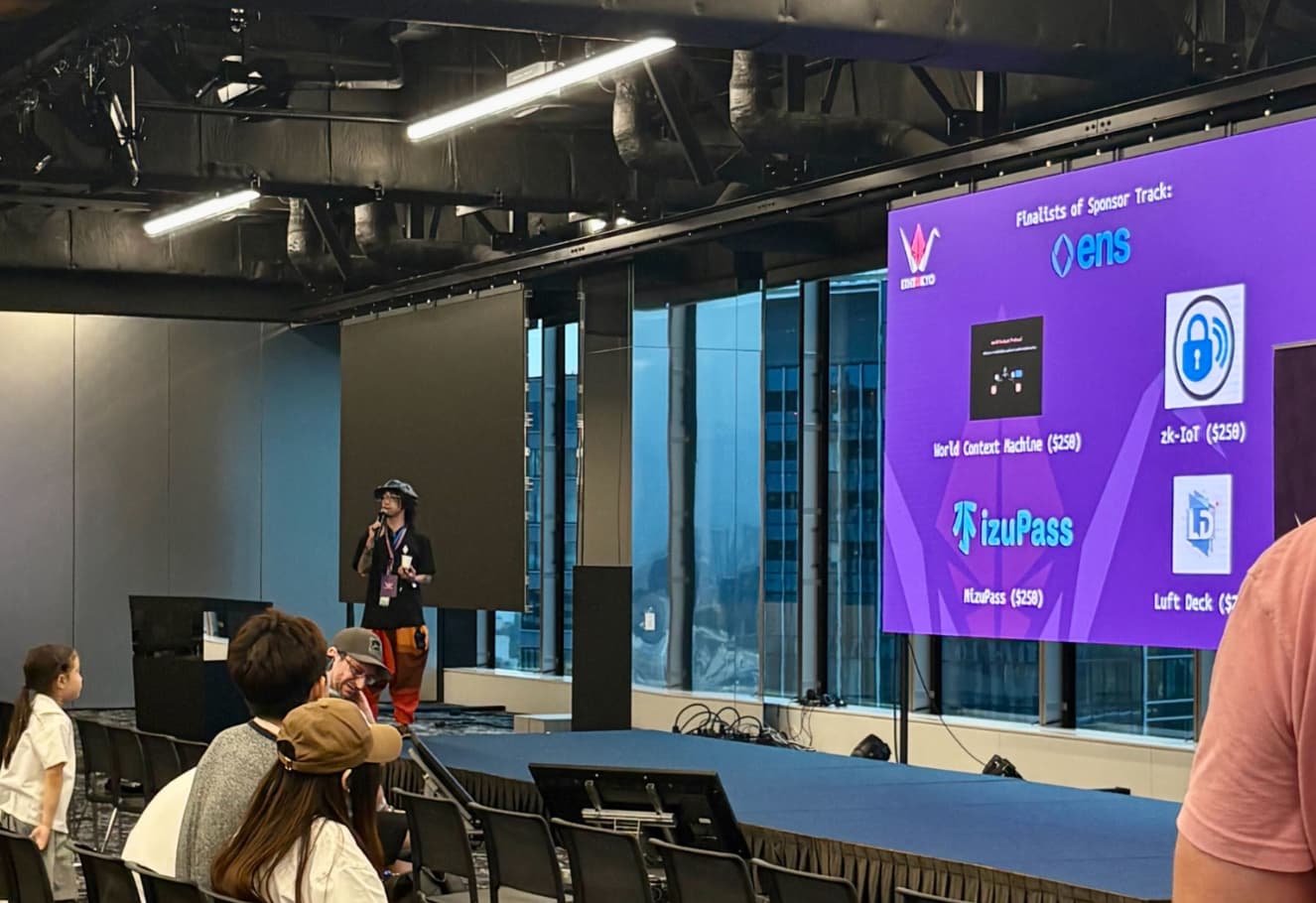
The winning $1K prize awarded to the hackathon winners sponsored by the PG WG, was split between four winners that built on ENS:
-
World Context Machine Ethereum == World State Machine for Human == World Context Machine for AI
-
zk-IoT a framework to enable IoT devices to prove compliance with rules or thresholds without revealing raw sensor data.
-
MizuPass a universal privacy first ticketing platform: ENS DID + ZKPassport verification + stealth JPYM payments + offline ZK proofs for seamless cross-border event access.
-
Luft Deck a privacy-preserving, proximity-based business card sharing app built with zero-knowledge proofs and P2P networking.

ENS joins the SEAL Whitehat Safe Harbor!
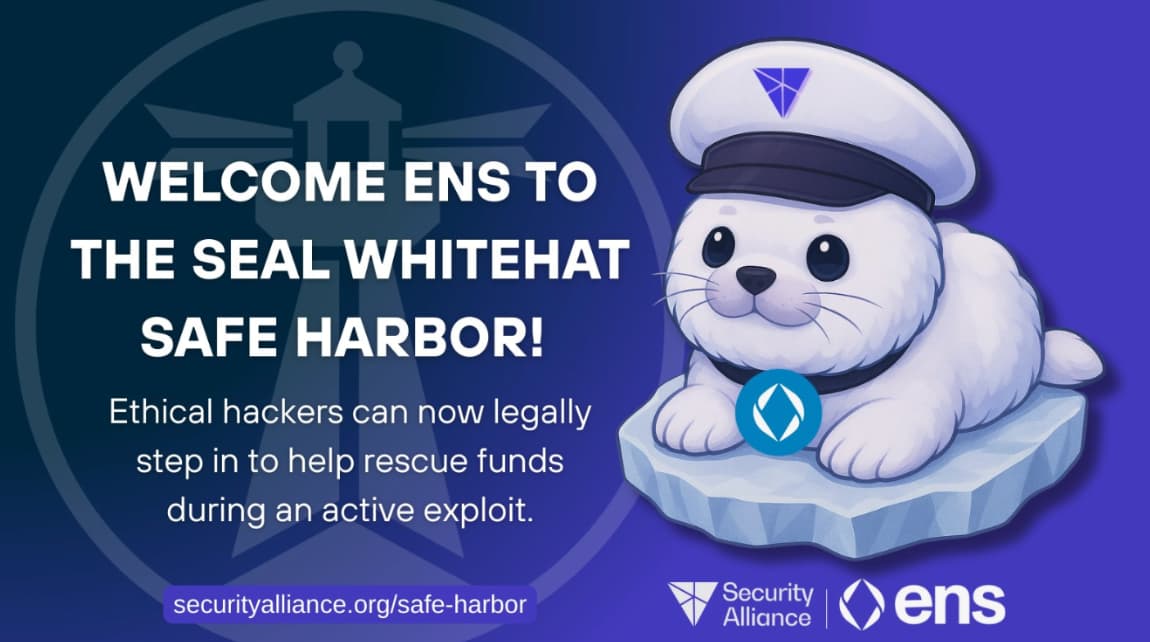
Earlier in June, Nick Johnson and Alex Urbelis met with SEAL leadership and volunteers about enhancing Web3 security and intel sharing across the ecosystem. Followed by on September 10th, ENS Labs officially adopted the SEAL Whitehat Safe Harbor Agreement.
The SEAL Whitehat Safe Harbor is an on-chain legal agreement, which protocols can adopt so that security researchers can rescue a protocol during an ongoing attack. By adopting the whitehat safe harbor agreement, whitehats can rescue your protocol correctly, without worrying about any legal repercussions.
The agreement creates a trusted legal framework that empowers whitehat hackers to safely and transparently intervene during an active exploit. Meaning if a vulnerability is ever discovered or exploited, ethical security researchers can step in to protect user funds and ENS infrastructure without fear of legal persecution.
To date, the Safe Harbor protects $10.9B+ in on-chain assets, covering $59B of DeFi’s TVL, and is deployed on ten blockchains with 18 protocol adoptions.
By joining SEAL’s Safe Harbor initiative, ENS Labs furthered our commitment to security, collaboration, and protecting the broader Web3 ecosystem through transparent and responsible vulnerability response.
ICANN + New 2026 gTLD Applications
Building on our participation at the ICANN Policy Forum in Prague last quarter, we have continued to establish our engagement in the ICANN ecosystem.
The recently closed Guidebook public comment period for the next round of new gTLDs (slated for 2025), brought renewed attention to the overlap between blockchain-based naming systems and traditional DNS – where ENS continues to lead. Earlier in July, Alex Urbelis submitted Public Comments on behalf of ENS in response to ICANN’s Final Proceeding for Proposed Language for the Draft Next Round Applicant Guidebook (AGB).
Highlights on ENS’ public comments included:
-
Many operators of blockchain-based naming systems are expected to apply for their matching DNS strings in the upcoming ICANN gTLD round.
-
We believe that if a new gTLD matches an existing blockchain-based TLD, it should be treated as a compromised asset, since delegating it could expose ICANN and applicants to legal, technical, and security risks.
-
While we support recognition of alternative namespaces, we do not believe alt-TLD operators should receive preferential treatment in the ICANN process for operating outside existing governance structures.
-
We’ve recommended that ICANN expand its String Similarity Evaluation to consider blockchain-based namespaces, helping to reduce name collisions and maintain DNS stability.
Our efforts have not gone unnoticed by the ICANN community. As ENS’s standing rose, we were invited to present at DNS-OARC 45 and ICANN’s Registration Operations Workshop, marking the first time a decentralized protocol will participate in those discussions as a peer. Building on our presence at the Prague Policy Forum, we quickly executed on the .locker integration with Orange Domains, reinforcing how ENS and traditional DNS can work productively together.
Looking ahead to ICANN Dublin, ENS is just about ready to reveal a new partnership that further cements our leadership at the intersection of DNS and Web3.
Partnerships
We continued to further our commitment to strengthening ENS’ ecosystem through strategic partnerships with DNS partners, protocols, decentralized and centralized exchanges, crypto-native communities, and FinTech players.
Key highlights this quarter included: Uni.eth surpassing 2M+ subname registrations, new subname launches with Base currently with 917K+ subnames, Gemini Exchange integrated with ENS with Gemini Wallet subnames at launch already with 15K+ registrations, and SheFi during ETHAccra (as of Sep 30).
The Gemini Wallet integration was featured in The Block, Blockworks and CoinDesk. We also introduced ENS Quests to the latest SheFi cohort and integrated ENS names with OpenSea profiles.
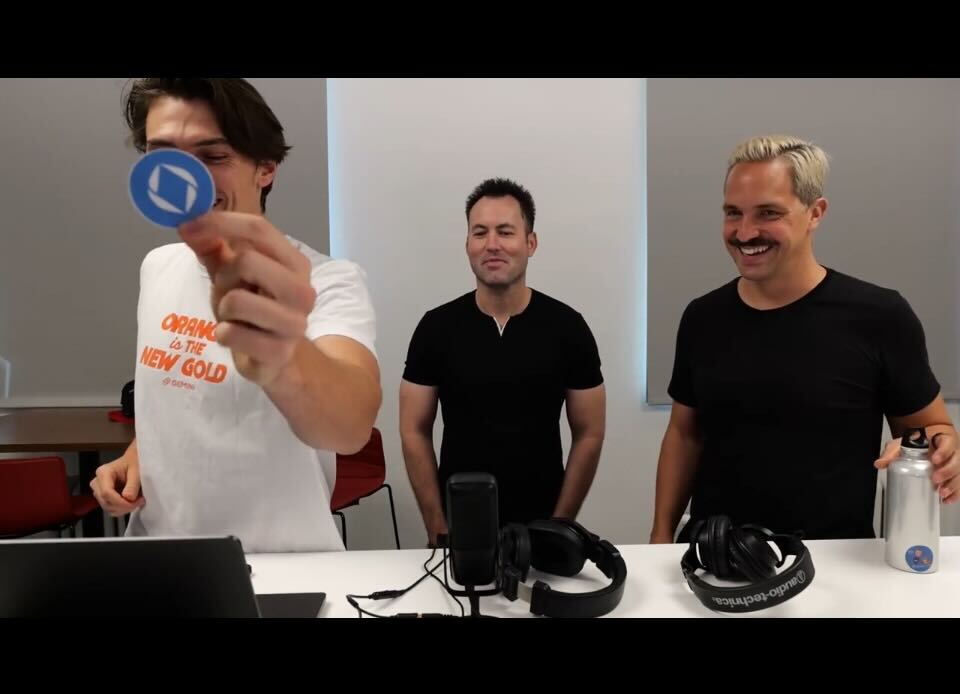
Simon, Head of DevRel, with the Gemini team.
On the identity front, ENS partnered with Orange Domains, an ICANN-accredited registry operator, to enable the .locker TLD and launched a Creator Score integration with Talent Protocol, bridging on-chain identity and reputation.
To expand awareness and education, we published 15 tutorials on ENS features, introduced a new blog tagging system with Intercom search, and released five integrations case studies featuring Uniswap, Base, GoDaddy, PayPal, and World ID that drove 8K+ visits to our ENS Ecosystem page.
Heading into Q4, ENS Labs will build on this momentum by deepening partnerships and expanding integrations across exchanges, wallets, dApps, protocols, and DNS partners to advance a unified, on-chain identity ecosystem.
In the Media
In Q3 2025, ENS was featured in 12 published pieces across The Block, CoinDesk, and The Defiant. Impressively, earned coverage reached an audience of 20.8M, with 149K total views, and almost 400 social engagements.
Highlights include:
-
Nick’s interview on Ethereum’s 10 Year Anniversary, featured on CoinDesk TV.
-
Nick authored and defined Tokenized Domains for CoinMarketCap.
-
Katherine’s commentary on the new era of ETH ETFs covered in Crypto Rank.
-
James’ interview with the Enterprise Ethereum Alliance.
-
James’ discussion with Domain Name Wire on the Future of ENS.
-
Alex’s comments on the Tornado Cash verdict, published in CoinDesk.
-
Alex’s op-ed on the current state of US crypto policy, the GENIUS Act, and where CeFi comes in.
-
Alex’s comments on America Is Becoming The Crypto Capital of CeFi.
Into Q4, we’ll continue expansion of new tutorials and stories that make ENS easier to use and integrate. As always, we’re open to suggestions on what content and topics you’d like to see on anything ENS-related.
Financial Reporting
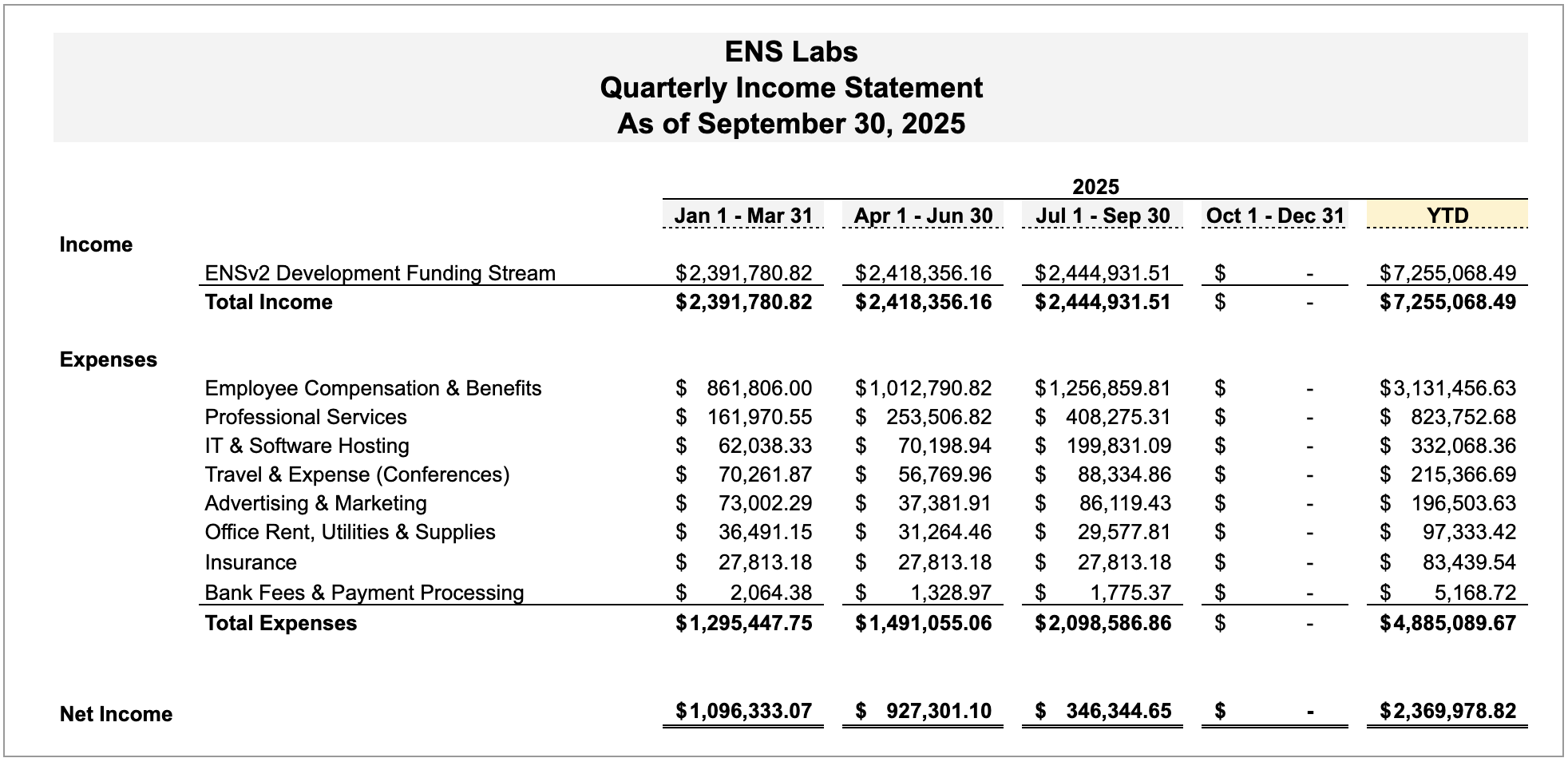
Income
As of Q3 close, we have received $7,255,068.49 USDC from the ENSDAO.
Expenses
Our expenses for Q3 2025 totaled $2,098,586.86 USD (40.7% increase from Q2) with total YTD expenses at $4,885,089.67. The top three expense categories were:
-
Employee Compensation & Benefits (59.9%) for payroll, benefits, and employer contributions for our 30 full-time employees and two contractors.
-
Professional Services (19.5%) August’s increase in expenses was attributed to prepayment towards two audit firms. Additionally, expenses include our regular third-party providers supporting our Accounting, Legal & Compliance, and Recruiting & Hiring efforts.
-
IT & Software Hosting (4.2%) spanning across our Operational and Engineering software and IT service providers (e.g. Google Cloud, Cloudflare).
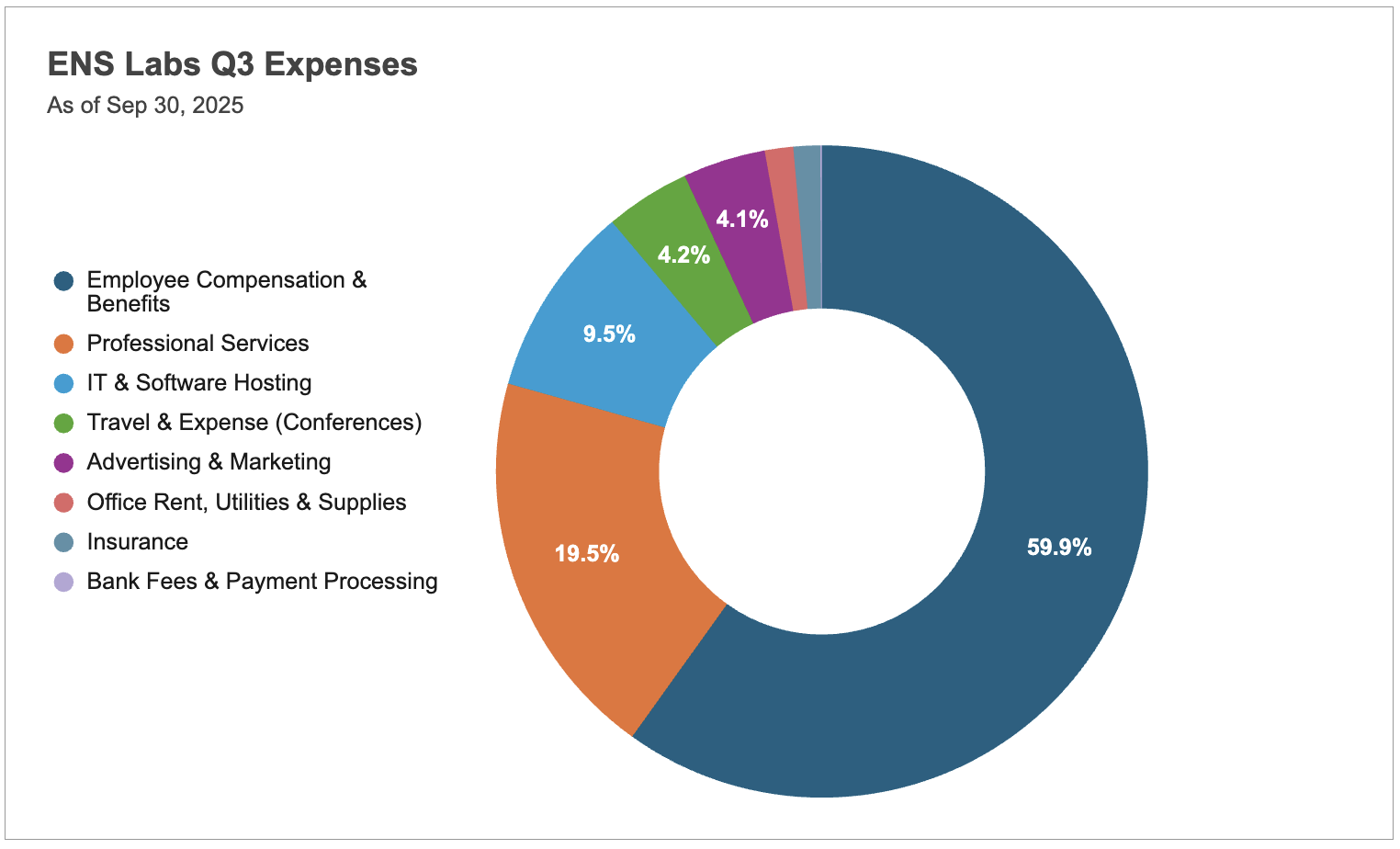
As anticipated, Q3 expenses experienced an uptick due to infrastructure and audit costs related to ENSv2 and Namechain. In Q4, we expect remaining expenses for 2025 to rise as well as we prepare for both launches between now and into 2026. We continue to operate as financially conservative as possible and as always appreciate the ENS DAO’s financial support.
Closing & Looking Ahead
The immediate technical priority for Q4 is ENSv2 readiness. Protocol and Web Engineering will complete audit cycles, expand testing on Namechain DevNet, and begin closed-group trials of the new Manager and Explorer. Feedback from these sessions will guide final refinements before the public rollout planned for early 2026.
As part of that, DevRel will coordinate a Universal Resolver Migration Campaign, helping wallets, dApps, and infrastructure partners update integrations ahead of launch. This proactive approach ensures that when ENSv2 goes live, the ecosystem is already compatible, supporting a crucial step toward a seamless transition.
On the public-facing side, Q4 will showcase ENS at DevConnect Buenos Aires and ETHGlobal BA. These events will serve as the first external demonstrations of the new Manager and the Namechain environment. While Growth and Design are collaborating on new materials, workshops, and visual assets that tell a coherent story about ENSv2’s role in Ethereum’s identity stack.
2025 is already shaping up to be a year to be proud of, and we look forward to closing out the year strong going into the final quarter of 2025. As always, we deeply appreciate your ongoing support and trust as we work towards ENSv2.