1. Welcome ALL [image]
- Welcome to the weekly dose of public goods goodness
- DRC will join us in the next call
- They are putting together a report
2. European Decentralisation Institute draft paper for review
- The team from EDI was presenting the last 2 calls.
- Here is the link to the first draft.
- Request access to review and comment.
3. KaiSign presentation
An open-source clear-signing infrastructure that allows users and wallets to deterministically verify what they are signing on Ethereum.
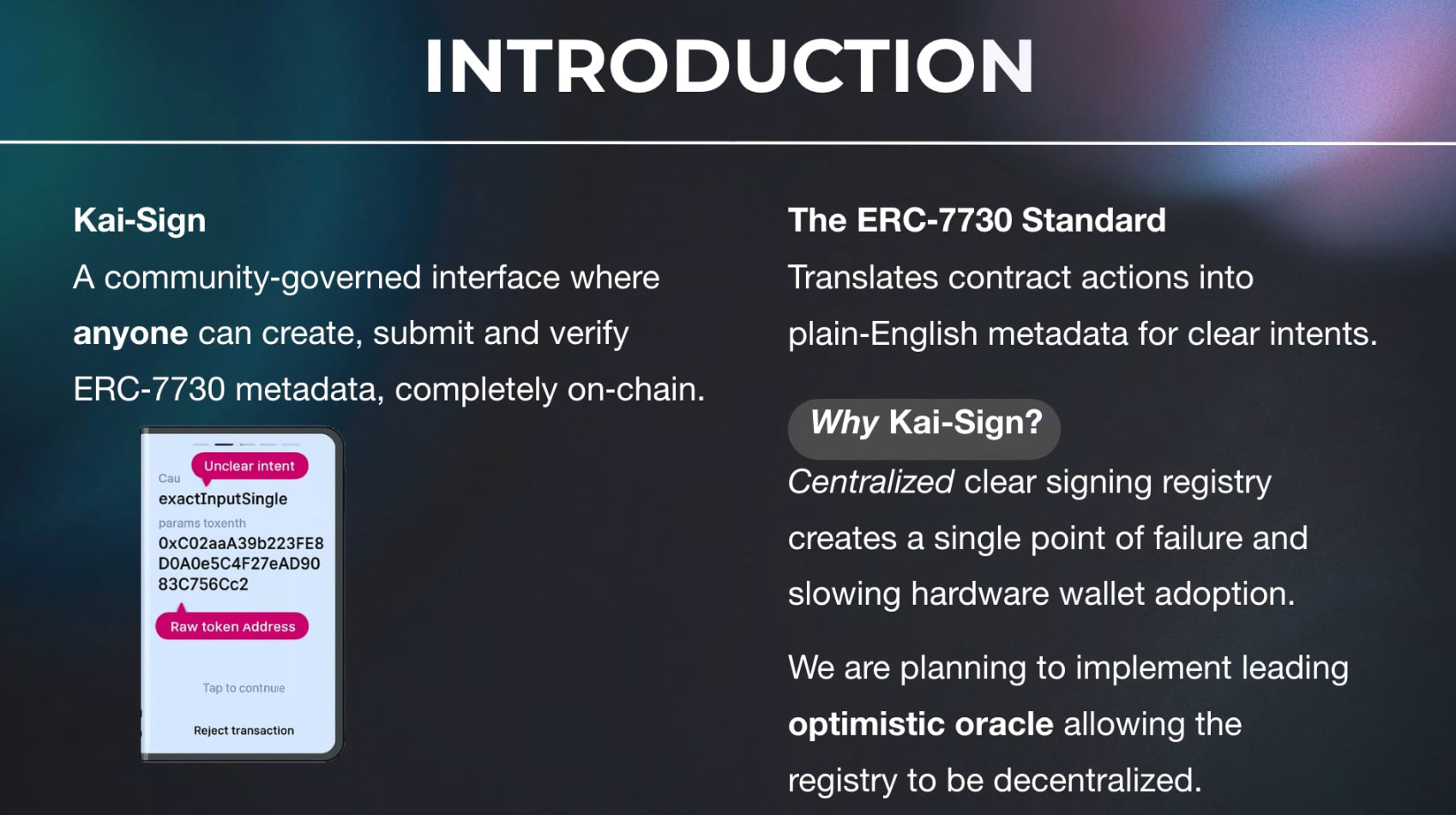
- KaiSign is a project aiming to create a decentralized registry for clear signing, based on the ERC7730 standard.
- Official site: www.kaisign.xyz and Twitter: https://x.com/kai_sign
- The ERC7730 standard is currently used by Ledger in their hybrid wallets, and KaiSign aims to make it openly accessible to all hybrid wallets.
- It uses optimistic oracles, allowing anyone to submit data for verification and binding onchain.
- The structure involves owners and distributors submitting and monitoring submissions, verifying metadata, and registering it onchain.
- Optimistic oracles will record clear data in the registry.
- Practical Implementation and Milestones
- Two milestones for increasing distribution: a Chrome extension and MCP.
- The Chrome extension will intercept transactions between hardware and software wallets, translating transactions found on the interface.
- MCP will utilize the same concept for the extension and AI agents, enabling AI agents to use clear signing metadata instead of raw ABIs.
- See full presentation.
4. Zawadi protocol milestones update
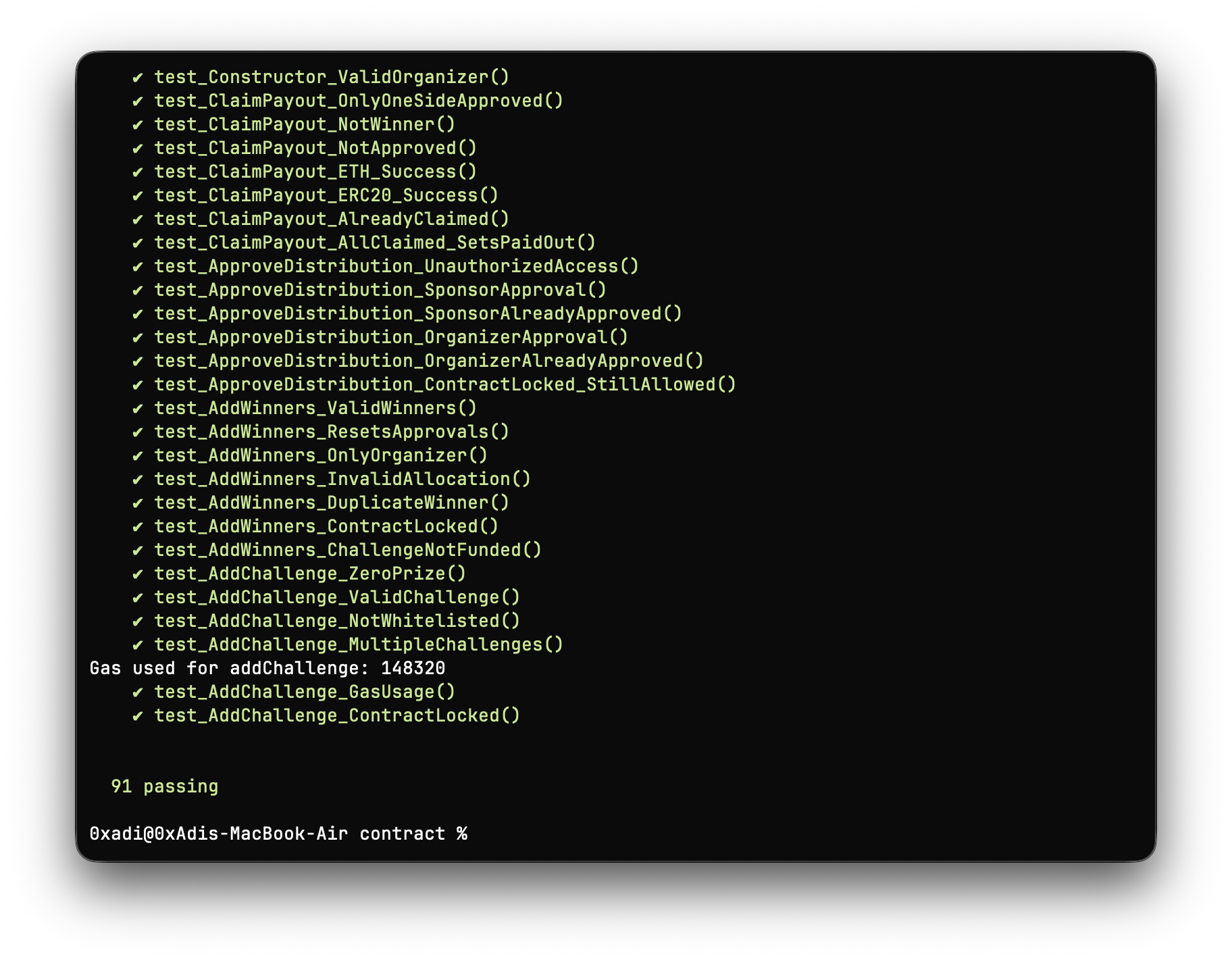
Plug-and-play protocol for hackathon bounty pay-outs
- The initial goal was a security audit and mainnet readiness.
- The budget wasn’t enough for a third-party audit, so an AI security review using Anthropic’s security models was used instead.
- This process identified 15 issues: 1 critical, 3 high, 4 medium, and several informational.
- Fixes were implemented for all bugs found.
- Zawadi Stage 2 Completion Links:
- Mainnet Contract (on Optimism)
- Security Audit Report.
- Live Demo (10 Test Events)
- Technical Test Results.
5. Mike Cooper from Metagov joins us with preliminary ENS Dao Retro recommendations - call for feedback
- Mike Cooper is leading the efforts for the ENS retro
- The Retro has three phases:
- Phase 1: data collection, which included a lot of interviews.
- Phase 2: looking at the key challenges that the Retro has been focusing on and looking at evidence outside of ENS.
- These challenges that ENS is facing are not necessarily unique to ENS. A lot of decentralized governance systems face the same kind of learning curve and the same kind of challenges that ENS is facing now.
- The recommendations have been tried and tested in other contexts.
- Key Decisions for ENS
- Accountability decisions
- Transparency decisions
- Structural reform decisions
- Data gaps exist in each of these areas.
- Recommendations are made to plug these data gaps so that the best fit evidence is readily available when decisions are made.
- Structural reform decisions are highly prioritized decisions that require better data, more data, and higher quality data.
Recommendations
Recommendations Regarding Structural Changes
- The research team is not recommending any structural changes to the ENS structure.
- There is not a sufficient level, quality, and quantity of data to make these kinds of structural changes right now.
- The recommendation is to take more immediate remedial actions that provide the data needed for better structural changes down the road, if that is what ENS wants to do.
- All of this is in the Google folder, which can be accessed through the forum post.
- The research team wants to discuss these preliminary recommendations with ENS, get feedback, and then take that feedback and make their final recommendations.
Master Plan Recommendation
- A master plan provides clarity and accountability to anyone inside or outside of ENS to be able to say what ENS is set up to do and how it’s performing against its ultimate objectives.
- This master plan would entail 2 to 3 objectives for labs, for working groups, etc., but it doesn’t mandate the strategy for achieving those objectives.
- A master plan helps to mitigate confusion, provides a common understanding, and helps to address centralization and accountability issues.
Transparent Infrastructure Recommendation
- Recommendation around creating a transparent infrastructure that improves transparency.
- This includes documentation practices and setting up a centralized data repository.
- The goal is for anyone to be able to go to one place and gain a complete, accurate, and up-to-date understanding of what ENS is doing as a whole in terms of its objectives and its performance against those objectives.
- Key components of that transparency infrastructure include standard templates for retro evaluations, quarterly reports, and proposal templates.
Delegate Accountability Recommendation
- This goes into creating delegate dashboards, participation metrics, delegates being obligated to provide a rationale for the ways that they have voted as well as different safeguards around conflict of interest.
- The research team is proposing the consideration of different types of safeguards, whether it’s being open and transparent about a possible conflict of interest or different types of remedial actions.
Treasury Oversight Recommendation
- This involves standardized practices around RFPs, different procurement templates, and reporting from service providers and vendors.
- It also opens up options for occasional milestone evaluations and third-party evaluations over treasury management spending.
Graduated Sanctions Recommendation
- This involves identifying those actions and behaviors that we want to avoid at all costs and prioritizing them, and then setting proportional sanctions against those instances.
- This is probably the most difficult recommendation to do.
Office Hours and SPP Application
- Office hours are posted in the forum with times and links.
- The hope is to have a dialogue with ENS to determine primary areas of concern and actions to avoid.
6. Open floor for all questions, proposals and other presentations etc.
- /