5. The DRC presents updates on the current legislative landscape
Stablecoin yield is a big issue.
Banks negotiated a position in the Genius Act that stablecoin yield issuers can’t offer interest, but stablecoin business partnerships can.
Coinbase offers 3.5 APY for USDC holders, which is attractive to consumers.
Banks lobbied Republicans, arguing that exchanges offering high interest through stablecoin rewards would cause a bank run.
Brian Armstrong (Coinbase CEO) threatened to pull support from the market structure bill if the stablecoin issue wasn’t resolved.
AML and the fake secrecy act requirements in DeFi are contentious.
3 Republican offices supported the proposal, but it was pulled and will be reproposed in March
The CFTC held a markup, with Republicans voting for it and Democrats abstaining.
They’re advocating for a bipartisan quorum at the CFTC and SEC.
Democrats are asking for the president to nominate and confirm Democrat and Republican commissioners at the SEC and CFTC before engaging with digital asset market structure rulemaking.
Ethics concerns exist due to the President’s family’s involvement in digital asset markets.
Democrats want an ethics provision preventing the President, Vice President, members of Congress, and senior executive branch officials from personally benefiting from digital asset financial dealings while in office.
Working on narrow issues pertinent to ENS and its community, including developer protections to reduce liability.
Rulemaking will happen from agencies like the SEC and CFTC, regardless of whether the market structure bill passes.
Focusing on advocacy for L2s.
Aiming to ensure L2s are not seen as traditional financial technology.
Kicking off a working group with a broader group of L2s later this month.
6. Open floor for all questions, proposals and other presentations etc.
Welcome to the weekly dose of public goods goodness.
2. European Decentralisation Institute Digital Identity Policy project updates
Initiative is about Digital Identity Policy in Europe.
Not limited to the EU, includes the UK, Switzerland, Norway, and Central Eastern Europe.
Seeking active contribution from Switzerland and the UK.
End of March/Early April: Closed-door roundtable with 25-30 participants (policymakers from EU, UK, Switzerland, politicians, industry executives, subject matter experts).
Location: Most probably Switzerland (Zurich or Zug).
Policy brief sent to policymakers, politicians, industry, media, think tanks, blockchain foundations, and published on their channels.
The policy brief revolves around the notion of digital subsidiaries.
The first policy brief discussed decentralization in the context of digital sovereignty.
Next steps: conceptualize the triangle between digital sovereignty, subsidiarity, and identity.
A comparative study will be conducted across several identity systems around the world.
Like the identity system in Bhutan on Ethereum and Aadhaar in India will be examined.
Interviews will be conducted to understand how the principle of subsidiarity was considered and the choices made.
The document will be available for review from March 1st onward.
3. Interop research project updates on morphing into dnssec solutions bridging dns → ens
Project is morphing and evolving.
Focus is on the Unified Resolver Matrix, specifically the branch most relevant to the Ethereum protocol’s evolution.
Experimenting with the P256 pre-compile since the Fushaka upgrade.
Universal Resolver Matrix developed using the grant.
A “how-to” guide for using different resolution patterns on different namespaces across different platforms and protocols.
Includes DNSSEC resolution pattern, EVM resolution pattern, non-EVM resolution patterns, and WebAuthn resolution.
European Decentralisation Institute Digital Identity Policy project updates part deux
Deimos presentation: an open-source mobile ZK benchmarking platform that measures client-side proving performance on Android and iOS devices
Voterax presentation: a privacy-preserving, reputation-powered coordination layer designed to enable fair and transparent decision-making across Web3 and Web2 institutions
Open floor for all questions, proposals and other presentations etc.
4. Voterax presentation: a privacy-preserving, reputation-powered coordination layer designed to enable fair and transparent decision-making across Web3 and Web2 institutions
European Decentralisation Institute draft paper for review
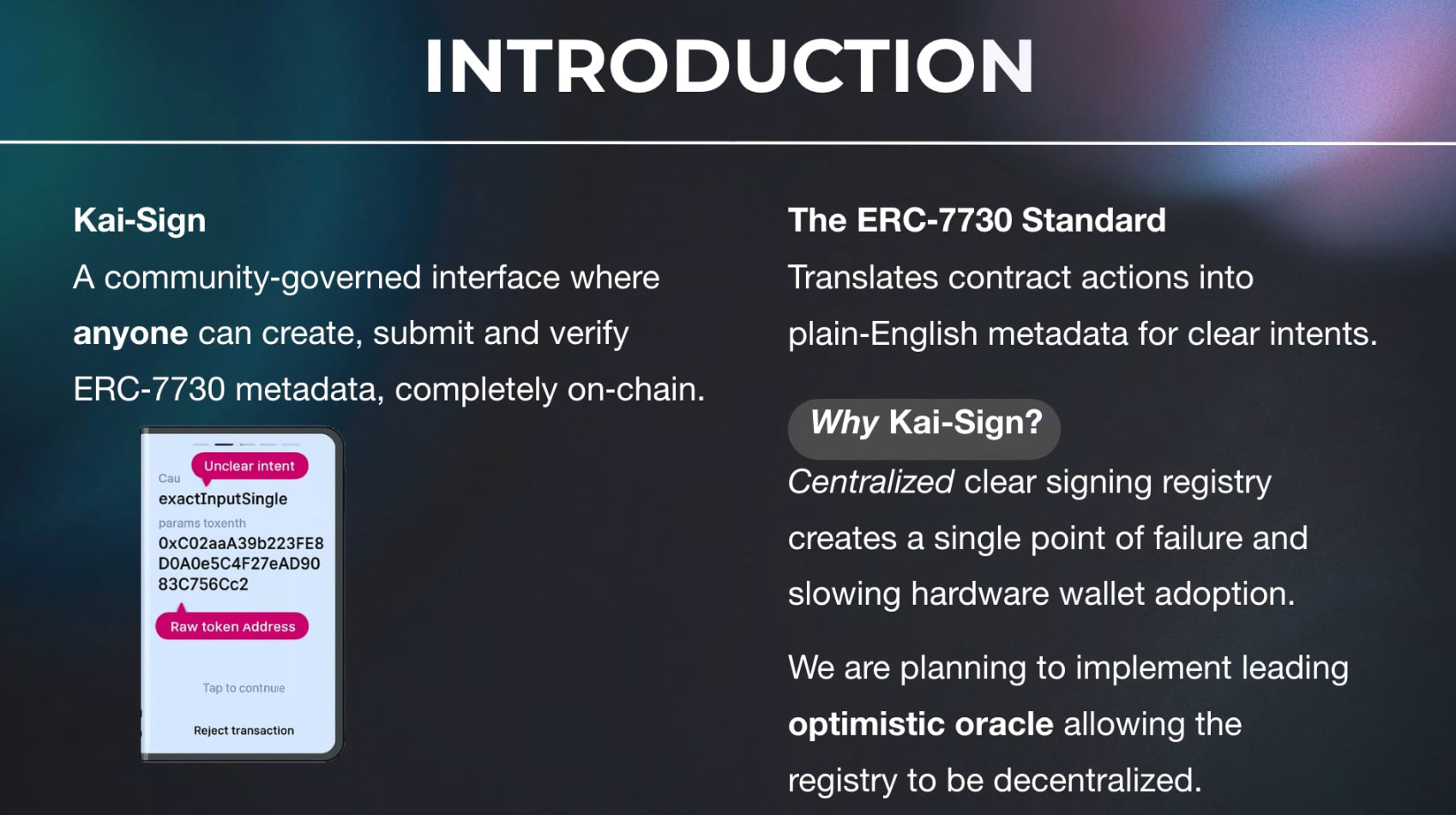
KaiSign presentation: an open-source clear-signing infrastructure that allows users and wallets to deterministically verify what they are signing on Ethereum
Zawadi protocol milestones update: Plug-and-play protocol for hackathon bounty pay-outs
Mike Cooper from Metagov joins us with preliminary ENS Dao Retro recommendations - call for feedback
Open floor for all questions, proposals and other presentations etc.
5. Mike Cooper from Metagov joins us with preliminary ENS Dao Retro recommendations - call for feedback
Mike Cooper is leading the efforts for the ENS retro
The Retro has three phases:
Phase 1: data collection, which included a lot of interviews.
Phase 2: looking at the key challenges that the Retro has been focusing on and looking at evidence outside of ENS.
These challenges that ENS is facing are not necessarily unique to ENS. A lot of decentralized governance systems face the same kind of learning curve and the same kind of challenges that ENS is facing now.
The recommendations have been tried and tested in other contexts.
Key Decisions for ENS
Accountability decisions
Transparency decisions
Structural reform decisions
Data gaps exist in each of these areas.
Recommendations are made to plug these data gaps so that the best fit evidence is readily available when decisions are made.
Structural reform decisions are highly prioritized decisions that require better data, more data, and higher quality data.
Recommendations
Recommendations Regarding Structural Changes
The research team is not recommending any structural changes to the ENS structure.
There is not a sufficient level, quality, and quantity of data to make these kinds of structural changes right now.
The recommendation is to take more immediate remedial actions that provide the data needed for better structural changes down the road, if that is what ENS wants to do.
All of this is in the Google folder, which can be accessed through the forum post.
The research team wants to discuss these preliminary recommendations with ENS, get feedback, and then take that feedback and make their final recommendations.
Master Plan Recommendation
A master plan provides clarity and accountability to anyone inside or outside of ENS to be able to say what ENS is set up to do and how it’s performing against its ultimate objectives.
This master plan would entail 2 to 3 objectives for labs, for working groups, etc., but it doesn’t mandate the strategy for achieving those objectives.
A master plan helps to mitigate confusion, provides a common understanding, and helps to address centralization and accountability issues.
Transparent Infrastructure Recommendation
Recommendation around creating a transparent infrastructure that improves transparency.
This includes documentation practices and setting up a centralized data repository.
The goal is for anyone to be able to go to one place and gain a complete, accurate, and up-to-date understanding of what ENS is doing as a whole in terms of its objectives and its performance against those objectives.
Key components of that transparency infrastructure include standard templates for retro evaluations, quarterly reports, and proposal templates.
Delegate Accountability Recommendation
This goes into creating delegate dashboards, participation metrics, delegates being obligated to provide a rationale for the ways that they have voted as well as different safeguards around conflict of interest.
The research team is proposing the consideration of different types of safeguards, whether it’s being open and transparent about a possible conflict of interest or different types of remedial actions.
Treasury Oversight Recommendation
This involves standardized practices around RFPs, different procurement templates, and reporting from service providers and vendors.
It also opens up options for occasional milestone evaluations and third-party evaluations over treasury management spending.
Graduated Sanctions Recommendation
This involves identifying those actions and behaviors that we want to avoid at all costs and prioritizing them, and then setting proportional sanctions against those instances.
This is probably the most difficult recommendation to do.
The Decentralization Research Center (DRC) joins us with an overview of their classifications work, addressing DeFi misinterpretations, and ENS-relevant applications
European Decentralisation Institute Milestone 1 finalized, draft policy brief, and all other items ready for review. You can find more information here on their Notion.
Update on Builder Grants
Open floor for all questions, proposals, and other presentations, etc.
Overview of their classifications work, addressing DeFi misinterpretations, and ENS-relevant applications.
Legislation is going through the Senate, but negotiations are holding things up.
A large part of the holdup is due to stablecoin yield debates and negotiations between tradfi and exchanges/stablecoin issuers.
There is a 30-40% probability that market structure will ultimately be signed into law.
They are still actively working on it, which is a positive sign.
Some proposals suggest that decentralized communities/protocols should have safeguards in place to address vulnerabilities.
Blacklisting or whitelisting protocols places undue regulatory burdens on decentralized communities.
Proposals include creating innovation centers within the government and working with organizations like Seal.
On March 17, the SEC and CFTC released joint guidance updating interpretations of token classifications: digital commodity, collectible, digital tool, stablecoin, and digital securities.
ENS domains were explicitly named as an example of a digital tool, where utility, not profit expectation, drives acquisition.
The ENS governance token was not explicitly categorized, requiring further clarification.
4. European Decentralisation Institute
Milestone 1 finalized, draft policy brief, and all other items ready for review. You can find more information here on their Notion.
5. Update on Builder Grants
A bug in Builder Grants caused duplicated records, which has been fixed.
The queue in Builder Grants is mostly caught up, with remaining entries to be resolved by the end of the week.
6. Open floor for all questions, proposals, and other presentations, etc.
Lighthouse Labs has developed a web-based voting interface for ENS, similar to Tally, which recently shut down.
They propose building out the tool to highlight ENS and utilize onchain data, differentiating it from Tally’s siloed platform.
A temp check post was created to gauge interest in funding the project as a public good.
There are concerns about demand and whether other ecosystems would be interested in supporting it beyond ENS.
Lighthouse is putting data onchain, which is interesting, but it’s not clear if it’s enough of an evolution from Tally.
When Tally first shut down, there was concern about who would fill the vacuum, with Agora being the only alternative.
Snapshot announced their governor support, so ENS people can vote on Snapshot.
Tally made an announcement about their support continuing.
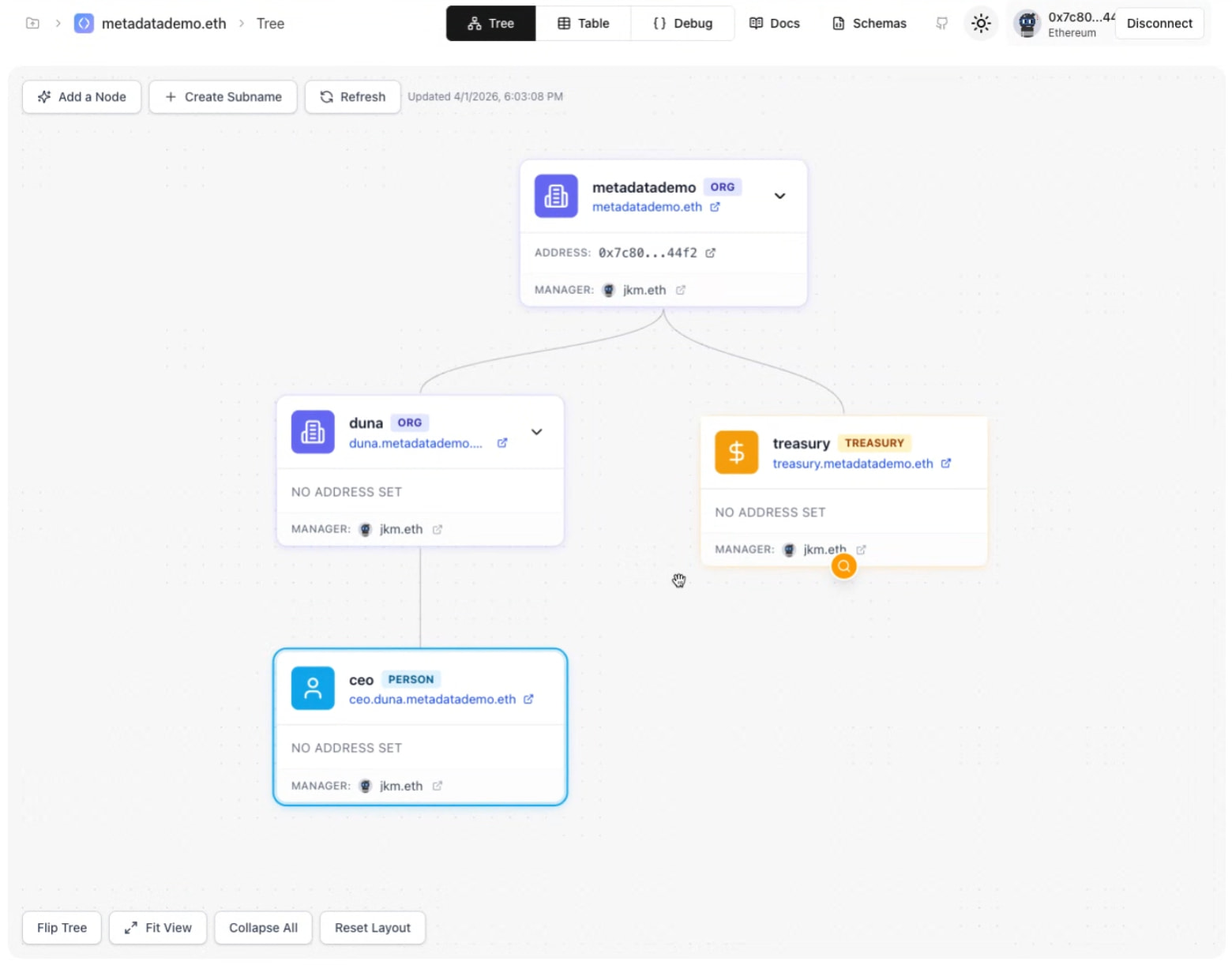
OnChain Metadata Demo
MetaGov working group funded a project six months ago to build a standard for storing metadata onchain attached to ENS names and subnames.
ENS names have a tree architecture with subnames.
The idea with metadata is that ENS is owned and managed by ENS DAO.
The information includes a description, labeling it as an organization, explaining it’s a DAO, and giving it a name.
Subnames can represent legal entities, with metadata including official registered addresses.
Schemas define the metadata expected on a node, making it customizable.
Users can design their own datasets for specific purposes, which can be copied and propagated.
UIs can intelligently pull in this data.
The UI can look up signers on the treasury and display their information.
Delegation statements specific to different DAOs can be stored onchain and pulled into the voting interface.
ENS eth could have metadata listing all its treasuries, pulled trustlessly from onchain data.
The interface could be packaged and deployed on IPFS for decentralization.
AI and ENS
There’s a schema type to represent AI agents that’s compatible with ERC8004.
AI agents can have ENS names and publish metadata onchain, such as their capabilities.
An SDK and CLI are in progress that would allow an AI agent to query metadata using an ENS name.
Onboarding is a challenge, but showing the value can get people excited, especially with AI agents.
One of their big goals is to get the ENSIP formalized and accepted, but there is very little clarity on how to actually do that.
One of their main commitments was to end with an ENSIP that is complete, documents everything, and is a standard that can be pointed to as they try to achieve adoption.
European Decentralisation Institute updates: following on from the roundtable on Digital Identity and European Sovereignty that brought together a genuinely rare mix of perspectives: 25 practitioners, policymakers, academics, and civil society representatives spanning multiple jurisdictions including India, Canada, Australia, Bhutan, Switzerland, the UK, the OECD, and the EU institutional space. Discussions covered nation-scale deployments, governance models, trust frameworks, and civil society perspectives on privacy, inclusion, and humanitarian identity.
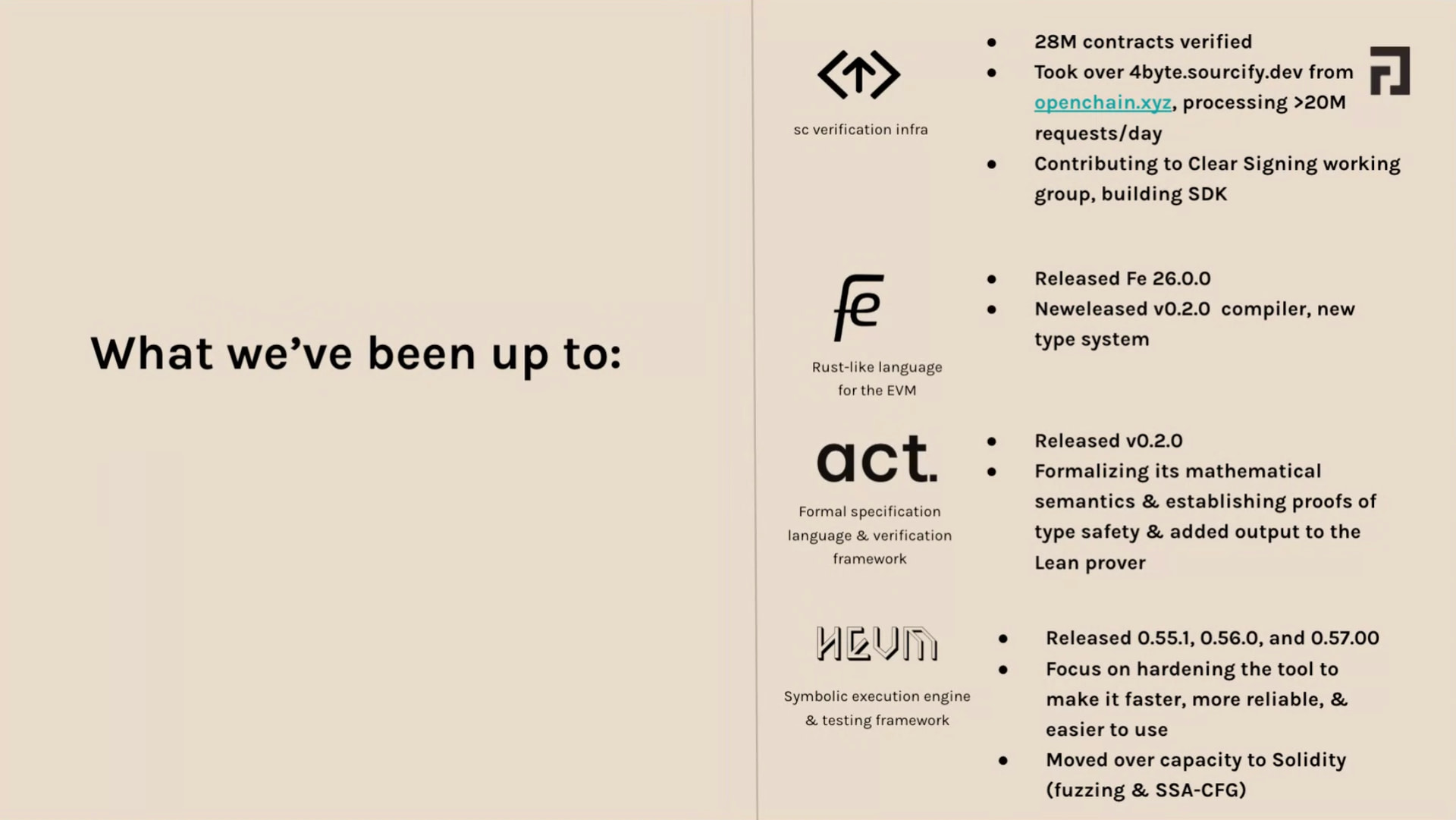
Argot Collective updates: Lea and Jacob from the Solidity team join us to share what the Collective has been working on
Open floor for all questions, proposals and other presentations etc.
A malicious submission attempting to extract funds was identified and stopped with the help of the BuidlGuidl team.
2. European Decentralisation Institute updates
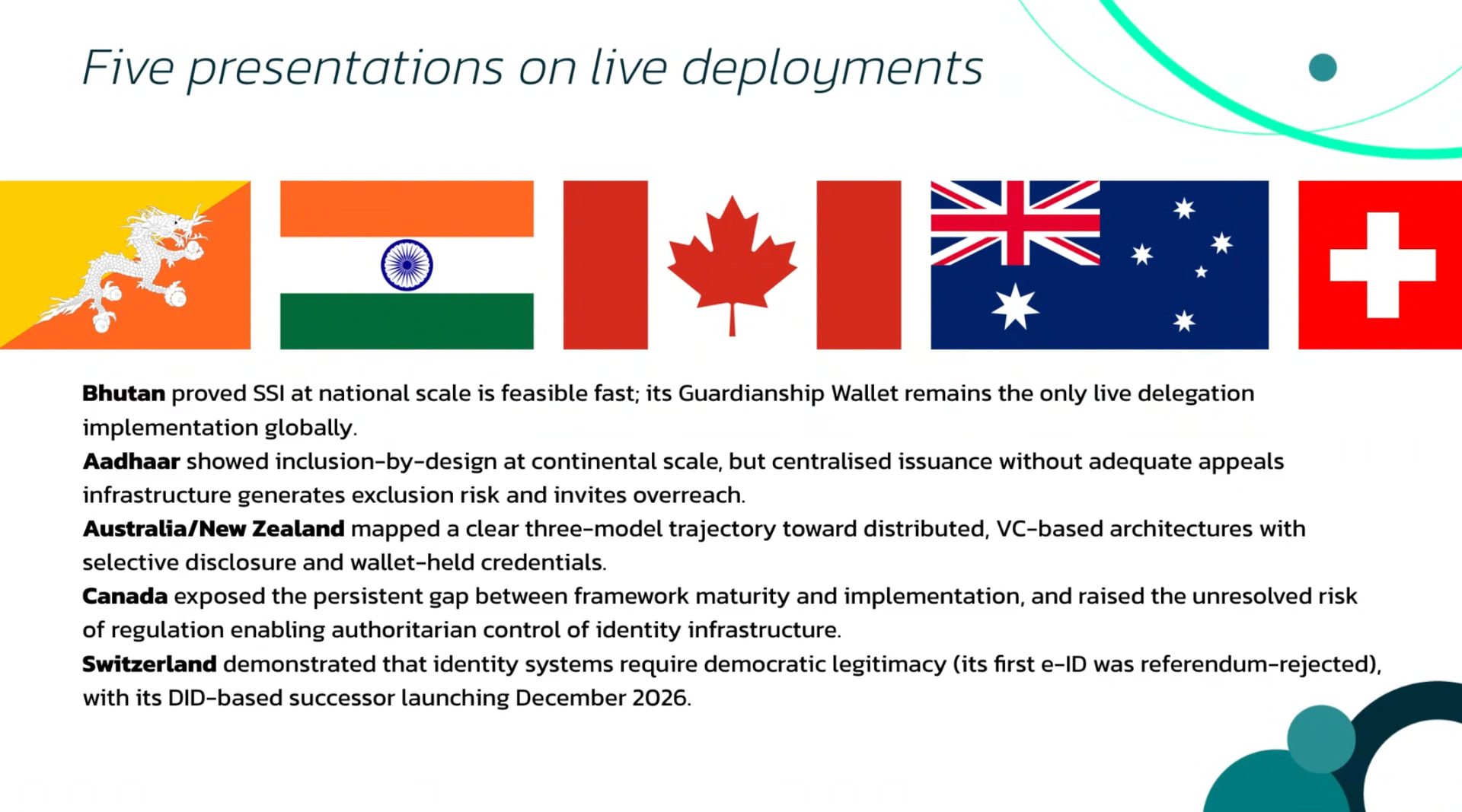
Following on from the roundtable on Digital Identity and European Sovereignty that brought together a genuinely rare mix of perspectives: 25 practitioners, policymakers, academics, and civil society representatives spanning multiple jurisdictions including India, Canada, Australia, Bhutan, Switzerland, the UK, the OECD, and the EU institutional space. Discussions covered nation-scale deployments, governance models, trust frameworks, and civil society perspectives on privacy, inclusion, and humanitarian identity.
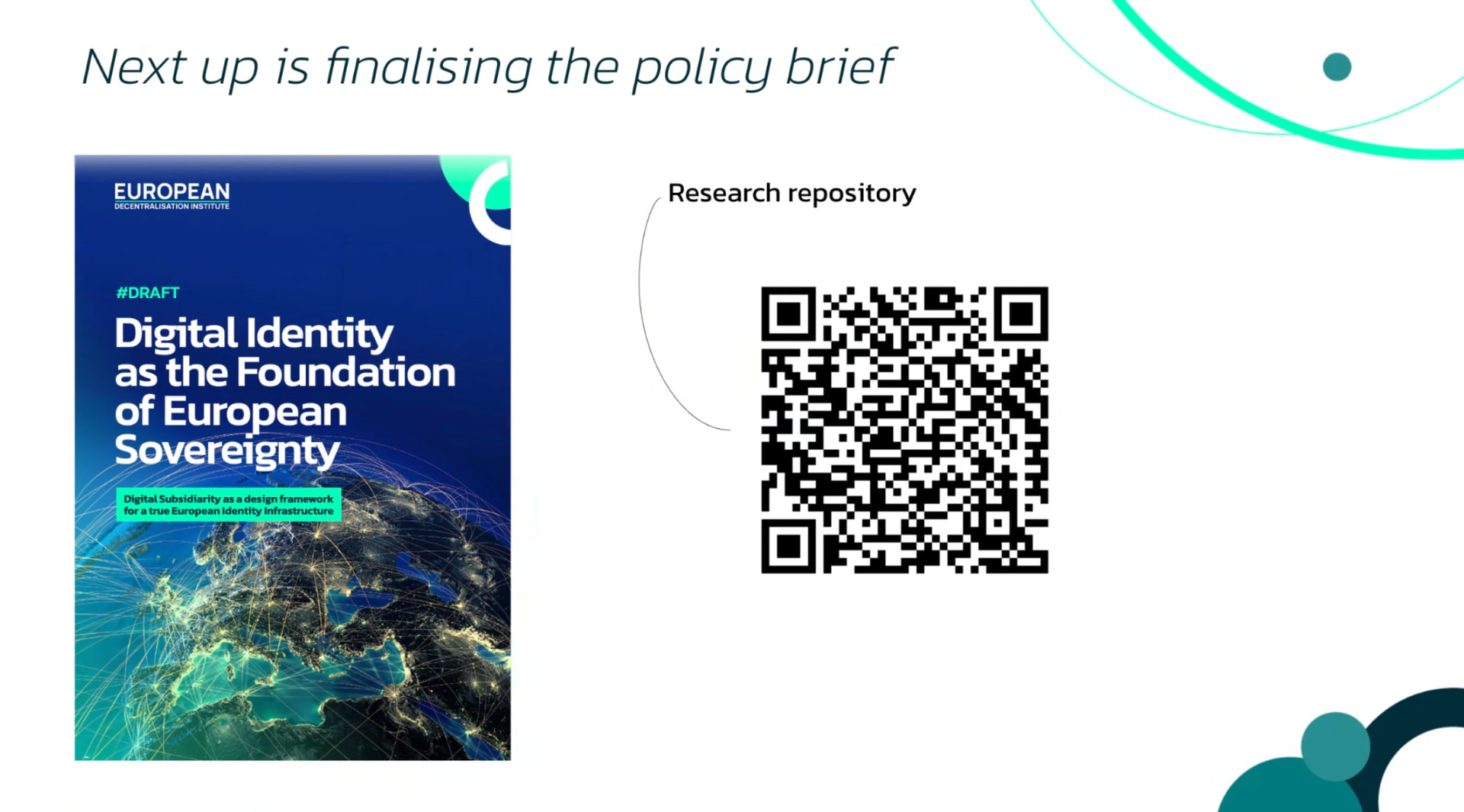
The goal was to create a policy brief on digital identity.
The first concept was ready in March, distributed to a selected group, and feedback received.
A roundtable took place on April 7th in Zurich.
The policy brief should be published at the end of the month.
It was a hybrid event with most people in Zurich (17 attendees) and others online.
Online participants included presentations from Bhutan, Australia, India, and Canada.
Pramod Varma, the chief architect of Aadhaar (Indian Digital Identity System), participated.
Argos is one of the largest spin-offs out of the EF, initiated by the Solidity team.
The largest work goes into Solidity, but it was also joined by a few other teams.
Roadmap recap from the last half year and an outlook for the first half of 2026 will be published every six months, along with a transparency report outlining all spending.
As the conversation continues around the structural future of the DAO, we will not be hosting the call this week but will continue reviewing milestones and applications on the Builder Grants platform.
We will aim to schedule a final PG call once and if a decision is made to have the structure sunsetted so that we are able to communicate any continuing future for PG funding within ENS and the status of existing streaming grants.