The Ecosystem Working Group is launching a $50,000 Hackathon Expansion Pilot starting November 1, 2025 to broaden ENS participation at in-person hackathons and strengthen relationships with builders worldwide.
The goal is to scale involvement beyond the current level.
The difficulty of objectively measuring metrics related to hackathons.
Discussion around builder retentions and metrics for success.
A large portion (85%) of hackathon spending goes to ETH Global.
The key thing about this pilot is the ability to have hackathons without Greg and Simon being present.
The pilot program is scaling through community involvement, using technical experts to guide participants.
Consumer App: Abstracts complexity and provides a simplified interface for everyday users.
Developer App: A specialized tool for developers and power users with access to detailed data (resolvers, records, fuses, permissions, etc.).
Rationale: The current Manager App tries to serve both user types and ends up too complex for most while too limited for developers. ENS Labs aims to clearly separate the two experiences.
DOMA x ENS Partnership
Partnership has been well-received at the ICANN event in Dublin.
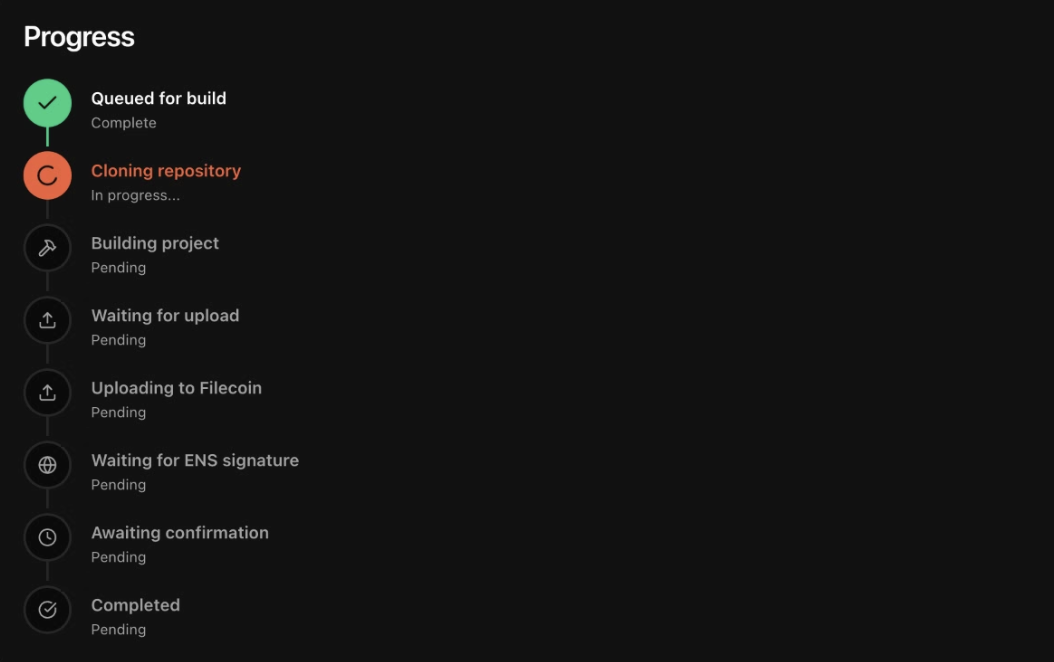
Used by devs to host e-commerce, e-books, and censorship-resistant sites.
Future initiative: Launching Octant V2 Vaults with ENS Foundation and others (each party depositing 1,000 ETH) to incentivize decentralized web hosting and immutable forever frontends.
Potential collaborators: Filecoin, Aptos Liquid, and others.
The ENS team is speaking through the events during the week.
Events and announcements
There will be an ENS app town hall hosted by the Ethereum Foundation, with only eight teams invited to discuss challenges like user onboarding and payment transactions.
Scenedex.basetest.eth is a decentralized music curation protocol.
A permanent archive for audio artifacts published on Base using Basenames, IPFS, Zora splits, and Safe multisig.
Resistant to censorship and owned by creators.
How it works:
Artists submit releases → curators approve via Safe multisig → once threshold is met, the system creates a 0xSplits revenue split (50/50 artist/curator), deploys a Zora creator coin, pins audio + metadata to IPFS, and registers everything under a unique ENS subname.
Each release becomes a permanent, queryable onchain record: releaseid.scenedex.eth resolves to IPFS metadata containing artist, title, audio CID, cover art, publisher proof (who approved + when), and contract addresses.
Stack: Next.js, PostgreSQL, ENS (L2), IPFS, Safe, 0xSplits, Zora – all on Base.
1.2. Contract naming season update
Things are moving forward positively.
Nouns approved a proposal for naming their contracts
Active discussions: Cork protocol, Liquity protocol, Superfluid, etc.
Instead of sending people to a generic guide on how to name contracts ENScribe team is collaborating with these protocols by auditing contracts and giving naming recommendations.
Cork is planning to redeploy some contracts to set primary names.
Once the contract naming is done with each project, they’ll write blog posts, articles, tweets, and collaboratively promote them.
A Hardhat plugin and a JavaScript/Typescript library are available.
Foundry was unwilling to merge their pull request.
Want to keep Foundry lean and not be opinionated with naming services.
2. Review Upcoming Events
/
3. ENSIP Updates
/
4. Space for Service Providers
Blockcful presents mostly on MetaGov calls
Due to other KPIs, Blockcful is focused on the Governance side of things.
Security incident – quickly patched, no impact on developers and apps.
ENSv2 Readiness guide coming soon in the ENS Docs.
2. Project Highlights
/
3. Review Upcoming Events
No plans for the immediate future for events.
ENS plans attendance at ETHDenver.
Next hackathon will be in Cannes for ethCC.
4. ENSIP Updates
Prem shared an idea to make it easier to name contracts.
The idea is to let the contract specify its own name using ERC-7201, which is called Namespace Storage.
The contract can set its primary name without doing it in the constructor.
It can be either mutable or immutable.
It allows for a contract that is deployed on L2 that doesn’t currently support L2 primary names to be able to indicate that they want a primary name in the future if ENS supports that.
ZK email presented a decentralized alternative for Dentity, offering cryptographic guarantees for verifying handles.
A live demo on ENS ZK Email allows users to update and verify their X handle and email address.
The process involves generating a ZK proof locally (for X) or server-side (for email) and submitting it onchain to update a verification status linked to the ENS name.
A smart contract acts as a ZK proof verifier, updating a mapping from the ENS name hash to the verification status upon successful proof verification.
Premm has been working on creating an open system where anyone can contribute a credential – Hooks.
5.2. Namehash Labs
Presented ENS Holiday Awards
Running from December 1st to 31st
$10,000 prize pool for renewals or registration referrals
There are 2 ways to participate:
Direct integration into an app for automatic rewards on registrations/renewals.
Using a referral link to share with the community.
The developer setup involves using 2 separate contracts for registrations and renewals, with a parameter for the referral address.
The leaderboard measures referrals in years.
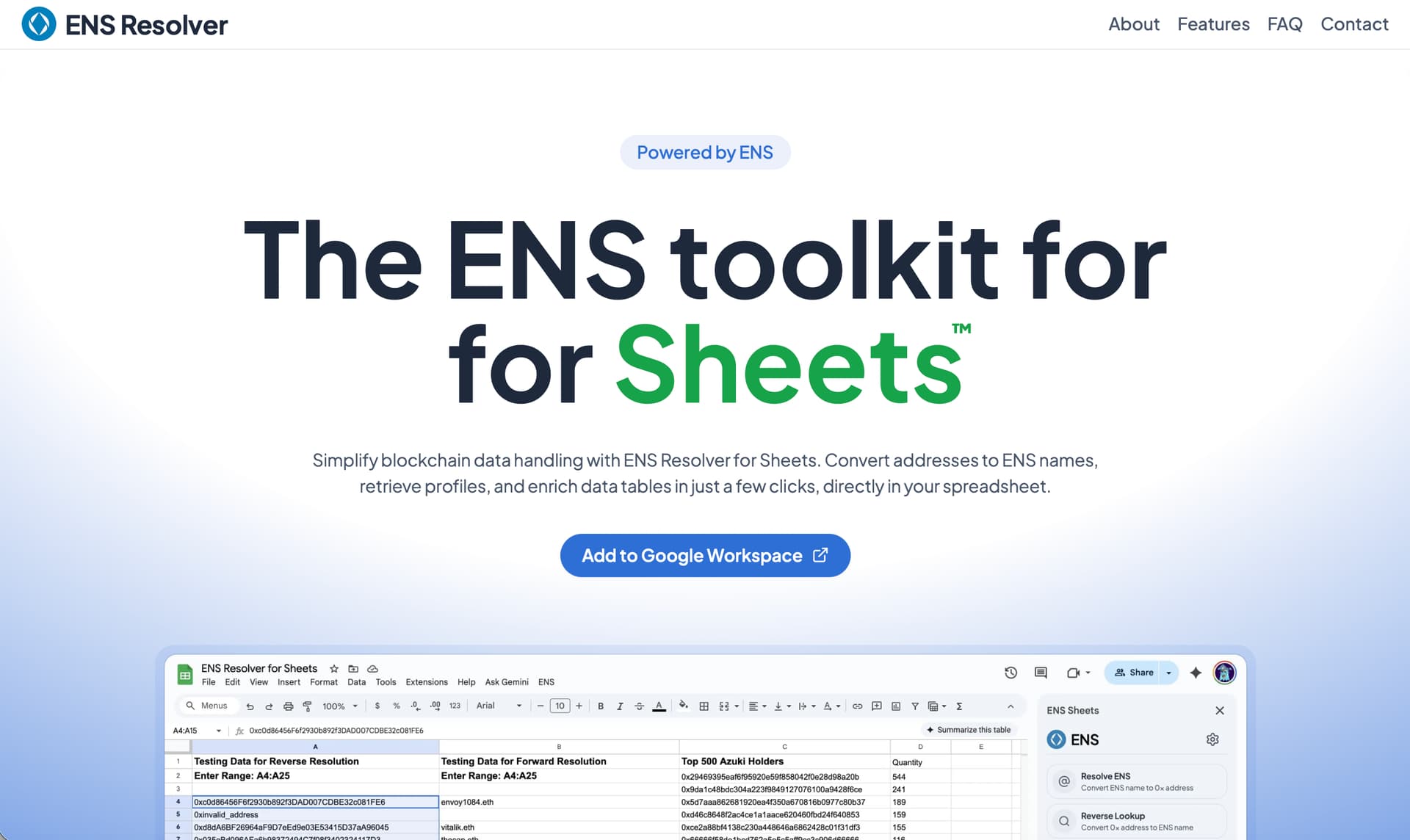
Namehash is also building ENS Analytics.
A tailored analytics platform for ENS that is like a more specialized dune for ENS-related metrics.
Namehash Labs will be running four more iterations of incentive programs over the next few months with a total price pool of $50k.
The goal is to incentivize apps with large audiences to integrate .eth name registrations/renewals and to have the ENS DAO fund the referral program indefinitely.
Rainbow Wallet removed its .eth name registration functionality.
The team will reach out to them about the possibility of reimplementing it.