[Social] ENS v2 Pricing: 5-Character Name Price Adjustment & Multi-Year Discounts

This is live for voting here

As ENS enters its next chapter, we want to ensure our pricing reflects both the value of the protocol and the accessibility that has always been core to our mission. As such, ENS Labs is proposing an increase for the price of 5 letter name registrations, and offering multi-year discounts for all names.

This temp check covers two changes: an updated annual registration fee for 5+ letter names and the introduction of multi-year registration discounts across the board.

Starting with ENS v2, we propose to set the annual registration fee for 5+ char names at $8 per year. Pricing for 3-char and 4-char names will remain unchanged. This adjustment was informed in part by the pricing policy research conducted by danch.quixote, which had recommended a $15 annual fee alongside a curved discount model for longer registrations. That initial research analyzed gas dynamics, secondary market health, and user sensitivity to price changes and gave us a strong quantitative foundation to build on. We’ve taken those findings and refined them with additional input from our own user research.

Specifically, in our user research, we found that everyday ENS users (the people registering one or two names for personal use) overwhelmingly perceived $12 per year ($1 per month) as a fair and intuitive price point for owning an ENS name. For us, this was a signal that ENS names felt like an obvious, low-friction choice for anyone entering the ecosystem, and pricing played a real role in that.

However, recognizing the current market conditions and ENS’s status as an “adoption phase” product, we believe a base price of $8/year, with a commitment to regular DAO review of pricing, is a sensible compromise at the current point in time.

Alongside the price update, we’re introducing multi-year registration discounts for all names to incentivize longer-term commitments. In our user research, the multi-year discount structure prompted 82% of users to register for longer than they had originally intended. Multi-year discounts rewards users who commit upfront, improving name stability across the protocol and giving registrants a better deal for thinking long-term.

Proposed Multi-Year Registration Discount (All names)

Term Discount 5-char $/yr 5-char Total 4-char $/yr 4-char Total 3-char $/yr 3-char Total
1 yr 0% $8.00 $8.00 $160 $160 $640 $640
2 yr 12.5% $7.00 $14.00 $140 $280 $560 $1,120
3 yr ~31% $5.50 $16.50 $110 $330 $440 $1,320
4 yr ~31% $5.50 $22.00 $110 $440 $440 $1,760
5 yr ~31% $5.50 $27.50 $110 $550 $440 $2,200
6 yr ~44% $4.50 $27.00 $90 $540 $360 $2,160
7 yr ~44% $4.50 $31.50 $90 $630 $360 $2,520
8 yr ~44% $4.50 $36.00 $90 $720 $360 $2,880
9 yr ~44% $4.50 $40.50 $90 $810 $360 $3,240
10 yr ~44% $4.50 $45.00 $90 $900 $360 $3,600

The applicable rate is calculated based on the number of years being registered/renewed in one transaction, and applies to the full duration - for example, if you renew a 5+ character name for 1 year, you pay $8, regardless of the duration it was previously registered for. If you renew it for 6 years, you pay $27 ($4.50/year).

Our earlier proposal used incremental fees (eg, the first year is $8, second is $7, for a total of $15 for two years) based on the existing expiration. This is ‘tidier’ in a sense, but much more difficult to convey to users, and has unintuitive results - you need to renew your name when it still has 5+ years left on it to benefit from the best prices. Adopting a simpler system with the same structure as other products is much easier to convey to users - eg, “Renew for 6+ years at $4.50/year”.

ENSv1 features a 90 day grace period. We’re proposing to reduce that to 28 days. During the grace period, names will be untransferrable and will not resolve - to all intents and purposes they act as if they are expired. During this period the name can still be renewed, which will restore it to operation for its original owner.

Based on the research, we plan to implement these changes in the upcoming v2 contracts at launch. We recognize that pricing decisions generate strong opinions, and we respect that. This post is here so the community can ask questions early, raise concerns, and understand the reasoning behind these choices prior to the protocol upgrade. We’ll be here to walk through our thinking and the data that supports it. We’re confident this is the right path forward for ENS, and we’re looking forward to the conversation.

Finally, we’d like the DAO to commit to regular reviews of pricing. Prices have been fixed at launch rates for 8 years now, and like any product, we ought to be regularly assessing the prices and determining if they are still fit for purpose. We believe an appropriate cadence would be for the DAO to commit to a pricing review every other year.

Edit 2026-04-23: Revised the price from $12 to $8 and made a number of other adjustments documented in this post.
20 Likes

This feels like the right direction to me. I think it will be especially good for 3 and 4 character holders who actually use their names as identity. Anything that encourages longer term ownership and a more stable namespace helps the people who are building real presence around their names.

4 Likes

I support this change.

ENS needs to have fees in order to allow names that are no longer being used to be made available for users who would like to use them. Early on, $5 may have been a good way to get early adopters to get their first name, and it was about the lowest price that could also, at the same time, bring in significant revenue in order to create a sustainable source of funding to maintain the protocol. Also, previously there were no easy alternative ways to get an ENS name at a low cost, but now that has changed, and there are many ways to get low-cost ENS names such as Basenames and Celonames.

As ENS continues to mature, the property that we should optimize for is long-term holders who want to get an ENS name that represents themselves or their organization, and builders who want to create platforms using a second-level name, such as a subname service or an AI agent identity protocol.

I think we could also consider narrowing the number of 3-letter and 4-letter names that have premium pricing, as recent discussions on the forum have pointed out that there are compelling reasons why some international 3-letter names are in fact more like 5-letter names, with a large supply, and Unicode names might not warrant a higher price, as they have a niche appeal.

Finally, there has been a lot of discussion on X about immutable names, ones that are set once and can never be changed, and I think this is a compelling use case for some applications. The only way to make that work is to register a name for a really long time, such as 50+ years. Cutting the price in half for such registrations makes this application a lot more feasible.

7 Likes

Curious if this is going to be it’s own DAO proposal, or bundled with v2?

3 Likes

Good to see these pricing changes are being informed by research.
I think secondary-market activity should also be monitored over time as a signal for whether pricing is close to optimal, especially in showing how much value is being left to speculators.
In my view, ENS should aim to keep speculative margins limited and capture more of that value in the primary market, while still keeping registration prices accessible enough for real users.

2 Likes

Hello and warm greetings to all

Firstly, the multi year discount for all registrations is a breath of fresh air and I fully support that.
However, a 150% hike for 5+ char seems a bit much.

To be clear, I agree that the price for 5+ char in particular could do with an increase to further raise capital, but I feel like a ~50-99% increase from base price ($8-10) would be more suitable to achieve this purpose. On the one hand, yes the dollar is devaluing, but on the other, worker pay and salaries aren’t going up, infact unemployment is rising - combined with the current geopolitical issues which has increased the price of goods and services. Most people are struggling.

With these considerations, I think the a price increase from $5 to around ~($8-10) would be more thoughtful than the proposed $12 for all 5+ char.

Next, I had hoped for a slight reduction on base price for 3,4 char, but it seems that’s not on the table. On that, I propose that rather than reduce the base price for 3,4 char, different multi year registration discounts should apply to them; such that a 2 year registration on a 3,4 char gives ~20% discount / 3 year gives ~25+% discount. (Note that most users don’t extend their 3,4 char beyond 2/3 years at a time due to high costs).

These are my thoughts, and I hope they are considered.

Warm regards to the community.

6 Likes

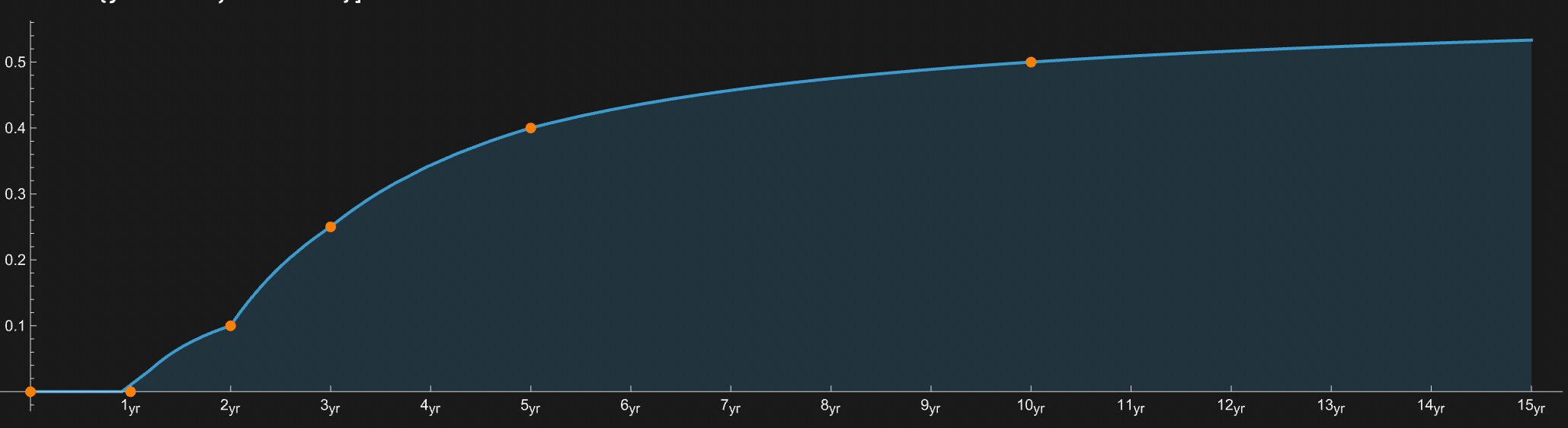
The discount curve is applied relative to the current expiry—extending X years and then Y years is the same X+Y years—which means the discount effectively “increases” as the expiry increases.

  • If I register for 1 year, and then renew every year for an additional year, I’m getting no discount.
  • If I register for 5+ years, and then renew every year for an additional year, I’m getting 40-50% discount (7.20-6.00$/yr).

IMO, this is good ENS alignment, as it encourages name owners to keep their name registered and rewards them with discounting pricing.


I think anything in 8-15$ is reasonable for 5L—10$ might be sweet spot so 50% discount restores the 5$/yr cost.

I’d also suggest slightly reducing 3L and 4L, although they benefit significantly from the discount curve. A simple change might be differentiating 3 bytes from 3 chars:

  • 3 ascii (3 bytes) → 3L pricing
  • 4 ascii (4 bytes) → 4L pricing
  • 3 chars (5+ bytes) → reduced 3L pricing
  • 4 chars (5+ bytes) → reduced 4L pricing
  • everything else → 5L pricing
8 Likes

I’m reposting this for better unicode region/script based registrar support in v2+
&& possible big discounts for non-ascii names instead of lumping all unicode chars counts with ASCII.

___

yo @raffy do we get proper datetime library instead of 365 days = 1 year constant?

__
* tbh, increasing >=5 char rent price is bad marketing decision, more so in current market conditions. Better option is to keep current price tags and give extra few % discounts for new long term renewals and registrations.. DAO can recoup extra % by staking those funds over years.

4 Likes

Supportive.

$12 a year for your identity seems very reasonable. Discounted rates for longer registrations - great.

I think what you are saying is that pricing depends on how far into the future your name is already registered, not just how many years you’re adding right now.

I like it.


There has been a lot of discussion about premium pricing on 3/4 ‘letter’ names.

I do think more consideration should be given to what is outlined here: Unicode (non-ASCII) .eth registration/renewal pricing.

Additionally I think that consideration should be given to the 3/4 ‘letter’ ASCII names too. My concern is that to achieve the fully discounted rate on a 3 letter name you have to renew the name for 10 years. 11 years if you want to maintain the 50% discount rate with a yearly renewal. If my maths is correct the cost to do that would be $4,736.

The ENS Constitution does state that “The primary purpose of registration fees is as an incentive mechanism to prevent the namespace becoming overwhelmed with speculatively registered names.” but I think there comes a point where the price is serving as a disincentive to real users.

Of course, no-one needs to have a short name, but the Constitution then states “A secondary purpose is to provide enough revenue to the DAO to fund ongoing development and improvement of ENS.”. I suspect that there is a price point at which speculation is discouraged and registrations of these names by real users go up. i.e. a net increase in revenue to the ENS DAO.

Playing around with the maths:

  • If 4 letter names cost $70 a year, 11 years of registration would cost $525 with a yearly perpetual renewal cost of $35.
  • If 3 letter names cost $130, 11 years of registration would cost a nice round $975 with a yearly perpetual renewal cost of $67.50.

Noting the response on X to this proposal there seems to be a general negative response from people who I would classify as speculators to the $12 price point. Given this I think there is a number greater than $12 but less than $160/$640 that would make everyone (the DAO and real users) a winner.

Some current registration numbers:

  • 2880 3 letter names (of 17,576 total combinations)
  • 994 3 number names (of 1,000 total combinations)
  • 248 3 character names (of 46,656 total combinations)
  • 9047 4 letter names (of 456,976 total combinations)
  • 6835 4 number names (of 10,000 total combinations)
  • 863 4 character names (of 1,679,616 total combinations)
8 Likes

I don’t think any fancy math is needed but the breakpoints are defined using 365.25. (Note: the discount curve in that file is just an example and different from this post.)


This PR matches this thread, specifically: contracts-v2/contracts/test/unit/registrar/StandardPricing.sol at fix/update-pricing ¡ ensdomains/contracts-v2 ¡ GitHub

*  2yr @ 10.00% ==  1yr @  0.00% +  1yr @ x =>  +1yr @ x = 20.00%
*  3yr @ 25.00% ==  2yr @ 10.00% +  1yr @ x =>  +1yr @ x = 55.00%
*  5yr @ 40.00% ==  3yr @ 25.00% +  2yr @ x =>  +2yr @ x = 62.50%
* 10yr @ 50.00% ==  5yr @ 40.00% +  5yr @ x =>  +5yr @ x = 60.00%

1 Like

ENS DAO Constitutional Concerns;

The Public Case Has Not Yet Been Made: (A Case for Evidence, Segmentation, & Caution; The Proposed 5+ Pricing Increase is Not Yet Sufficient)

I want to be clear that I am not arguing ENS fees can never change.

The ENS DAO Constitution explicitly allows governance to change registration and extension costs using transparent criteria, (such as name length), so long as the change pursues a constitutional goal.

My objection is narrower:

On the current public record, I do not think the case for raising the 5+ baseline (from $5 to $12) has yet been made on the ENS Constitution’s own terms.

Article II is the key issue:

The DAO Constitution says:

  1. the primary purpose of registration fees is to prevent the namespace from becoming overwhelmed with speculative registrations, and
  2. the secondary purpose is to provide enough revenue to fund ongoing ENS development and improvement.

It also says governance will not enact fees for other purposes.

That means the relevant question is not whether $12 “feels fair” (a 140% baseline increase), whether it is “only $1/month”, or whether ENS names have become “more valuable”.

The relevant question is whether the ENS DAO has publicly shown either that current 5+ pricing is:

  1. too low to control harmful speculation, or, that
  2. it is insufficient to fund ENS operations at a reasonable level.

On that point, I think the proposal is under-argued.

  1. If the justification is anti-speculation,
    1. then the DAO should be shown the public evidence.
  2. If the justification is funding necessity,
    1. then the DAO should be shown that public case too.

The “internal user-research” conclusions about what price “feels” intuitive are not the same thing as a constitutional showing under Article II.

And if the real theory is broader value-based pricing, then that should be stated openly…
…because that is not how the Constitution defines the purpose of the ENS fees.

Also, I think the proposal sits uneasily with the published pricing research it relies on.

That research explicitly says ordinary users registering 1–3 domains are much more sensitive to price increases, and, are important for ENS scalability and word of mouth…while at the same time, heavier users are far less sensitive.

It also later argues that 5L+ should not necessarily be treated as one flat category, and specifically explores splitting 5–7L from 8L+ because 5–7L names are more vulnerable to higher final price.

On that basis, a flat jump across the entire 5+ band looks analytically blunt, even before getting to the constitutional question.

There is another broader constitutional reason for caution as well.

  • Article I protects users’ ability to retain and extend names they own, and,
  • Article IV frames ENS as aiming to facilitate the most widely usable naming system.

I do not read those clauses as banning fee changes…

…But I do think they reinforce the idea that materially “increasing recurring carrying costs” (for the broadest part of the namespace) should require a strong public justification, (especially where ordinary-user adoption is concerned).

So my position is simple:

The ENS DAO may decide that fees should rise, but before moving to implementation, the DAO should be “shown a fuller” public case, based on public-and-citable evidence.

At minimum, that should include:

  1. the anti-speculation case,
  2. the funding-necessity case,
  3. the actual methodology behind the cited user research, and,
  4. a serious comparison with narrower alternatives, (such as segmentation within 5+, multi-year discounts without an immediate baseline jump, or a smaller phased increase first).

Until then, I do not think a 140% increase in the baseline 5+ price has been sufficiently justified under the ENS Constitution.

PS: I am clearly not defending squatters; and the Constitution already allows higher fees where they are actually needed to address excessive speculation or to fund ENS at a reasonable level.

What I am saying is that the DAO should insist on seeing that case made “publicly, rigorously, and constitutionally“, (before accepting a 140% baseline increase for the broadest part of the namespace).

Respectfully,
GaryPalmerJr.eth

14 Likes

ENS was born from a profound truth: In the old centralized web, your identity (username, domain, email) was rented from corporations: revocable, surveilled, monetized at their whim.

For .eth, the fee structure was deliberately light $5 per year for 5+ character names because the primary goal was anti-squatting, not revenue extraction. It is a toll to discourage hoarding empty names, not a subscription that turns ownership into ongoing tribute. This low cost embodied accessibility as a virtue. Anyone from an artist, builder, dreamer, everyday soul in the Global South or a teenager in the US could claim their name for pennies on the dollar relative to traditional domains.

It democratized identity at the protocol level. The constitution’s Article 2 (fees as incentive mechanism against speculation, not primary revenue) was meant to guard this flame. Raising it to $12/year (more than doubling the effective burden) for the vast majority of names (the long tail of 5+ character ones that normal people actually want and use) shifts the balance. It moves ENS closer to a rent-seeking model,

For buyers, this is not neutral. It is a quiet tax on hope, the hope of owning a clean, memorable identity that should represent you forever…

This proposal cites user research where “everyday users” found $12/year ($1/month) “fair and intuitive.” This is the voice of the conditioned masses speaking.

For personal buyers (the “one or two names” people), this is a direct hit on disposable income in a volatile crypto economy. Gas is now near zero thanks to Ethereum’s scaling, yet the protocol fee rises. Why?

Many bought .eth precisely because it was cheaper and freer than .com renewals.
Doubling that baseline makes ENS feel less liberation and more like another bill.

The multi year discount is a trap, it “incentivizes” longer commitments (82% in the survey registered longer). But this is psychological coercion dressed as benevolence. It pressures buyers to lock capital upfront for discounts, reducing liquidity and flexibility. What if life changes? What if you no longer want or need the name? You’ve overpaid for “stability” that benefits the protocol’s metrics more than your sovereignty. True ownership shouldn’t require bulk-buying your freedom to get a “deal.” It rewards those with more capital (whales, speculators) who can afford 5-10 years upfront, while casual buyers pay the full annual premium repeatedly, widening inequality among the people.

The research by danch and refinements to $12 (down from $15) are rational from a ENS labs/DAO treasury perspective. But we must ask, whose utility is being maximized? The protocol’s predictability and revenue stream, or the individual’s unencumbered claim to their name?

The bulk of .eth registrations are everyday 5-10+ character names for personal use, projects, or pseudonyms. A higher base price raises the barrier, even if gas is negligible. In bear markets or for non-crypto natives, $12/year + any ETH volatility feels heavier. Fewer legitimate registrations could ironically increase squatting pressure if only determined (or wealthier) actors participate. The proposal claims stability improves, but it risks making the namespace feel elite or “priced in” rather than open.

Money spent on higher fees or multi-year prepayments is capital not used for building, creating, or investing elsewhere in Web3. For small holders, this compounds. Resources should flow to humans flourishing, not protocol overhead.

DNS domains have renewal fees too, but ENS’s magic was being cheaper and censorship-resistant. Moving toward $12 normalizes it as “just another subscription.” This proposal takes a step in that extractive direction without full community ratification yet.

This proposal treats .eth names increasingly as managed assets of the DAO/Labs rather than inalienable property of the registrant. The constitution guards against infringement on ownership, but raising the ongoing cost of maintaining that ownership indirectly erodes the right. Fees were never meant to be the lifeblood, they were a guardrail (kinda like how we saw in 2017/18).

This is the classic tragedy of institutionalization. What began as a radical experiment in decentralized identity slowly accretes the habits of rentiers. Multi-year discounts improve “name stability across the protocol” sure a bureaucratic win, but for the individual buyer, it can feel like being nudged into longer serfdom.

In the grand tapestry, the people who buy .eth do so for sovereignty, self-expression, and permanence, not to optimize DAO metrics or reward longer lockups. A good system minimizes friction between a human and their name. This change adds friction, however “modest” or “data-backed.” It may be prudent for ENS Labs’ sustainability. It may pass a vote. It may even generate more predictable income. But when it comes to caring for the flourishing of every person who seeks a home in the decentralized web, it is not good overall.

10 Likes

PPS: When “Nick.eth” (and ENS Labs) state what “will be” for ENS fees, (based on what they “felt” and “feel”, without clear methodology or cited user research, and in a way that appears misaligned with the ENS DAO constitution), it doesn’t come across as a temperature check.

It reads as if the decision has already been made by ENS Labs, without the ENS DAO.

If we’re a DAO, this should be presented as a proposal: with transparent rationale, alternative options, and a defined path for feedback and voting; not as a foregone conclusion.

At minimum, the process and integrity should be preserved; not just the outcome dictated.

11 Likes

I read through the temp check, and honestly it feels like a reaction to declining revenue rather than a forward-looking strategy.

When renewals and activity slow down, the instinct is to increase prices or push multi-year lock-ins to stabilize income. But that doesn’t address why people are leaving in the first place.

The bigger issue is that ENS feels increasingly disconnected from its core users. Less engagement → fewer renewals → lower revenue. Raising prices in that environment just risks accelerating the cycle.

The multi-year discounts look attractive on paper, but in reality they’re just incentivizing people to lock capital longer to offset a higher base price. That’s not growth, that’s revenue smoothing.

If anything, this kind of move can end up being the tipping point. When a product is already losing momentum, making it more expensive to stay rarely brings people back—it just pushes more out.

9 Likes

Thank you for this well articulated response! Couldn’t have said it better myself.

One thing that stands out to me is that ENS is supposed to be identity, but till date, there is not one single CEX (centralised exchange) that has integrated ENS in their withdrawal. Everyone is still tied to using HEX addresses to withdraw funds from exchanges, even though the user has an ENS address.
In this case, isn’t the ENS DAO responsible for pushing these integrations to exchanges?

Rather than seek to tax the few active users of ENS, the DAO should instead pursue such integrations that add value to the ecosystem so that ENS truly feels like identity even to normies.

Well said.

5 Likes

Supportive of this initiative.

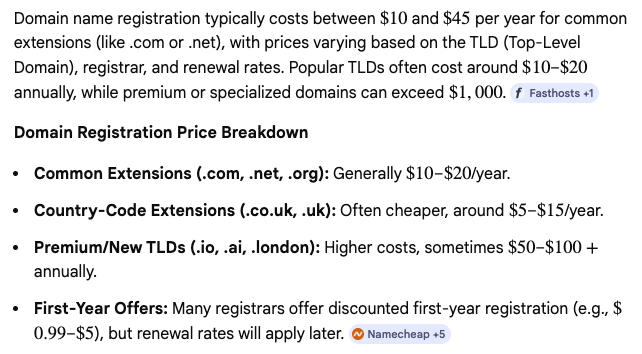
ENS is still cheap compared with DNS TLDs (see summary from Gemini below).

People are free to import DNS names, and there’s plenty of free subname providers out there, so I don’t see this increase being unreasonable at all.

I am not one of the everyday ENS users that perceives this price increase to be fair but I wont argue with what the majority of the people want. I am wondering, will this be the only price increase or the first of many 140% increases .eth users can expect?

1 Like

The reverse is true. The evidence shows that speculators overwhelmingly register for short periods, because longer expiration dates do not translate to higher sales prices on the secondary markets. End users, as our research shows, are much more likely to register for long periods. The end result is that more of the fee burden is borne by speculators, and less by end users, proportionally.

We cited research (Danch’s and our own) and our methodology based on that.

This post is following the same temperature check process as any other proposal. You’re using the temperature check process to complain about the lack of consultation - which is a little baffling.

1 Like

ENS isn’t DNS yet, so comparing prices directly doesn’t really hold up.

DNS domains come with real-world adoption, infrastructure, browser-level support, and decades of network effects. ENS is still early, with limited mainstream usage and far fewer practical integrations for everyday users.

You can’t price something like a mature global standard when the product hasn’t reached that level of utility or demand yet.

Right now, ENS still relies heavily on its existing .eth community for renewals. If that base starts shrinking, raising prices risks accelerating the problem rather than solving it.

9 Likes

Fair point on the research and process…I’m not saying there’s “zero input”, or that this isn’t “technically a temperature check”.

My concern is more about how it’s being framed and received.

When language leans toward “what will be”, then it can come across as “directional or pre-decided”, (even if that’s not the intent)…In our DAO context, perception matters, just as much as the process.

I think what would strengthen this is making the range of possible outcomes more explicit, EG:

  • what alternatives are on the table
  • what would change the proposed direction
  • what specific feedback would meaningfully impact the outcome
  • what the explicit constitutional basis is for the change; (which principles/articles are being applied vs. informal “feels”)

My wish is that you and ENS Labs keep the temperature check “clearly open-ended” and reinforce that the DAO is actively shaping the decision, and not just reacting to it.

Separately, my earlier point on the constitution and research still stands, in the sense that it would help to more clearly anchor the proposal to those standards, (and to ensure that the underlying assumptions are transparent and appropriately scoped).

5 Likes